

Listen to the article
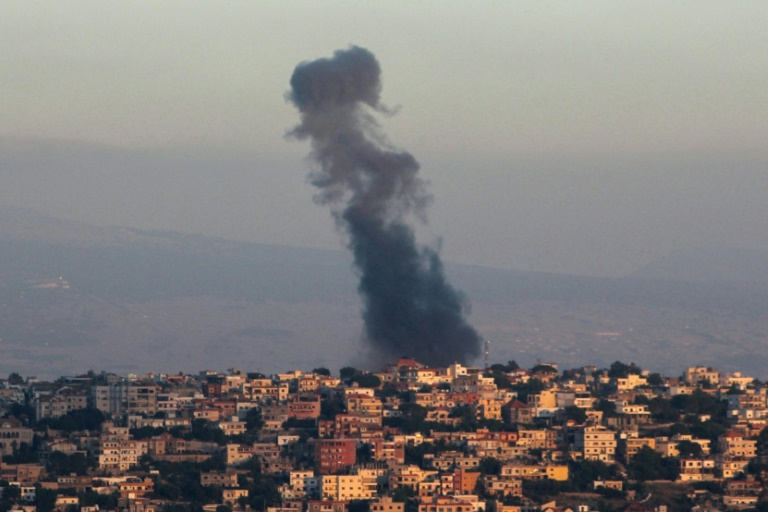
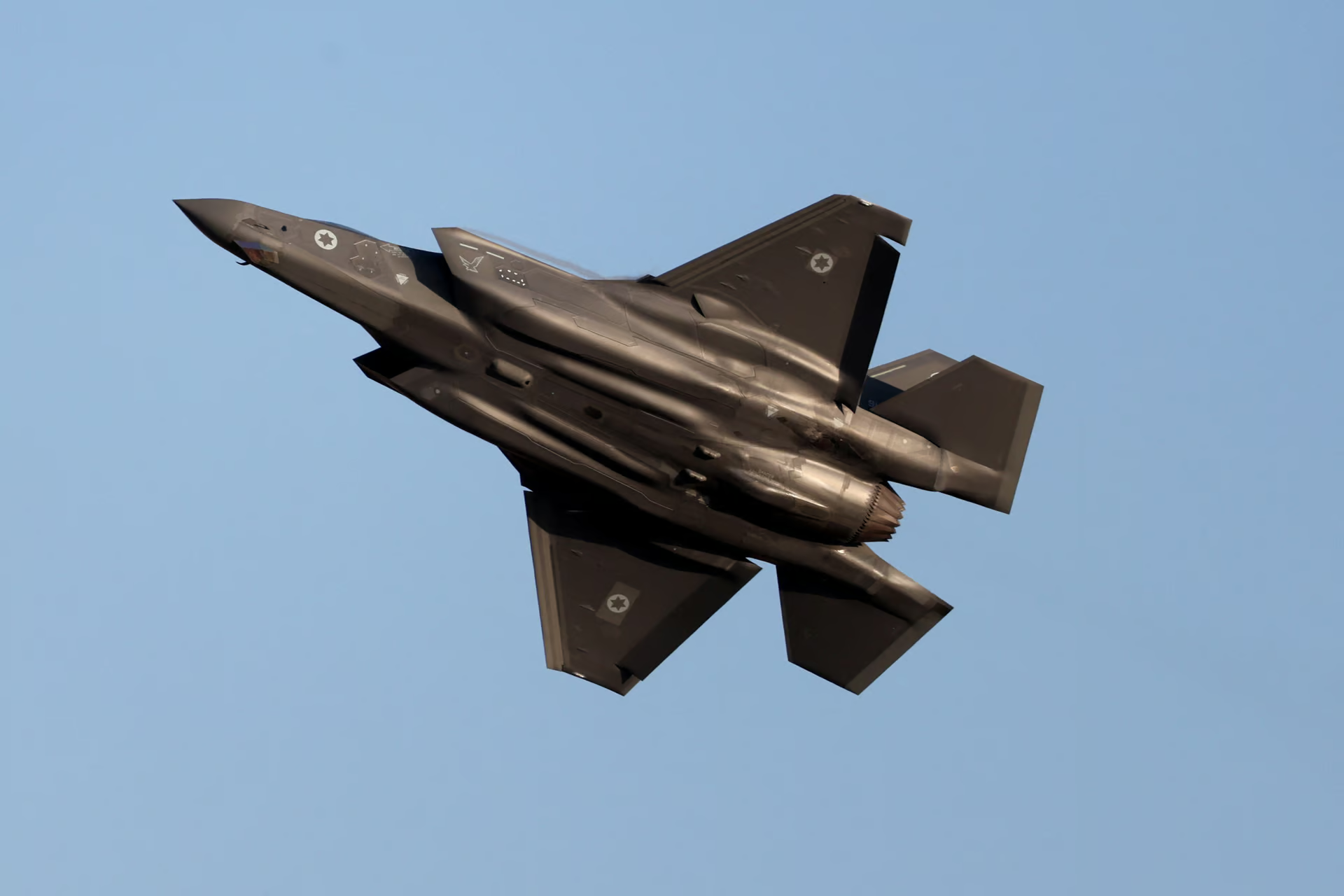
Israel is on the brink of an all-out war with the terrorist group Hezbollah, a former Israeli Intelligence officer has warned.
Avi Melamed, a former member of the Israeli Defence Forces, said that any conflict with the Lebanese-based groups would have geo-political consequences.
Mr Melamed, who is now a Fellow of Intelligence and Middle East Affairs for the Eisenhower Institute in Washington, said he believed Hezbollah is running out of Israeli targets to strike without triggering a significant counterattack from Jerusalem.
In an interview with National Security News, the former officer said: “The ramifications would be huge, it will inevitably result in the disintegration of Lebanon. It might also result in direct involvement of the Iranian regime, especially if it fears losing its most significant proxy, Hezbollah.”
The former intelligence officer also said that regional actors such as Turkey and European countries such as France, with its close links to Lebanon could be drawn into the conflict, which he said could have geo-political consequences.
The ultimate goal for Israel would be the “total dismantling of Hezbollah”, thereby crippling Iran’s regional influence, according to Mr Melamed.
But the former intelligence officer cautioned that Iran would not stand by and would likely take every measure to resist such an outcome.
Western governments regard Hezbollah as Iran’s most significant proxy in the region, with billions invested in its establishment and maintenance.
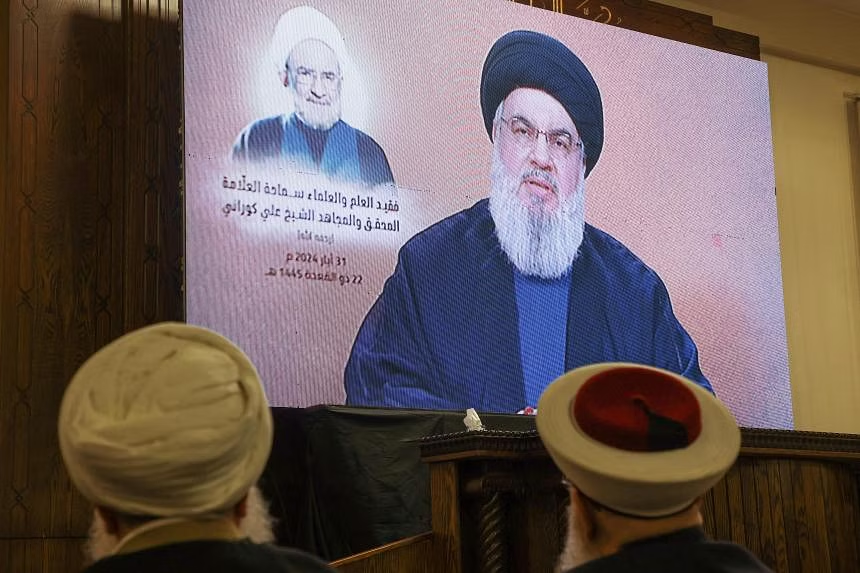
The group’s leader, Sayyed Hassan Nasrallah, has threatened to expand the conflict beyond Lebanon, declaring that “no place” in Israel would be safe and even targeting Cyprus.
Major General Charlie Herbert, a former senior British Army officer, warned that a two-front war would significantly complicate Israel’s military efforts.
He told NSN: “A war on two fronts would further diminish the likelihood of Israel eliminating Hamas in the Gaza Strip, and would undermine any successes made in Gaza since 7th October. No rational nation chooses to fight a war on two fronts. It is hard to see how Israel could sustain such a war, let alone succeed on both fronts.
“The IDF is already struggling to achieve genuine long term, strategic success in Gaza. Entering a war with Hezbollah now is a recipe for disaster.
“It increases significantly the likelihood of drawing Iran into an overt regional conflict, with implications for the US and Europe, Hezbollah will not be easily defeated by Israel and any significant IDF incursion into Lebanon will be fiercely opposed, as it was in 2006.
“The outcome of war is rarely certain, and no one should assume that an Israeli victory would be certain.”
Since the beginning of the current conflict, there has been a ramping up of tensions with both sides engaging in what Mr Melamed describes as a “gradual escalation” of restrained strikes.
But despite these measured actions, Mr Melamed believes there remains a high risk of a “slippery slope” leading to full-scale war, exacerbated by Hezbollah’s continuous attacks on Israel.
Experts have warned that Israel and Hezbollah are one false move from starting a devastating war. Both sides have been increasing their rocket fire and airstrikes, reviving fears of a conflict even more destructive than the 2006 war.
Hezbollah’s arsenal has significantly expanded, now boasting up to 150,000 rockets compared to 15,000 in 2006. This increase raises concerns about a return to large-scale warfare, with Israel aiming to neutralise the threat from Hezbollah to allow displaced residents to return home.
US envoy Amos Hochstein visited Lebanon and Israel this week, emphasising the urgency of finding a resolution.
He said: “It’s in everyone’s interest to resolve it quickly and diplomatically. That is both achievable and it is urgent.”
UN officials have also expressed concerns about the high risk of miscalculation, a sentiment echoed throughout the region.
Urban Coningham, a research fellow at the Royal United Services Institute (RUSI), said there were three potential strategies for Israel.
The first could be a full-scale military conflict in which Israel could launch an offensive to neutralise Hezbollah, but he said the strategy carried significant risks due to Hezbollah’s missile and drone capabilities and the potential for provoking attacks from the terrorist group’s allies.
Secondly, he said Israel might respond to Hezbollah’s strikes with heavy retaliation to restore deterrence, possibly targeting key Hezbollah and Iran’s Islamic Revolutionary Guard Corps officers in Lebanon.
Lastly, he said that diplomatic efforts could persuade Hezbollah to retreat from the border, possibly to the Litani River as mandated by UNSC 1701.
