

Listen to the article
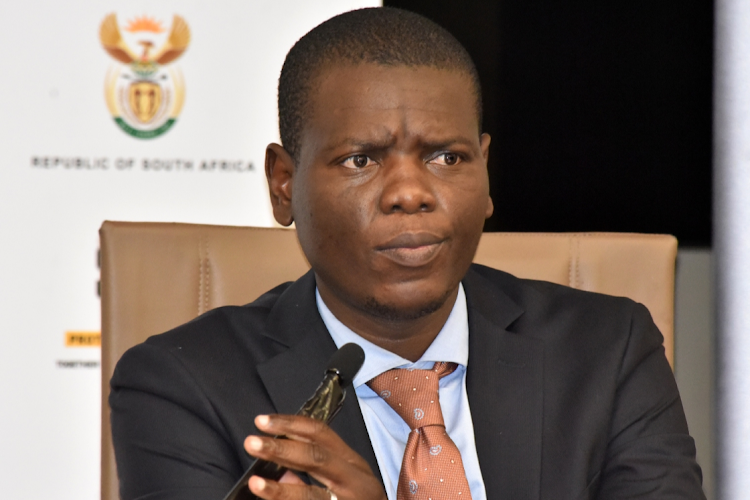
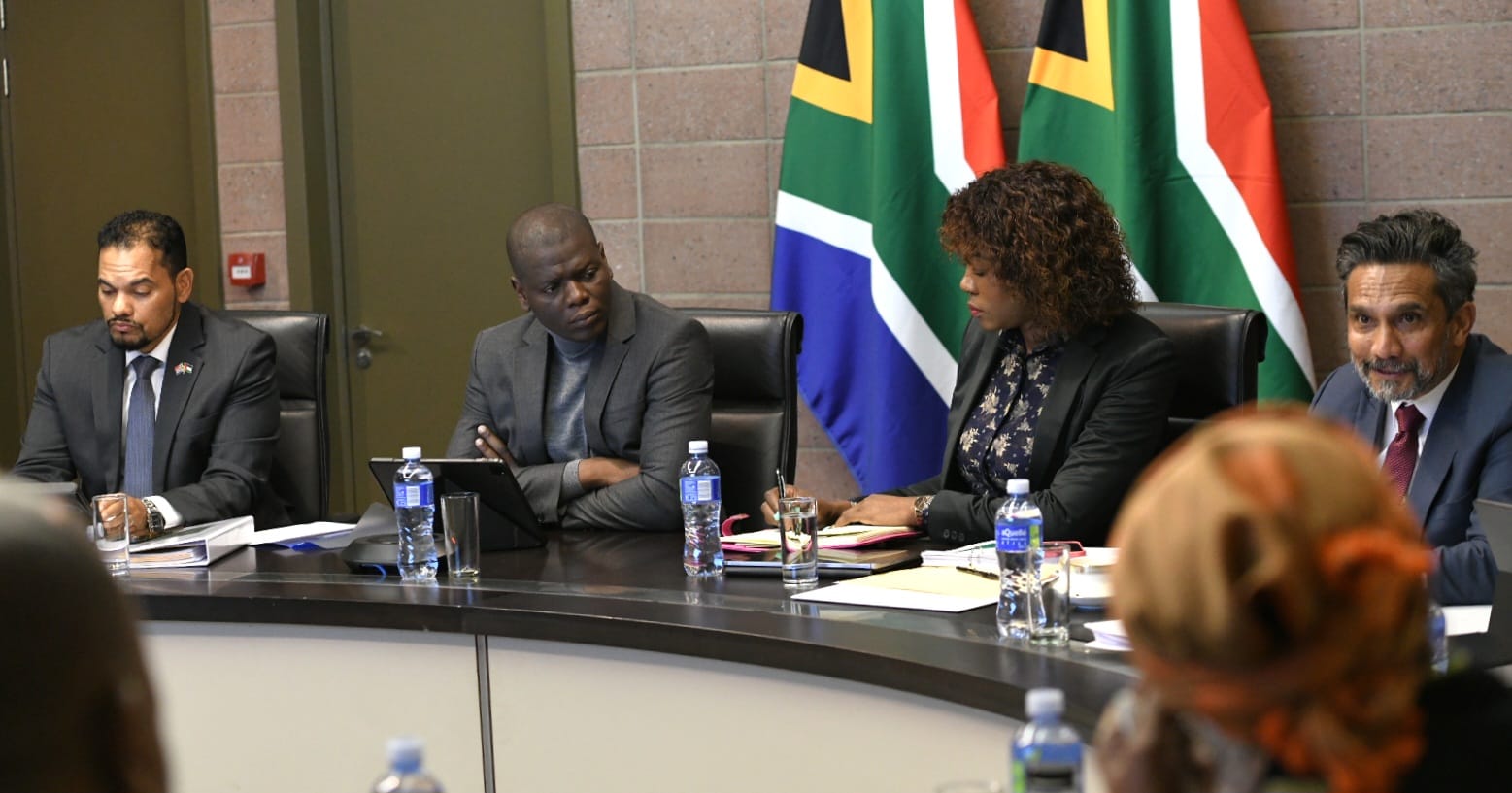
South Africa’s foreign policy is expected to be less aggressive against Israel and more pragmatic and balanced under the new Minister of International Relations and Cooperation, Ronald Lamola, according to Prof. Gilbert Khadiagala, professor emeritus at Wits University. He expects there to be a change in tone and style, quite different from Lamola’s predecessor, Minister Pandor. A pullback from South Africa’s close alliances with China and Russia military is anticipated, with an alignment closer to the United States.
“I think there is a perception that there is really no point in escalating the conflict between South Africa and Israel over the Gaza problem. I think the case has been made, and it’s in the hands of the International Court of Justice. I do not see South Africa taking a much more radical line under Lamola,” he said.
Minister Pandor, Prof. Khadiagala said, had a really emotional and personalised interest in the case.
“I think it was her style of leadership, her perception of the world, and her commitment to the Gaza issue. So, there’s going to be a slight stepping back from that kind of position on the Israeli-Palestinian question.” He said it was important that there was a new face at the international relations ministry in South Africa.
His comments follow the South African Chamber of Commerce in the US raising alarm after the US Congress voted to pass legislation requiring a “full review” of Washington’s bilateral ties with South Africa. The Chamber warned that a review could harm relations and jeopardise South Africa’s status in the African Growth and Opportunity Act (AGOA), which grants duty-free access to US markets. The legislation is not yet law; it still needs to pass the Senate and be signed by the President.
Prof. Khadiagala said when the political parties in the Government of National Unity begin negotiating about foreign policy, they will have to find a middle ground. The Democratic Alliance, the official opposition in the country with a pro-West inclination, “has been clearly pro-Israel” while the ANC has been pro-Gaza. “The middle ground,” he said, “is simply going to be that there are some issues that we should not be overexposed to.”
“I think that there will be recognition that it doesn’t really help to jeopardise relations with Western countries on issues such as Iran, even though the ANC has been a very good ally of Iran. Those kinds of baggage, I think, will take a lesser prominence in South African foreign policy.”
He did not see South Africa pulling back from its position on Gaza and their support for the Palestinians. “That has been a very consistent line,” he says. “But they will at least try to tone down the anti-Israeli postures that the last administration took.”
Improved relations with the United States are also anticipated, highlighted by a call from US President Joe Biden to President Ramaphosa, in which Biden congratulated him on the GNU.
“President Biden called President Ramaphosa and congratulated him on the Government of National Unity, wishing him well,” said Prof. Khadiagala. “I think there is a broader warmth emerging around the GNU that is going to make a difference in South Africa-US relations.”
Minister Lamola spoke to US Secretary of State Antony Blinken earlier this week, where they reaffirmed the importance of the US-South Africa partnership and shared priorities. They discussed Russia’s war against Ukraine and the conflict in Gaza, including the need to reach an immediate ceasefire and secure the release of hostages.
A pullback from South Africa’s close military alliances with China and Russia is also anticipated, with an alignment closer to the United States.
Prof. Khadiagala said Congress had been quite vocal that South Africa’s security interests are hurting US security. “Countries are not supposed to take positions that endanger US national security,” he said.
“I see a pullback from that position of closer alliances with China and Russia militarily. This is not going to happen soon, but I think it will gradually become part of the administration. There is no reason why South Africa cannot return to the previous non-aligned position, which allowed us to be friends with both the East and the West, but without military engagements that actually tend to be against the interests of the United States and the West.”
Commenting on South Africa’s role as peacekeeper in the Democratic Republic of Congo, which has been criticised by defence analysts and the DA, Prof. Khadiagala said South Africa will have to decide whether it is making a difference on the ground through military intervention or should begin to push for a negotiated settlement in the conflict.
He said South Africa is not doing “very well on the ground in the Eastern DRC and it has lost a few soldiers.” There were also reports that the troops are “not even prepared to fight the M23.”
What is emerging as the unpreparedness of the South African military within the Southern African Development Community (SADC) mission “is going to force a rethink of the military component of that intervention.”
South Africa, he said, should use its position within SADC to put more pressure on the Congolese government under Felix Tshisekedi, president of the DRC, to try to find a political solution.
In the larger GNU, Prof. Khadiagala says there is a view that some of South Africa’s foreign policies are not pertinent to domestic development. South Africa will have to step back from some of the positions on military engagement with the Russians and the Chinese.
The links with the West, he said, are not something that should be taken for granted. “I think the GNU is going to push for that position because trade is going to be important in foreign policy. Trade issues are very much international relations issues that the minister will have to negotiate with the other parties to reach some compromises.”
On South Africa’s membership of the BRICS bloc, Prof. Khadiagala said Russian President Vladimir Putin has suggested that the bloc should grow by another 10 members, which means South Africa’s influence “is essentially being watered down.”
“It will be easy for South Africa to drop the crusade for de-dollarisation and not really lose face,” he said.
