

Listen to the article
The huge cost of nuclear power stations will only decrease when nations start building them in large numbers, a leading industrialist has claimed.
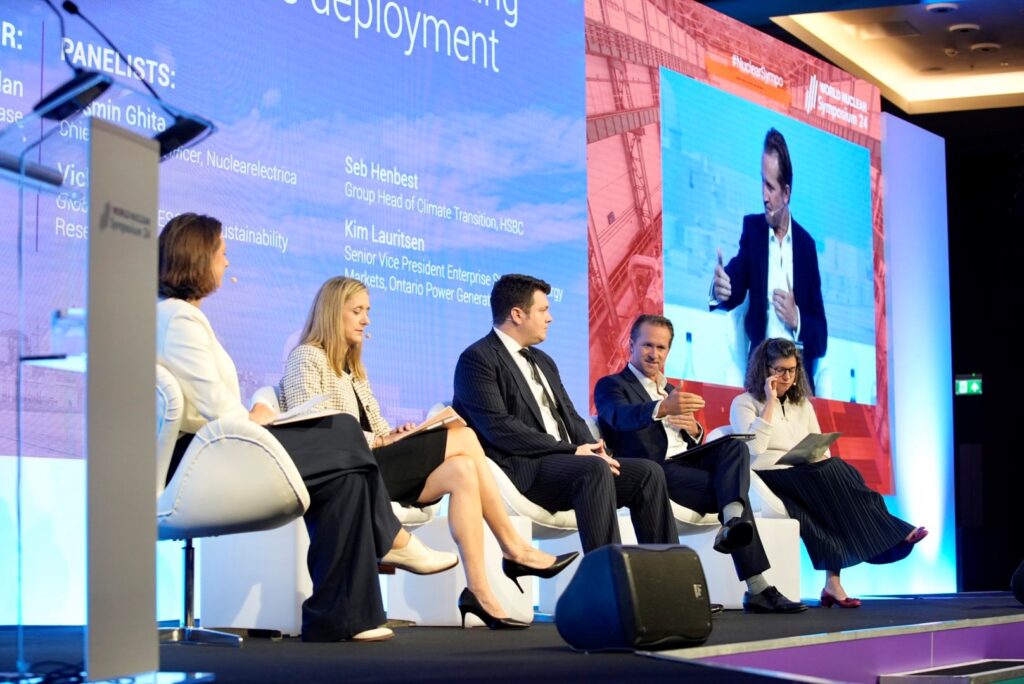
Seb Henbest, Group Head of Climate Transition at HSBC, highlighted China’s strategic approach to nuclear power and suggested that it was a model the rest of the world could follow.
Speaking at the World Nuclear Symposium in London, he said: “China is building loads of [nuclear power plants], because it’s got a plan of the role that nuclear will play in the energy system.”
He said most of the nuclear power plants in the world have been built in China, stating “there’s 24 or 25 of them in construction at the moment.”
Henbest also highlighted the importance of manufacturing volume in reducing the cost of nuclear power.
“China’s ability to build nuclear plants for $60 per megawatt hour, compared to the rest of the world’s $200 per megawatt hour, is partly due to its series build approach,” he explained. By constructing multiple plants simultaneously, China can benefit from economies of scale and drive down costs.
He said: “We know the first ones going to be expensive but if you do it well and do it right the next one gets cheaper the one after that gets cheaper.”
Henbest stated the importance of having a clear energy strategy to guide nuclear development. He highlighted the challenges faced by countries that lack such a plan, noting that “it’s hard to identify the value proposition” for nuclear energy when competing with other energy sources.
“I think that’s the fundamental challenge here,” he added.
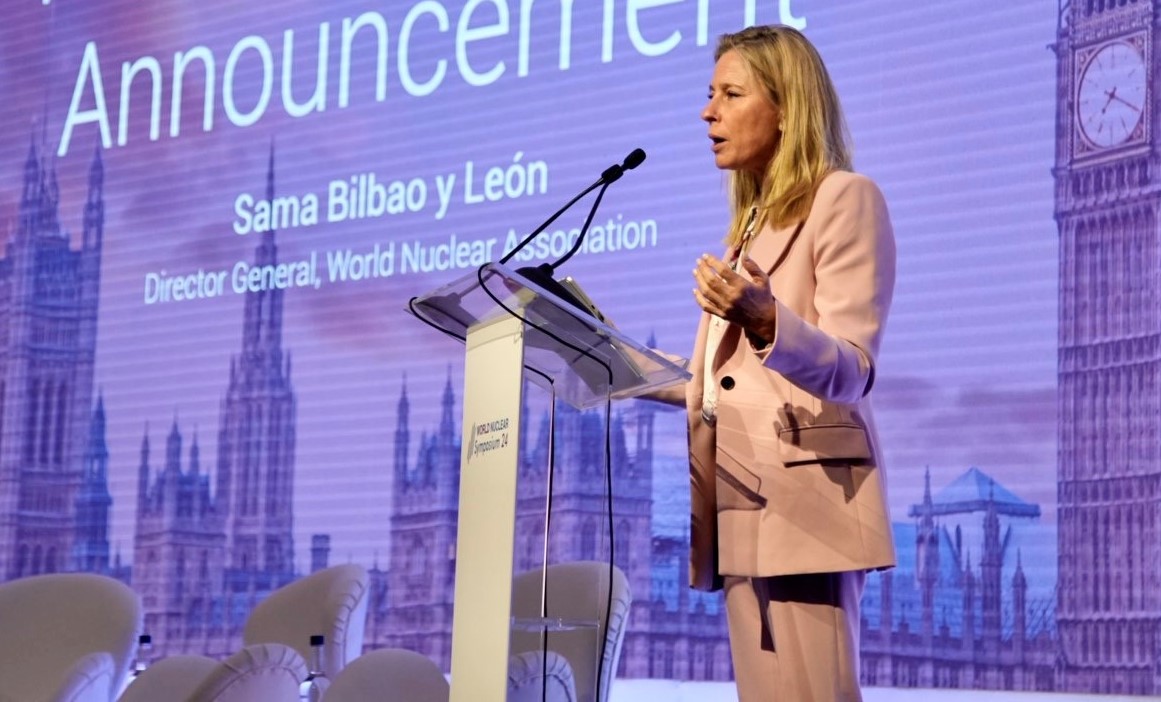
Sama Bilbao y León, Director of the World Nuclear Association, the organiser of the symposium, emphasised the urgency of the moment, stating: “the time is now, not tomorrow, but today.”
The prestigious conference, a focal point for the nuclear community, brought together over 800 delegates from around the globe to discuss the industry’s potential in meeting the world’s demand for clean, reliable, and affordable energy.
Key topics included discussions of government plans for nuclear expansion, fuel supply chain development, workforce development, and project delivery, with a strong emphasis on international collaboration to achieve goals.
The symposium also highlighted a significant shift in the financial community’s perception of nuclear energy, with Ed Cook, Global Head of Capital Markets at BlackRock, noting a surge in investor interest.
Cook said the number of financiers in attendance was “a couple of hundred, versus not many last year. So, I think that those numbers tell you that there is a direction up.”
Speaking in a panel discussion titled “Turning momentum into nuclear energy”, Cook emphasised that it is not just the capital that will unlock the opportunity.
He added: “It’s actually the technology, the engineering, the unit economics, the regulatory framework, the political world, all these things that set a particular project, or set technologies, or industries, above others.”
Cook acknowledged the inherent risks but emphasised that the risks also present opportunities.
Cosmin Ghita, CEO of Nuclearelectrica in Romania, said investment in the immediate future would be crucial for the industry.
He said that “the next five years will be very important” for the development of nuclear energy. While acknowledging the challenges faced, he noted a positive shift in the conversation surrounding nuclear power.
The recognition of nuclear’s benefits at COP, the United Nations meetings on climate, and by governments worldwide, has been a major breakthrough, Ghita stated.
In Europe, he noted a change in attitude, as “we can now say nuclear out loud and not be afraid of it, and put it in official statements and documents.”
He said: “Now it’s just having the right technical, economic assessment to develop optimal regulations that manage and oversight the right types of risks and keeping that value alive.”
To ensure successful development, Ghita stressed the need for strong public-private partnerships and knowledge-sharing. He emphasised the complementary roles of public and private institutions in driving the industry forward, combining their respective expertise to achieve the goal of tripling nuclear capacity by 2050.
Vicki Kalb, Global Head of ESG and Sustainability Research at UBS, added that the demand for nuclear energy is undeniable. “The quality of one unit of nuclear versus one unit of anything else is far superior,” she said.
