


Listen to the article
As China’s foreign policy becomes more aggressive and centralised, the world is seeing a new international order. In this article, published originally by The Conversation, Professor of International Security Stefan Wolff explores how Xi’s meetings with foreign leaders shows China’s growing economic and military strength, as it starts to play a more dominant role on the world stage.
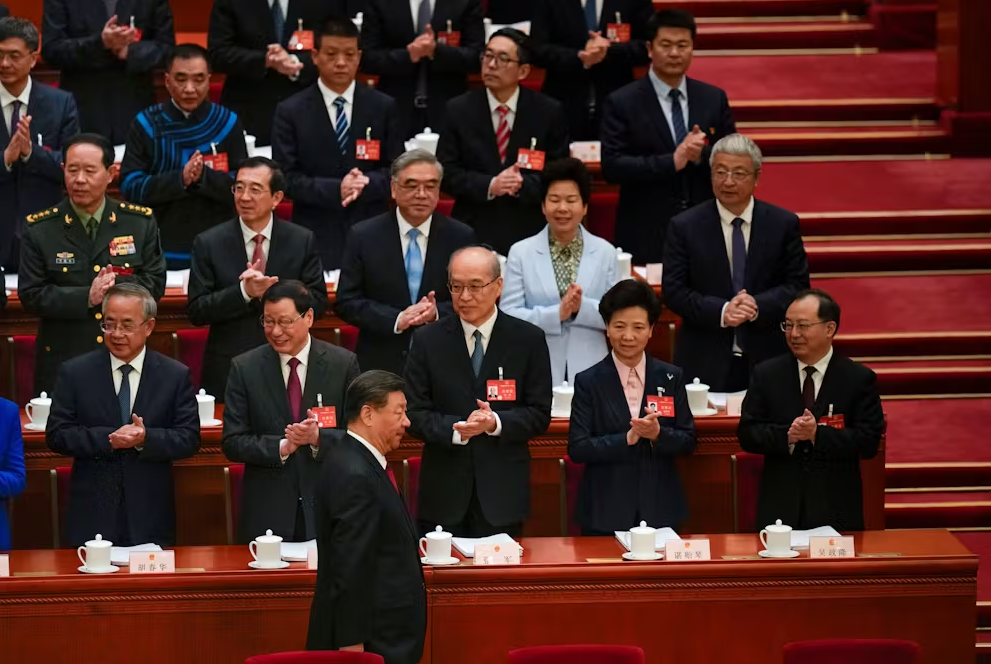
China’s new world order: looking for clues from Xi’s recent meetings with foreign leaders
There is broad consensus that Chinese foreign policy has become more assertive and more centralised in the decade since Xi Jinping has ascended to the top of China’s leadership. This has also meant that Chinese foreign policy has become more personalised and that Xi’s own diplomatic engagements offer potentially important clues about its direction.
The international order is clearly in flux and a key driver of this change, by its own admission, has been China.
After more than 100 minutes on the phone with US president Joe Biden on April 2 2024, Xi hosted the German chancellor, Olaf Scholz, for an official state visit and several hours of talks two weeks later on April 16 2024.
The Chinese readout of the meeting between Xi and Scholz provides some interesting insights in how China envisages its relations with a country that is strategically and economically important, but clearly not a rival in a military sense. Xi emphasised “growing risks and challenges” and the need for “major-country cooperation” to achieve “greater stability and certainty”.
The Chinese framing is, of course, self-serving. Not only does China want German companies to invest, it also wants trade to continue without the threat of punitive tariffs or the dangers of derisking (restricting business relationships), let alone decoupling (weakening economic ties).
This is not a message solely directed at Germany, but was expressed in similar terms in Xi’s meeting with US business leaders at the end of the March.
The European dynamic
Engagements with Germany, however, also have a broader European, and especially EU dimension. Germany now has its own moderately hawkish China strategy, aiming to reduce economic reliance on Beijing.
But Berlin is still considered softer than many other EU member states and therefore an important ally for Beijing within the EU and in EU-US deliberations on China policy.
That Germany does not see eye-to-eye with all its partners in the EU when it comes to China and privileges its own national economic interests over geopolitical concerns became once again obvious when Berlin abstained from a vote on the EU’s new human rights supply chain law.
This wasn’t specifically aimed at China. But the law’s intent to hold large companies to account for potentially benefiting from child labour or environmentally damaging production methods, would clearly constrain trade with China.
More importantly, China will also hope that Germany will at least water down potential EU anti-dumping measures aimed at the Chinese automobile, solar and wind industries.
This is particularly important for China’s state-sponsored economic recovery in light of a hardening of the US line on tariffs on Chinese goods. This was brought in by Donald Trump and continued by Biden in response to China’s policy of dumping goods onto EU and US markets.
These economic dynamics are embedded in broader geopolitical debates. From a German and European perspective, the Russian conduct in the war against Ukraine remains a key concern. Cutting through the diplomatic niceties, it is obvious that China, like Germany, would prefer the Ukraine war to end sooner rather than later.
Since issuing its position paper on Ukraine on the eve of the first anniversary of the Russian aggression in February 2023, China has supported negotiations based on freezing the current frontlines with a ceasefire and then negotiating a settlement between Russia and Ukraine.
This is, so far at least, at odds with the general western position, reiterated by the German chancellor in Beijing, that a Russian withdrawal from Ukrainian territory is an essential pre-condition for sustainable peace.
Scholz and Xi on diplomacy
Notably, both the German and Chinese leaders emphasised their commitment to key principles of the UN charter. These included sovereignty and territorial integrity, and the importance to explore diplomatic ways to end the war.
What is significant is Scholz’s statement that rather than western military support for Ukraine, diplomacy now takes centre-stage.
Beijing has produced a multitude of visions for the so-called new era, such as the Global Security Initiative (set up by China in 2022 with the aim of eliminating the cause of international conflicts) or the Global Development Initiative (a China-led plan to overcome the challenges of the pandemic). These offer a blueprint of a new international order in which China plays a more dominant role, including in Europe.
Yet turning these plans into reality is a different matter and China is experiencing a similar degree of uncertainty regarding the endgame of a new international order as the major players in the west – from Washington, to London, Paris, Berlin and Brussels – are.
China’s approach to managing, and shaping, the fluidity of the international system relies predominantly on diplomacy, albeit with a significant coercive streak. This may not always be obvious in the communiques released after high-level meetings with near-peers, such as the US, the EU or key members of the G7, including Germany, the UK or France. But even in these relationships, China has become more vocal about its red lines in a number of areas beyond traditional concerns such as Taiwan or the South China Sea. This was reflected in China’s response to a meeting between US defence secretary Lloyd Austin and China’s Admiral Dong Jun on April 16, in which it suggested the US continued to behave provocatively over Taiwan.
The emphasis on diplomacy serves Chinese interests well. It helps Beijing to sustain its own narrative of resolving problems, especially with its major trade partners in the G7, through cooperation.
The (not so) hidden message that accompanies this diplomatic front, however, is one of growing Chinese economic and military strength and of a leader who is willing to use that strength to defend and push his country’s red lines.
Stefan Wolff, Professor of International Security, University of Birmingham
This article is republished from The Conversation under a Creative Commons license. Read the original article.
