

Listen to the article
Emmerson Mnangagwa’s government claims it has addressed electoral reform, yet the trajectory ahead of polls in August could mean another term for the incumbents, something the country can ill afford, writes PIERS PIGOU.
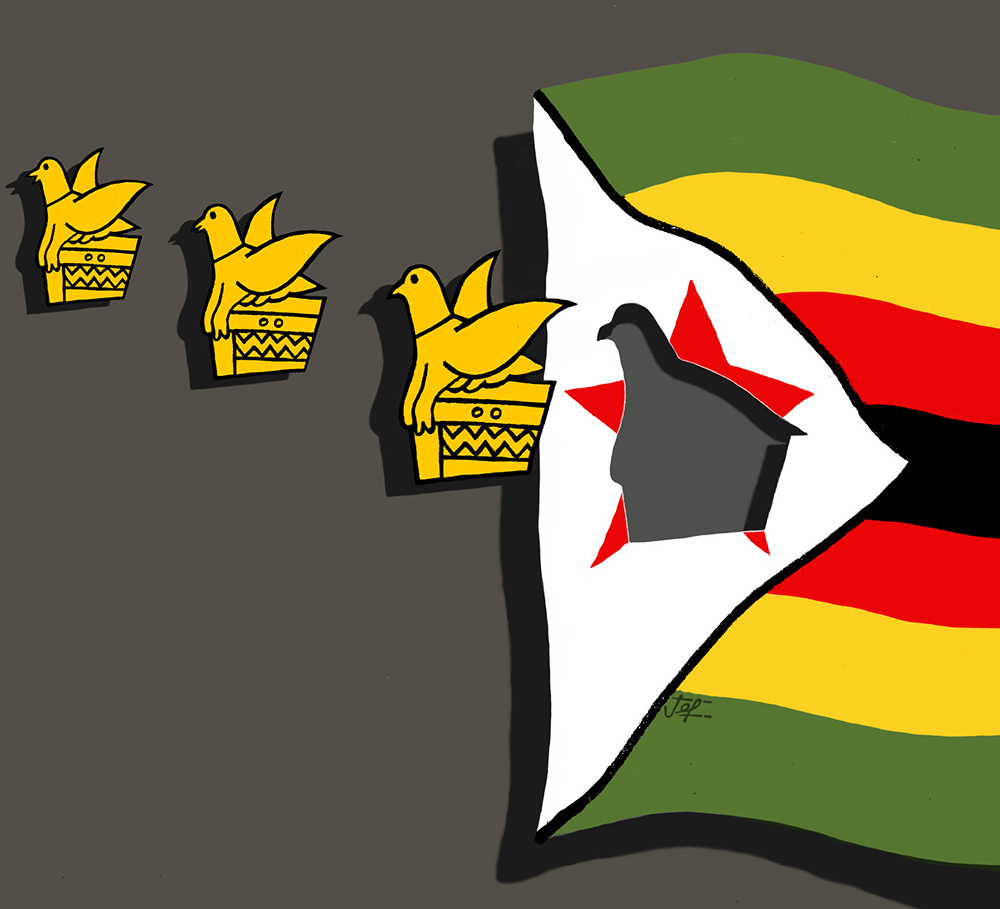
ZIMBABWE is heading for another round of “harmonised elections” (presidential, parliamentary and municipal) on August 23.
The trajectory with less than three months until polling day has some disturbingly familiar features: key elements of the process contested, further claims of a compromised election commission that is not trusted by most of the population, restricted access to an unaudited voters roll, a dodgy delimitation process, and so on.
Yet again, we see a distorted electoral playing field, media bias, operational restrictions and other factors, including violence and intimidation, that militate against the opposition.
The government claims it has addressed promised election reforms; the opposition and election-focused civil society organisations disagree. Unsurprisingly, there has been no effort to resolve this dissonance.
In its latest report on Zimbabwe, Fitch Solutions predicted a Zimbabwe African National Union-Patriotic Front (Zanu-PF) victory in the elections. This forecast is predicated on “overarching resources” and “the advantages of incumbency”. This is polite terminology for partisan manipulation of state resources, in other words cheating.
One aspect of this is the provision of expensive new vehicles for the country’s chiefs, most of whom depend on and align themselves with Zanu-PF. The party itself has reportedly handed out hundreds of vehicles to its aspiring parliamentary candidates.
There is no transparency on party funding in Zimbabwe, much of which comes from heavy-hitters in the business community who have beneficial access to lucrative contracts and opportunities overseen by state actors. It is but one aspect of the ongoing fusion of party/state interests that entrenches state capture.
The opposition Citizens Coalition for Change (CCC) is financially outgunned and will be unable to field party agents at every polling station. Defending the integrity of the vote will be riven with challenges. The scale of anomalies found in this week’s official check on the voters roll reinforces concerns about the elections’ integrity. The Zimbabwe Electoral Commission (ZEC) has steadfastly resisted calls for an independent audit, compounding negative perceptions it refuses even to acknowledge.
As a result, the credibility of the elections is once again a hot issue and there is a distinct odour of déjà-vu is in the room. In 2018, it was hoped that a clean election would provide a platform for catalysing the promised reform, re-engagement and recovery strategy that accompanied President Emmerson Mnangagwa’s victory after the November 2017 coup d’état that forced Robert Mugabe’s choreographed resignation.
The much-celebrated removal of Mugabe and the promise of a break with the past was accompanied by a large dose of wishful thinking as a convergence of domestic, regional and international players decided to give Mnangagwa and his military backers the benefit of the doubt. A minority voice, warning about the dangers of this illegal transfer of power and the influence of the security forces in the political arena, was effectively drowned out.
The 2018 election results were unsuccessfully challenged by the Movement for Democratic Change (now rebranded as the CCC); for many, a credible dispute resolution is not possible when the courts are captured; others claim the CCC failed to make its case.
This was followed by violent state repression and an opposition boycott of a government-initiated political dialogue. A stalemate has subsequently endured and the mainstream CCC has effectively gone underground, operating on the basis of what its leader, Nelson Chamisa, dubs “strategic ambiguity”.
After the lifting of a Covid-related prohibition on gatherings, the police have banned more than 60 CCC rallies, broken up small meetings and arrested organisers, and misused new security laws that the government claims were introduced to address the excesses of the notorious Public Order and Security Act.
The democratic space has visibly eroded on several fronts during the Mnangagwa administration. New laws to regulate civil society organisations and to punish “unpatriotic” narratives have been passed in parliament. They have yet to be enacted by the president.
The threat of repressive legislation against civil society has been part of the Zanu-PF playbook before, and while Mugabe didn’t enact similar legislation some believe Mnangagwa will have no such hesitation. Either way, the chilling effect on civil society is already obvious as their calculations shift towards survival.
The criminal justice system has long been weaponised against political opponents. The selective harassment and prosecution of opposition activists has a long history in Rhodesian and Zimbabwean dispensations. This includes the incarceration of CCC deputy president Job Sikhala, who was refused bail and has been awaiting trial on charges of incitement for almost a year, effectively disqualifying him from taking part in the elections.
In late April, Transform Africa leader Jacob Ngarivhume was convicted and imprisoned, also on incitement charges relating to organising protests against corruption during Covid lockdowns.
Zanu-PF figures remain protected from such consequences; before violent March 2022 by-elections, Vice-President Constantino Chiwenga warned the CCC that Zanu-PF would “crush them like lice”. He was not held accountable for subsequent election-related violence.
Despite this, many analysts do not think there will be a significant uptick in violence in the run-up to the election. If there is one thing Zanu-PF learnt from 2008, it is that too much of that will attract unwelcome attention.
Other means of manipulating the outcome will be employed, some of which are already in play. A series of recent discussions hosted by the Southern Africa Political Economy Series (Sapes) Trust, for example, illustrated an array of concerns and most have not received the attention of the ZEC or the government.
Nevertheless, the threat of violence, coercion and intimidation sustain a pall of fear that permeates the polity. Zimbabweans have much experience of violence perpetrated primarily by ruling party and state actors; a situation compounded by systemic impunity.
Fitch Solutions warned about a possible chaotic aftermath to the 2023 polls; claims of a stolen election are indeed likely to be met with some measure of protest, but it seems unlikely the CCC leadership will be prepared to take to the streets. For the most part, this approach has been avoided by Chamisa and his predecessor, Morgan Tsvangirai.
Earlier this year, the African Development Bank announced a resuscitation of efforts to address Zimbabwe’s burgeoning debt crisis, bringing in former Mozambican president Joaquim Chissano to mediate. The process has been welcomed by creditors, and in many ways it is the only game in town in terms of prospects for candid conversation about the challenges and contested issues in play. Harare has been promising to deal with debt arrears since October 2015.
Economic and social pressures are dire, and notwithstanding some progress around issues of macroeconomic stability, most Zimbabweans remain impoverished and have limited prospects of relief any time soon. Major concerns remain relating to corruption, rule of law deficits, off-budget expenditure and related secrecy.
For the first time, however, the African Development Bank process has improved prospects for candid negotiations, an evidence-based approach to reforms, addressing compensation commitments to farmers and related issues around sanctions. The process posits the elections as a key indicator of progress in governance reform.
There are no election observers in place with 12 weeks left until the polls. Nor has the pre-election assessment by SADC’s election advisory council been made public. It seems fairly obvious we are on course for a contested poll outcome.
Whether this will derail the African Development Bank negotiations remains to be seen, but Zimbabwe and its people can ill-afford another five years trapped in a political, social and economic cul-de-sac.
This article was originally published on Die Nuwe Vrye Weekblad.
♦ VWB ♦
