


Listen to the article
OP-ED
Early results of South Africa’s national election point to the ruling party, the ANC losing its majority after being in power for 30 years. The final result is expected this weekend and it will be followed by two weeks of intense negotiations before a final picture will emerge. – Linda van Tilburg who has been reporting on South African politics for 30 years.
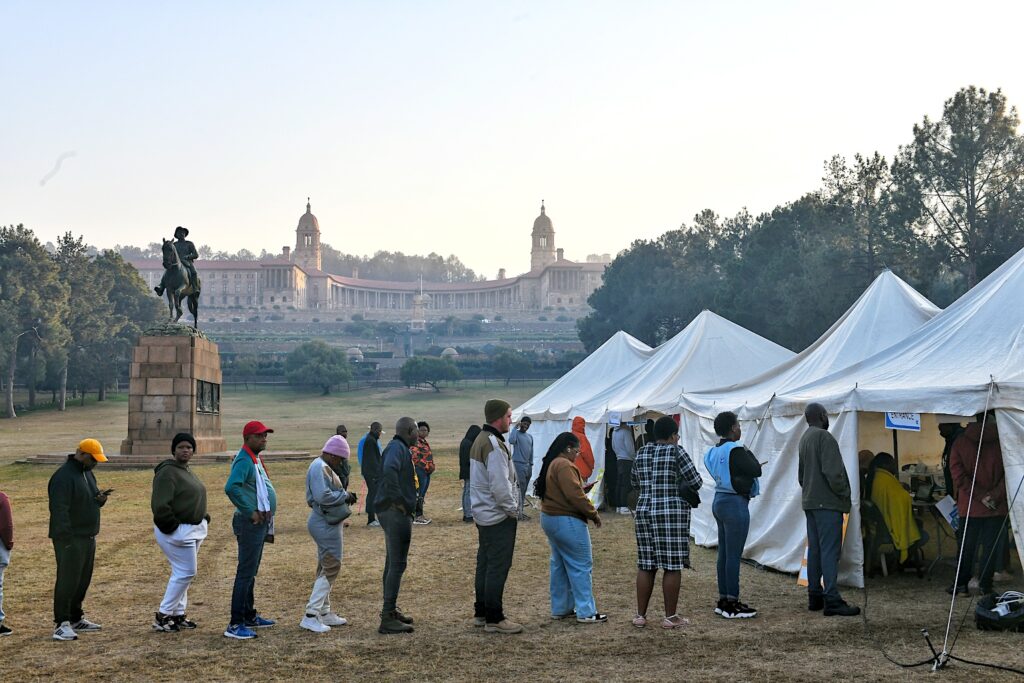
The sight of millions of South Africans queuing patiently to cast their votes on 29 May in the country’s provincial and national elections evoked memories of the 1994 election, marking the end of apartheid. This election occurred three decades after Nelson Mandela and the African National Congress (ANC) first assumed power, a period during which the ANC’s rule remained unchallenged.
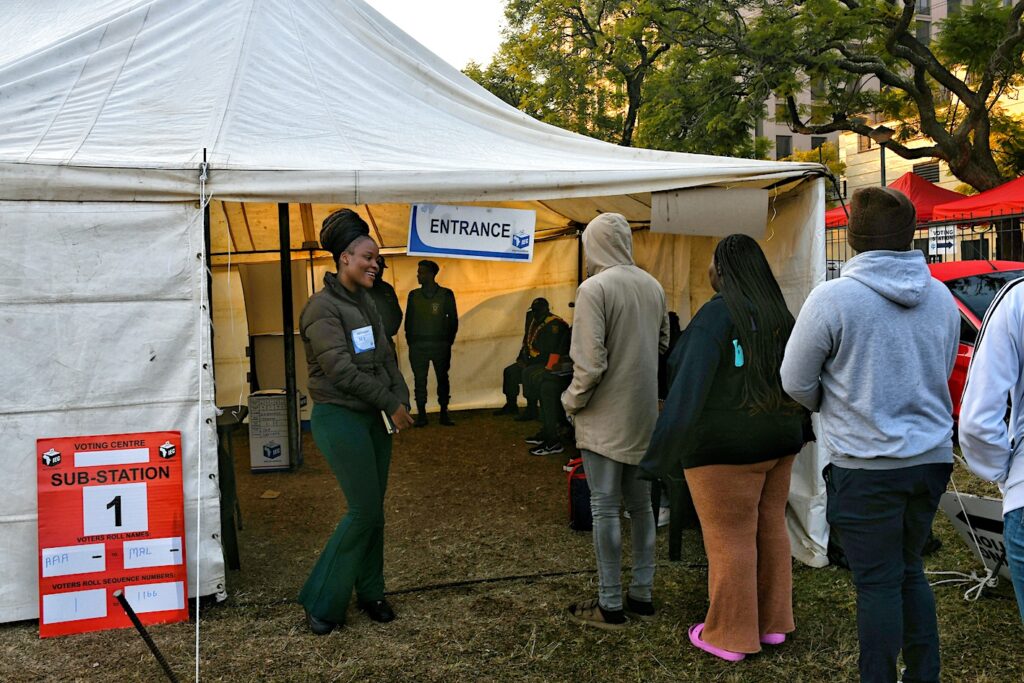
A total of 27 million voters registered for the elections. Despite lengthy lines and logistical challenges faced by the Independent Electoral Commission (IEC), the elections proceeded peacefully. Only isolated incidents of violence were reported, none of which occurred near polling stations.
The IEC was grappling with cuts in its budget and had to deal with three ballots because of the introduction of independent candidates. Chris Vandome, an African Analyst at Chatham House, observed, “The system is extremely robust and transparent.” Moreover, the dispute resolution mechanisms enjoy widespread trust. He also remarked on the presence of robust and credible domestic observation missions during the elections in South Africa.
The early assessment of observers is that the political system can be trusted.
High turnout, voters keen for change
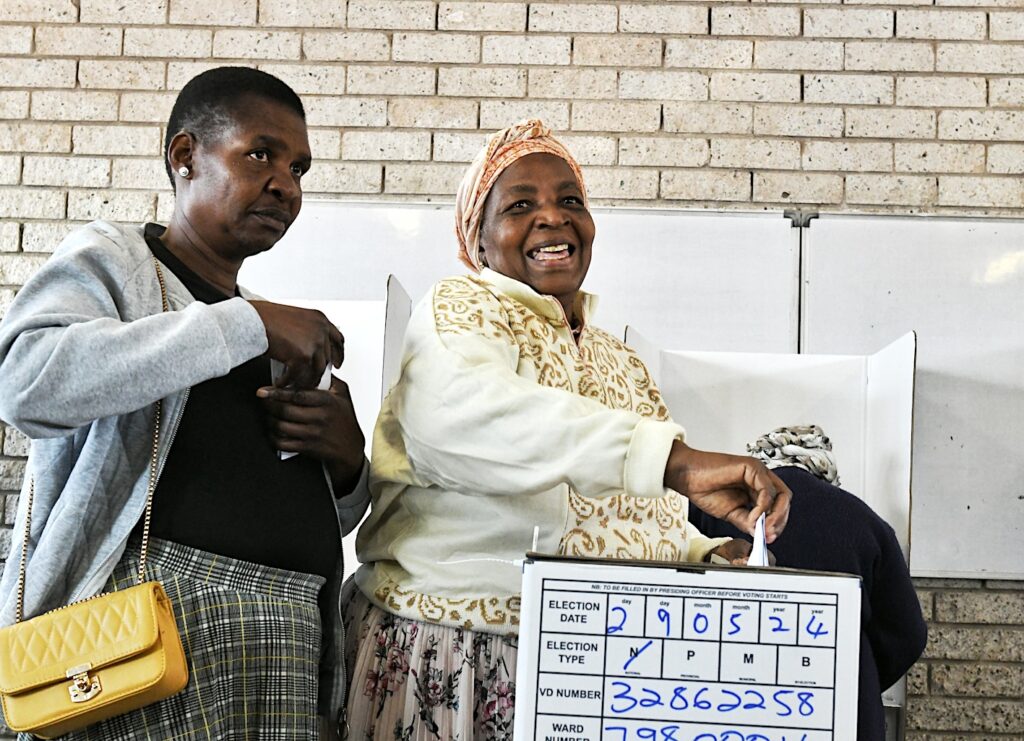
The high turnout of voters, expected to be more than 60%, signals a strong desire for change in the country
Initially, the country had a good run of about 10 to 15 years, where progress was made in improving the lives of citizens. However, the era under President Jacob Zuma is seen as a ‘lost decade’ due to widespread corruption and economic struggles.
The promise of a ‘better life for all’ became a reality only for the elite, who benefited while the country faced rampant corruption, unemployment, and a faltering economy. State-owned enterprises, meant to be growth engines like Eskom and Denel, turned into emblems of mismanagement and corruption, leading to severe blackouts, failing infrastructure, and soaring crime rates.
When President Cyril Ramaphosa took office five years ago, he vowed to curb corruption and turn the economy around. Yet, he seemed more focused on keeping the ANC and its coalition intact rather than enacting substantial changes for South Africans. There was also an incident where thousands of dollars were discovered hidden in a sofa on his game farm.
Threat for ANC came from former leaders who broke away
Early election results indicate that the ANC will not be able to maintain its majority, ushering South Africa into a new era of coalition politics.
The threat to the ANC comes from political parties formed by leaders who broke away from the party. They include the Economic Freedom Fighters, led by Julius Malema, a former leader of the ANC Youth League, and, more recently, the umKhonto weSizwe (MKP), named after the ANC’s former military wing and established by former President Zuma.
Zuma’s MK Party comes from nowhere
Early results put the MKP and EFF at the same level of support, each garnering around 8% of the vote. The MK Party is performing particularly well in KwaZulu-Natal, where no outright winner for the province has emerged. Pockets of MKP support have also appeared in other Zulu-speaking areas of the country.
Uncertainty: Make-up of ANC coalition when ANC look for a partner
Three scenarios:
- If the ANC garners support close to 50%, it is likely to conclude a deal with a smaller party like the Inkatha Freedom Party (IFP), the United Democratic Movement (UDM), or the Patriotic Alliance (PA)
- Should the ruling party fall closer to 40% and be forced into a coalition with a larger party, it could either form a coalition with the current main opposition party, the Democratic Alliance (DA), or the Economic Freedom Fighters (EFF). An alliance with the EFF is what international investors fear, as the EFF supports the nationalization of mines and other industries and aligns with Russia and China on the international front.
- An alliance with the DA would likely keep the ANC on a centrist, pro-market path. There could be demands for key Cabinet positions or the role of deputy president. However, the risk for the DA is that they could be punished for keeping the ANC in power.
International implications: Voice of transition within international institutions
South Africa has been flexing its muscles on the international stage, taking a strong position against Israel regarding Gaza. It is also involved in other conflicts in Africa, including those in the DRC and Mozambique. Additionally, the country will chair and host the 2025 G20 summit. According to the Foreign Policy Council, South Africa has been a vocal proponent of the urgency to reform global governance systems.
Who it chooses as a coalition partner is likely to have a profound influence on its foreign policy direction and how it tries to steer the debate in the G20 and it has according to Dr. Frans Cronje from the Social Research Foundation implications for South Africa’s geopolitical alignment.
There is uncertainty about South Africa’s future foreign policy direction, which will only be determined after the election results, expected over the weekend.
For the next two weeks until the new President is elected in Parliament, a period of heightened tension and intense horse-trading is expected behind the scenes as coalition partners are sought.
What is certain is that democracy in South Africa stands firm, and early assessments from observers indicate that voters and political parties feel the political system can be trusted.
