

Listen to the article
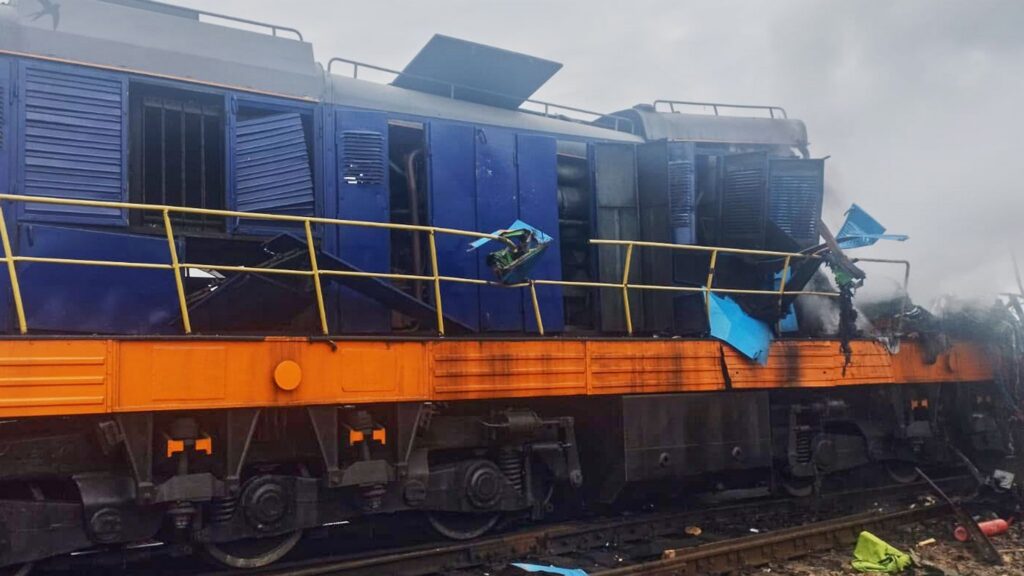
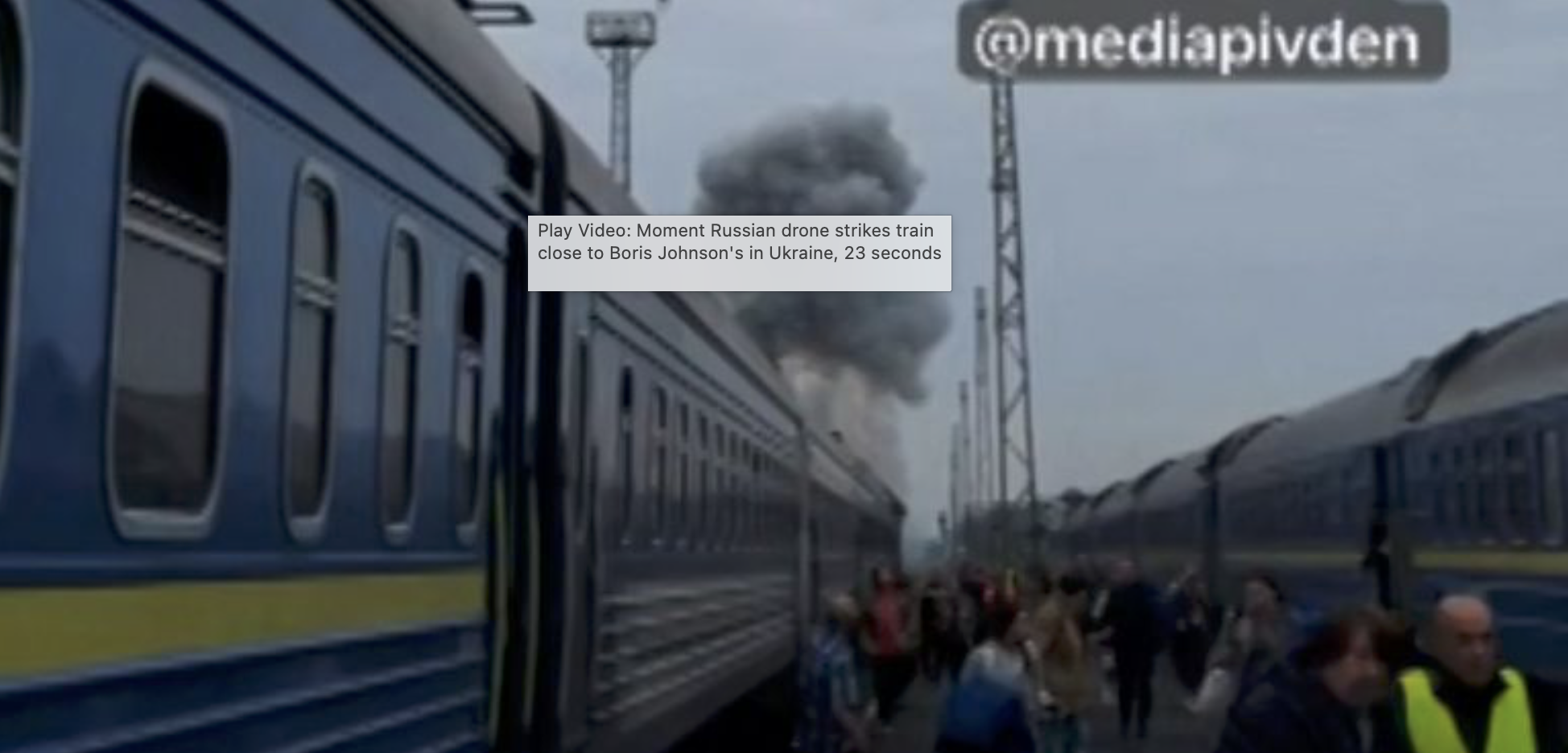
Russia has attacked a passenger train travelling from Kyiv to Warsaw in a drone strike just two miles from the Polish border.
The drone strike has prompted warnings that Moscow is deliberately escalating the war towards Nato territory.
The train was struck near the Yahodyn-Dorohusk border crossing on Sunday after passengers had been evacuated. A nearby petrol station was also hit and caught fire.
The Institute for the Study of War (ISW) said European politicians and security officials had been travelling through the border area after attending the Yalta European Strategy conference in Ukraine.
Passengers included Boris Johnson, the former prime minister, former US CIA director General David Petraeus, Günter Sautter, Germany’s national security adviser, and Robin Wagener, a German MP. The train was reportedly hit shortly after officials had passed through the crossing.
Donald Tusk, the Polish prime minister, said the attack demonstrated that Russian escalation was becoming a reality, while the Polish military described the threat posed by Moscow as “real and imminent”.
The Russian defence ministry acknowledged attacking railway infrastructure in western Ukraine, claiming it was being used to transport European military supplies.
But the ISW, a Washington-based think tank which monitors the war, pointed out that the passenger train was travelling out of Ukraine and therefore could not have been carrying Western weapons into the country.
The attack is likely to increase pressure on Nato to strengthen air defences along its eastern frontier amid growing concern that Russian drones and missiles could eventually cross into alliance territory.
Andriy Sybiha, Ukraine’s foreign minister, described the strike as Russian terror “knocking” on Nato’s doors.
Johnson called for Ukraine to be supplied with additional air defence systems, while Margus Tsahkna, Estonia’s foreign minister, said Russia was increasingly attacking targets close to Nato territory.
Russian forces have also struck four Ukrainian-Moldovan border crossings since August, according to the ISW. The think tank said Russia had increasingly used sabotage, attacks on infrastructure, maritime disruption and drone incursions as part of a campaign designed to test Western resolve.
The escalation comes as American officials claim progress is being made towards a possible peace settlement.
Jared Kushner, President Trump’s former senior adviser, said at the weekend that the United States, Russia and Ukraine had reached agreement on almost every issue except territory.
However, Yuri Ushakov, an aide to President Putin, disputed that account, saying numerous issues remained unresolved.
The Kremlin continues to demand Ukrainian withdrawal from territory in Donetsk, Luhansk, Zaporizhzhia and Kherson that Russia claims to have annexed, including areas its forces have never captured.
Moscow also continues to demand Ukrainian neutrality and restrictions on the country’s military, conditions Kyiv has repeatedly rejected.
The ISW said developments on the battlefield undermined Moscow’s claims that Russian victory was inevitable.
Ukraine has effectively halted Russia’s overall advance since March and has recaptured more than 745 square kilometres of territory in Donetsk, Dnipropetrovsk and Zaporizhzhia during counterattacks earlier this year.
Russian troops have also repeatedly failed to break through Ukraine’s heavily fortified defensive belt around Slovyansk, Kramatorsk, Druzhkivka and Kostyantynivka.
Although Russian forces have made tactical gains inside Kostyantynivka, they have been unable to capture the city despite first infiltrating it almost a year ago.
At the present rate of advance, the ISW estimates Russia would not capture the whole of Donetsk until 2032, assuming it could maintain its progress.
Fighting nevertheless remains intense. Russian commanders appear to be concentrating their attacks around Kostyantynivka and Dobropillya in an attempt to break into Ukraine’s so-called fortress belt from the south and southwest.
Since the beginning of August, Russian forces have launched an average of 24 attacks a day towards Kostyantynivka and 32 towards Dobropillya. Attacks towards Slovyansk have fallen from an average of 14 a day in August to four this month.
Russian troops have also infiltrated around Orikhiv in Zaporizhzhia, but Ukrainian counterattacks have prevented Moscow from exploiting those gains.
Ukraine, meanwhile, has continued striking targets deep behind Russian lines.
Recent attacks damaged the Saratov oil refinery, destroyed part of a chemical plant near Volgograd and damaged hangars and Shahed drone launchers at an airfield in Oryol region, according to satellite imagery and Ukrainian military reports.
Russia has responded by surrounding some oil installations with shipping containers, metal frames and anti-drone netting in an attempt to protect them from Ukrainian attacks.
The ISW said the combination of Ukrainian counterattacks and long-range strikes was challenging Moscow’s ability to dictate the course of the war.
It added that declining Russian recruitment and preparations for possible compulsory reserve call-ups after this month’s parliamentary elections suggested that the Kremlin was struggling to sustain its war effort.
The strike on the Warsaw-bound train, however, underlined the danger that Russia may compensate for its difficulties on the battlefield by widening its campaign against Ukraine’s links with Europe.
Western officials have relied heavily on the Polish rail route into Kyiv since Ukrainian airspace was closed at the beginning of Russia’s full-scale invasion in February 2022.
