

Listen to the article
The first new component under US Special Operations Command in twenty years formalises a relationship that has been operating in the shadows, and sends a signal to allies and adversaries alike.
By André Pienaar
When the Marine Corps stood up its special operations component in 2006, it did so after years of internal discussions about whether a service built around amphibious assault had any business inside the closed world of US Special Operations Command.
Two decades on, the newest and smallest of the American services has made the same leap. On October 07, the US Space Force quietly activated Space Forces Special Operations (SPACEFOR-SOC) as a component command under USSOCOM. A formal ceremony will follow on November 02 at MacDill Air Force Base in Tampa, where the new headquarters will be led by Colonel Peter Norsky, previously commander of Space Delta 1 at Vandenberg.
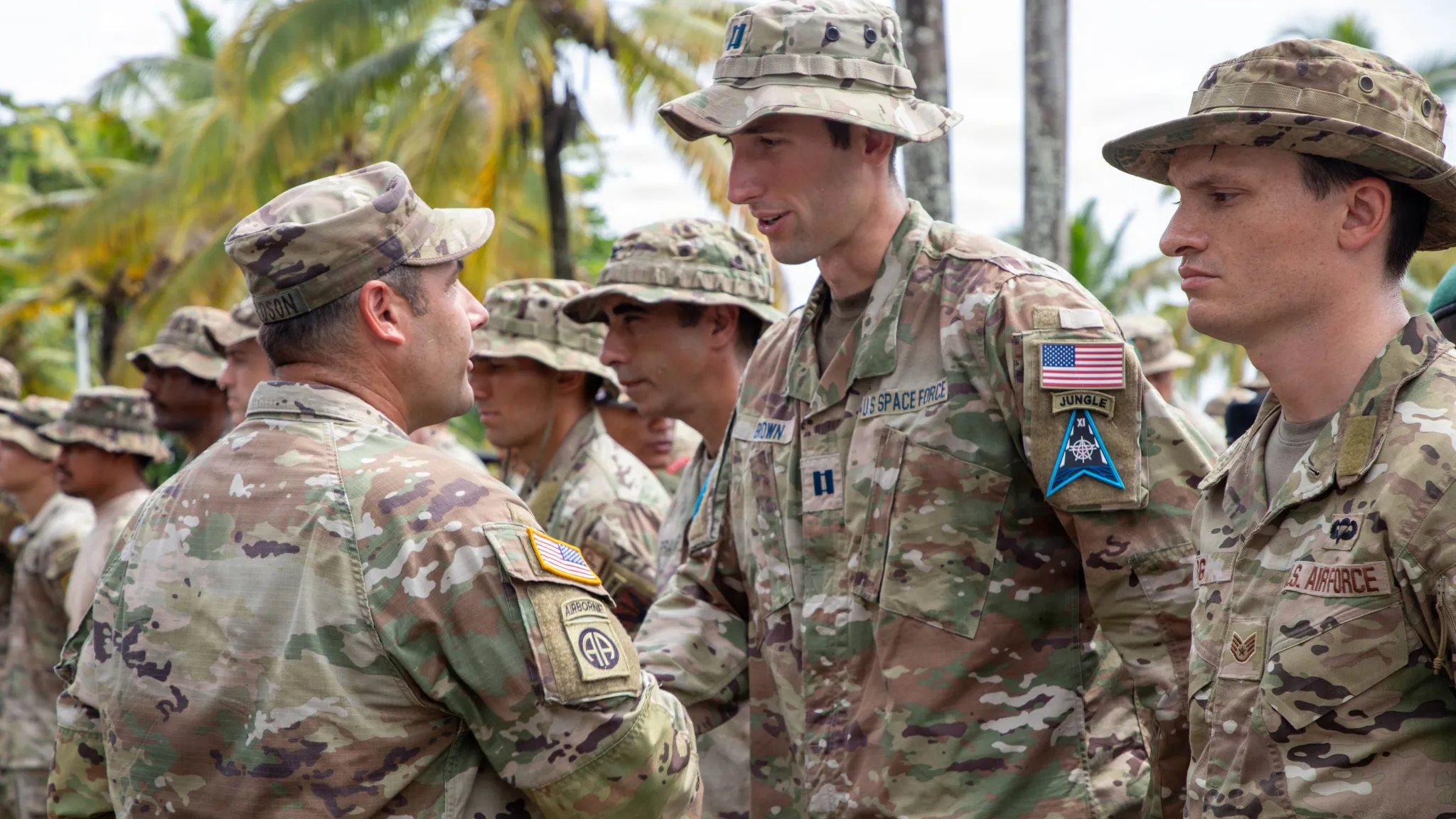
SPACEFOR-SOC is the first new service component created under SOCOM since MARSOC. It formalises a relationship that has been operating in the shadows for years. The Space Force has had a special operations element at MacDill supporting SOCOM since before the service was fully established. Guardians, as members of the Space Force are known, have deployed alongside Air Force Special Operations Command in exercises such as Emerald Warrior.
What changes now is that the arrangement has a commander, a budget line and a seat at the table beside Army Special Operations Command, Naval Special Warfare Command, AFSOC and MARSOC. In Washington, the difference between an element and a component is being counted.
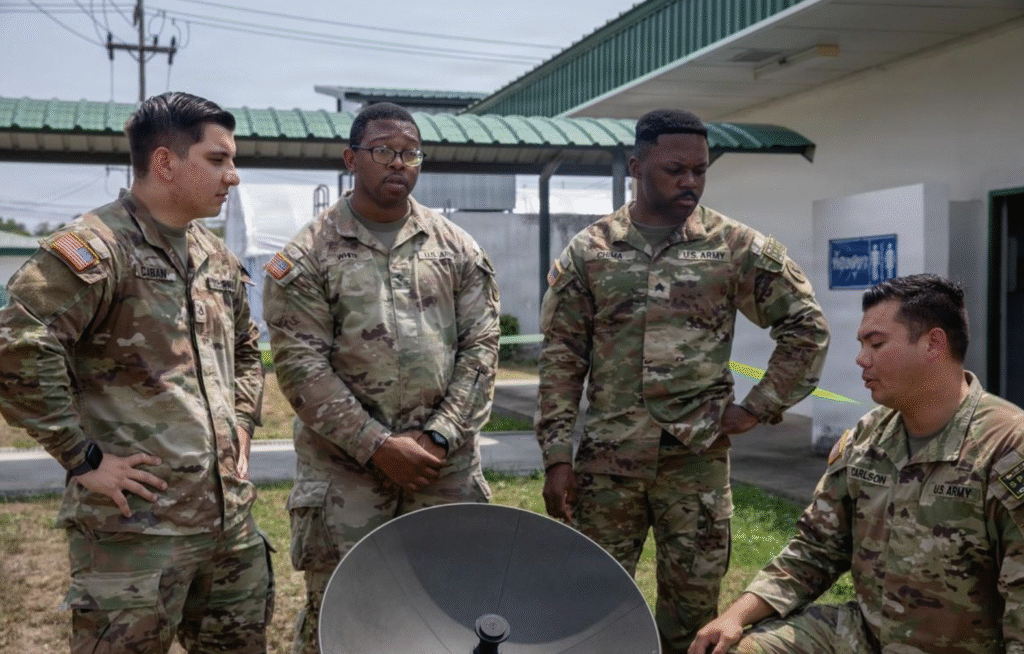
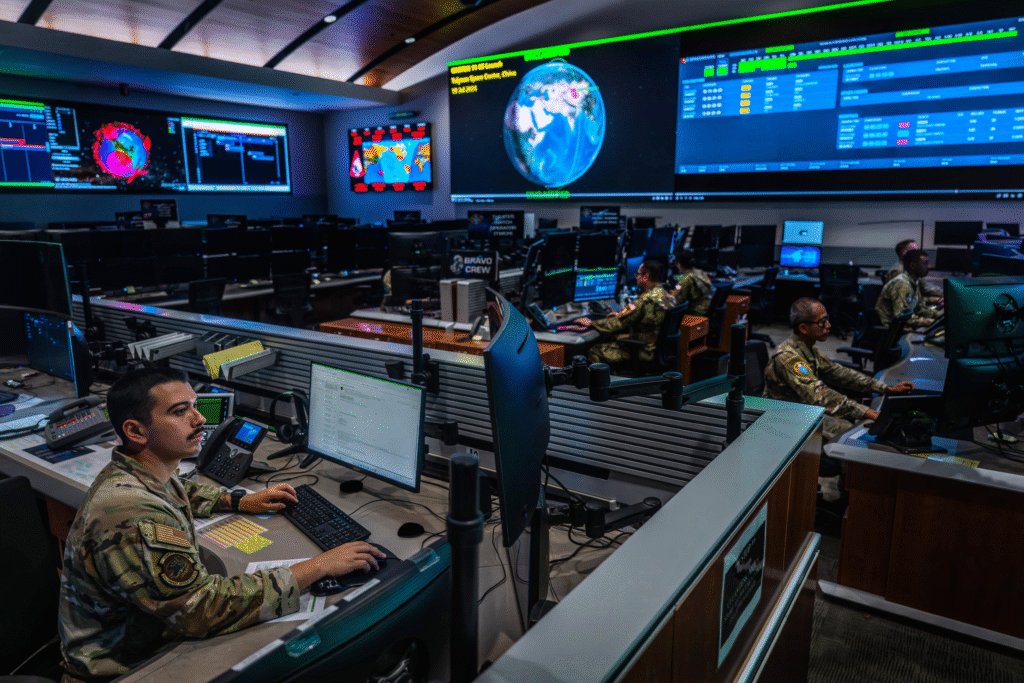
The mission is not what the phrase “space commandos” conjures up. Guardians will not be fast-roping onto compounds. Their role is to deliver the space-enabled effects that modern special operations cannot function without: assured positioning, navigation and timing in jammed and spoofed environments; satellite communications that survive in denied theatres; the tasking of overhead intelligence, surveillance and reconnaissance at the tempo that a raid, rather than a campaign, demands; and, increasingly, offensive and defensive space and electromagnetic effects integrated at the point of action.
The Axis of Aggressors has understood this for some time. Russian forces in Ukraine have made GPS denial a daily feature of the battlefield. The PLA’s doctrine treats the degradation of American space support as the opening move in any Pacific confrontation. An operator who cannot see, talk or navigate is simply a soldier in the dark. SPACEFOR-SOC exists to fight to keep the lights on.
There is a second, quieter logic at work. SOCOM is the combatant command that has been given, and has earned, the greatest freedom to campaign below the threshold of open conflict. It is where the US military conducts its irregular, clandestine and hybrid operations, from counter-terrorism to the support of partner forces.
Space, as a warfighting domain, is now central to all of it. Commercial satellite imagery, proliferated low Earth orbit constellations and resilient communications are now the strategic high ground of warfare. A SOCOM component gives the Space Force a route into that grey zone. It gives SOCOM a direct claim on space capabilities without having to queue behind the geographic combatant commands.
That the activation happened at all tells us something about how the Pentagon is being run. As recently as December, Congress was asking pointed questions about why the Space Force needed a special operations component and sought a report before any money was spent on creating it.
The service answered by starting small. The command is led by a colonel rather than a general officer. It is co-located with SOCOM headquarters rather than building its own campus. The activation was authorised by memo on September 29, with the ceremony to follow.
It is the manoeuvre of a young institution that understands its position: establish the fact, make it cheap to accept and let the structure grow once it has demonstrated its value.
The Space Force has now built components across Space Command, Indo-Pacific Command, Central Command, Northern Command and Southern Command, a combined component for Europe and Africa, and sub-unified components in Japan and Korea. SPACEFOR-SOC completes the set in the one command where the service’s contribution is least visible but arguably the most consequential.
For allies, the implications are immediate. The United Kingdom’s Special Forces and UK Space Command already work closely with their American counterparts, but the institutional interface on the US side has until now been informal.
A standing component at MacDill creates a counterpart for liaison, combined training and the exchange of personnel. It also sets a standard. If the United States has concluded that special operations require dedicated space forces, then the question for US allies is not whether to follow but how quickly.
There is, finally, an industrial dimension. SOCOM has long been the most agile customer in the American defence establishment, willing to buy from non-traditional suppliers and to field capabilities in months rather than years.
A SOCOM space component will want tactically responsive launch, resilient small-satellite communications, rapidly tasked commercial imagery and space domain awareness delivered to an operator’s handheld device rather than to a windowless building in Colorado.
That is a different market from the large programmes of record run through Space Systems Command. It favours the commercial space companies that have been building for speed and resilience. The investors who grasp that distinction will do well.
The Space Force is seven years old. It has spent much of that time defending its existence against sceptics. The activation of SPACEFOR-SOC is a sign that the argument is over.
Space is a special operations domain now. The Guardians have joined the quiet professionals. The ceremony on November 02 will be brief and the headquarters small. The consequences will be neither.
