


Listen to the article
The British Army is being forced to overhaul how it treats wounded soldiers after the war in Ukraine revealed how drones can prevent casualties from being evacuated for hours or even days.
Russian surveillance and attack drones have made it increasingly dangerous for medical teams and ambulances to reach injured troops, leaving some soldiers stranded on the battlefield without access to life-saving treatment.
The threat has undermined the military’s long-established “golden hour” principle of getting seriously wounded troops to advanced medical care within 60 minutes.
British Army medics are now preparing for future conflicts in which they may have to keep critically injured soldiers alive for days before they can be evacuated.
A study published in BMJ Military Health by British military medical personnel examined how the widespread use of drones in Ukraine has changed both the injuries suffered by soldiers and the ability of medical teams to rescue them.
The researchers, including personnel from the British Army and UK Strategic Command, identified a growing number of head, neck and hearing-related injuries caused by drone attacks.
They also reported that Russia’s use of drones had severely restricted casualty evacuation and increased the danger faced by military medical personnel.
During the wars in Iraq and Afghanistan, British and American forces relied on relatively rapid casualty evacuation, often using helicopters to transport injured troops to field hospitals.
In Ukraine, surveillance and attack drones are being used to monitor roads, track military vehicles and strike positions behind the front line.
A NATO report found that Russian forces had targeted Ukrainian casualty collection points and medical evacuation routes using first-person-view attack drones, loitering munitions and artillery directed by surveillance drones.
The report stated that evacuation within the first hour had become the exception rather than the rule, with some wounded soldiers waiting more than 24 hours to reach advanced medical care.
It described how the traditional golden hour had effectively become the “golden day”.
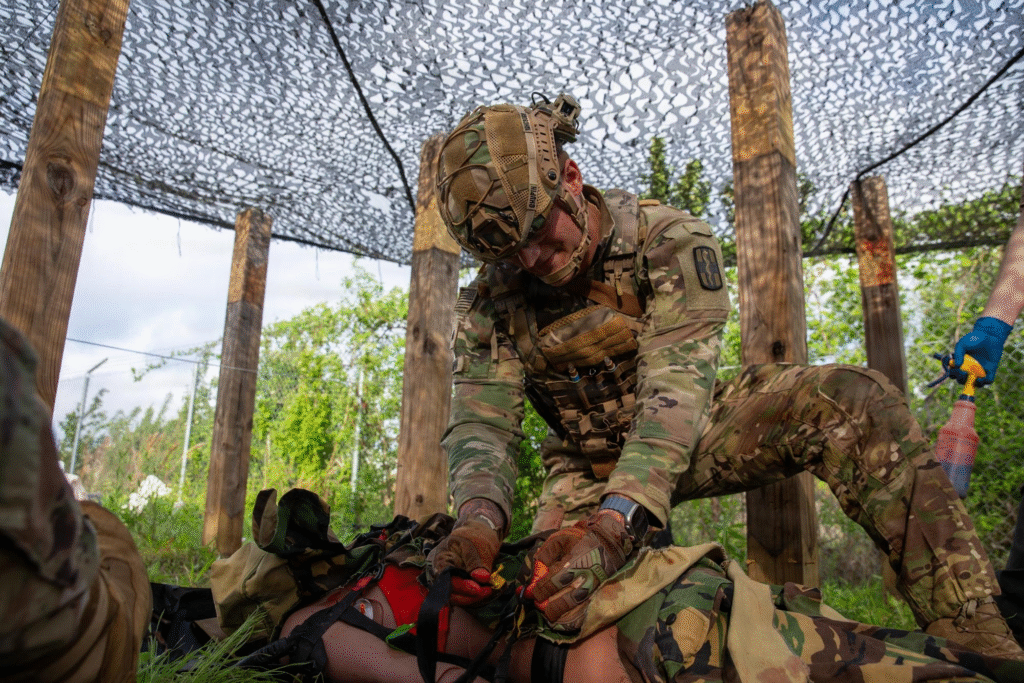
Soldiers suffering severe bleeding, blast injuries or traumatic amputations can require immediate medical intervention.
Tourniquets, used to prevent catastrophic blood loss, can also cause complications when they remain in place for prolonged periods.
Ukrainian medical teams have reported abandoning conventional evacuation routes because Russian drones can detect and attack vehicles travelling towards the front line.
In some areas, wounded soldiers have had to be carried several kilometres through forests on stretchers because ambulances cannot safely approach their positions.
A Ukrainian military doctor serving near Kupiansk described how the increasing drone threat had affected evacuations.
He said: “Before, artillery got in our way, but now drones give us no peace.”
The British Army has begun adapting its medical training to reflect lessons emerging from Ukraine.
During Exercise Brave Cyclone, personnel from 16 Medical Regiment practised treating casualties while attempting to conceal their vehicles, equipment and positions from enemy surveillance.
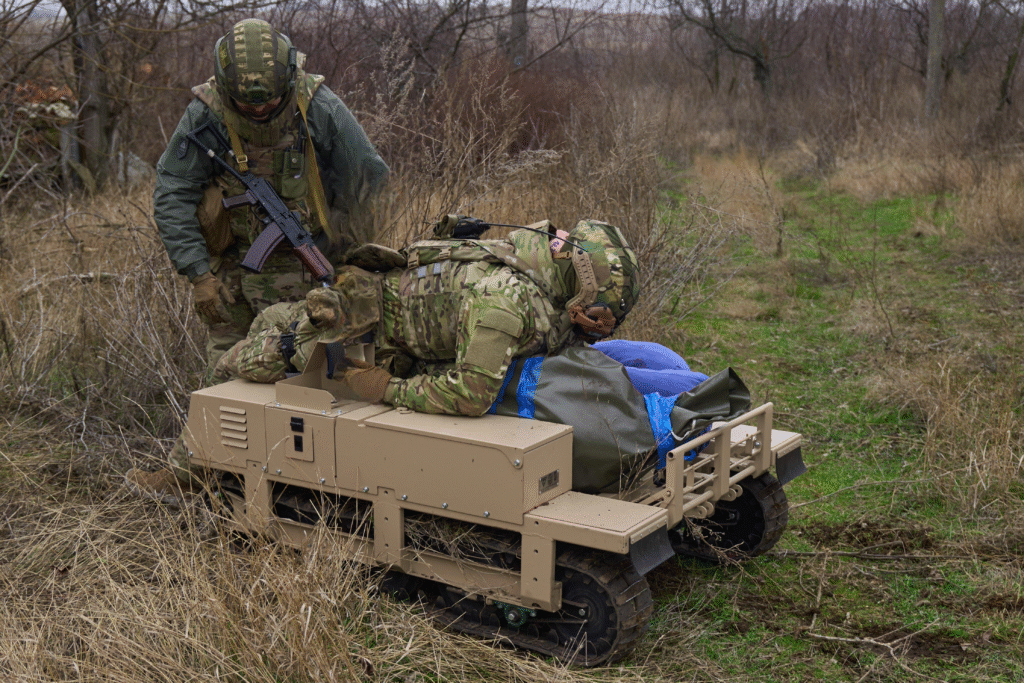
The exercise also involved experimenting with unmanned ground vehicles to transport casualties from the battlefield.
Warrant Officer Class 2 Levi Scarlett, of 23 Squadron, 16 Medical Regiment, said: “It’s about changing mindset and building mental resilience – it’s no longer good enough to treat a casualty and then wait for an evacuation.”
The Army is also examining ways to reduce the visibility of medical facilities and vehicles through improved camouflage, reduced electronic and thermal signatures, and the dispersal of medical personnel across wider areas.
Research published in August 2026 examined how persistent drone surveillance and precision strikes have affected medical evacuation.
The researchers identified evacuation delays lasting eight to 12 hours and reported that the movement of wounded personnel increasingly depended on factors including air superiority, concealment and the availability of protected routes.
Ukrainian forces have also developed medical resupply packages that can be delivered by drone to troops unable to leave their positions.
According to British military medical researchers, the packages contain sufficient equipment to support prolonged casualty care for up to seven days.
Unmanned ground vehicles are also being used and tested to recover wounded soldiers from areas where conventional ambulances cannot operate safely.
Ukrainian forces have also reported using aerial drones to evacuate casualties.
In one operation announced this month, Ukrainian troops said they had evacuated a wounded soldier from a frontline position using a heavy-lift aerial drone.
Video released by the Ukrainian military showed a soldier being lifted from the ground by an unmanned aircraft equipped with a winch.
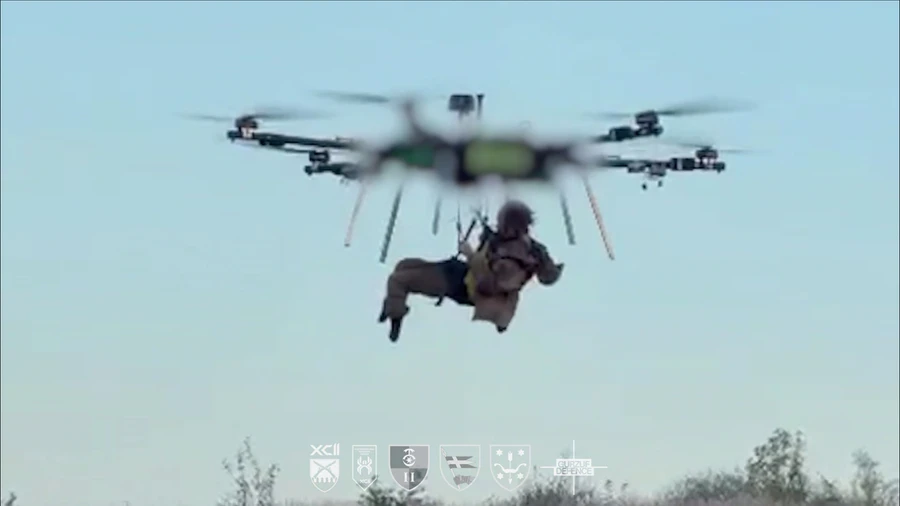
The Ukrainian unit involved described the operation as the first of its kind, although the claim has not been independently verified.
