

Listen to the article
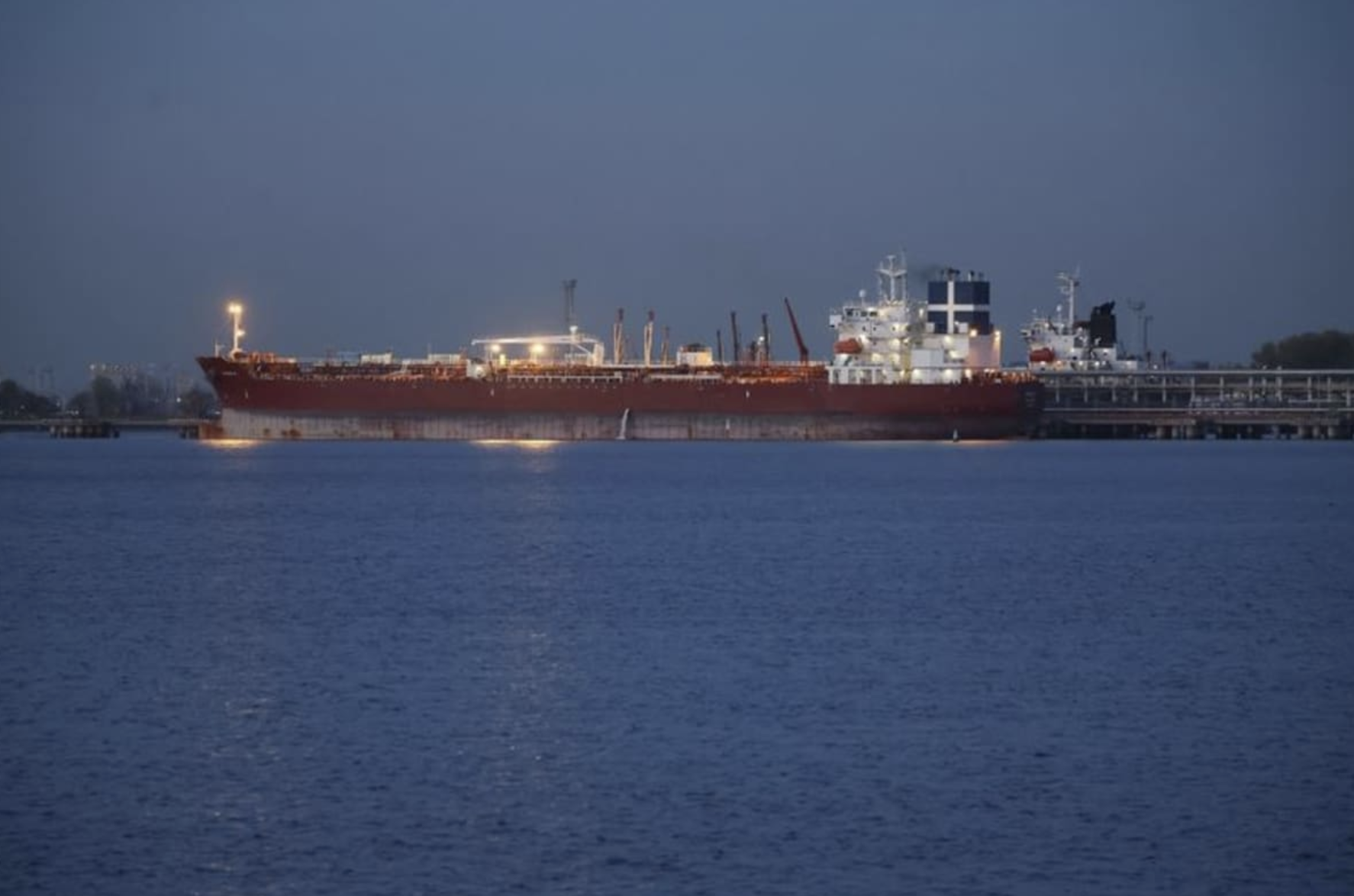
Britain has been accused of failing to enforce sanctions against Russia after a blacklisted oil tanker sailed past Shetland without being intercepted.
The Leruo, carrying 300,000 barrels of Russian diesel, travelled through the northern North Sea last week, despite new powers allowing British forces to intercept sanctioned ships in UK waters.
According to The Times, the tanker departed the Russian Baltic port of Primorsk on October 17, initially identifying Manaus in Brazil as its destination.
Shipping intelligence provider Kpler subsequently recorded its destination as “Atlantic Coast for order”, suggesting the cargo could be bound for a North American customer.
The voyage follows a decision by President Donald Trump’s administration to relax restrictions on Russian diesel imports as Washington seeks to ease pressure on domestic fuel prices ahead of November’s midterm elections.
The US Treasury issued General License 135 on October 09, temporarily authorising transactions involving Russian diesel until April 07, 2027.
Russian Deputy Prime Minister Alexander Novak has confirmed that three tankers carrying Russian fuel are heading towards America’s eastern seaboard.
The development has prompted criticism from Ukrainian campaigners, who argue that allowing sanctioned vessels to continue transporting Russian fuel undermines efforts to restrict Moscow’s war financing.
Svitlana Romanko, executive director of the Ukrainian campaign group Razom We Stand, said: “Every barrel on board these ships exporting Russian fossil fuels is money for the missiles and drones Russia fires at Ukrainian homes every night, bringing more civilian casualties.”
She added: “Britain sanctioned this tanker a year ago, yet it sails past Shetland unchallenged and Washington’s new diesel licence now gives it a buyer.
“Sanctions only work when they are enforced at sea, so the UK must stop and inspect sanctioned vessels in its waters, and the US must withdraw General License 135 and enforce the sanctions law Congress passed.”
Romanko warned: “Until this is done, those who do not actively curtail Russia’s energy export business must realise that they have Ukrainian blood on their hands.”
The Leruo was added to Britain’s sanctions list in October 2025 on the grounds that it “is, has been or is likely to be involved in activity whose object or effect is to destabilise Ukraine”, because it is “carrying oil or oil products that originated in Russia from Russia to a third country”.
Ukrainian military intelligence has identified the vessel as part of Russia’s shadow fleet, reporting that it has previously disabled its automatic identification system and conducted ship-to-ship transfers near European waters.
Russia’s shadow fleet consists largely of ageing tankers operating through opaque ownership structures, often under foreign flags and with uncertain insurance arrangements.
The network allows Moscow to continue exporting oil despite Western sanctions, raising concerns about maritime safety and the security of critical infrastructure.
In March, Downing Street authorised British military and law enforcement personnel to intercept sanctioned vessels in UK waters following months of legal discussions between the Ministry of Defence, Foreign Office and Home Office.
Several sanctioned Russian tankers subsequently changed course to avoid the English Channel.
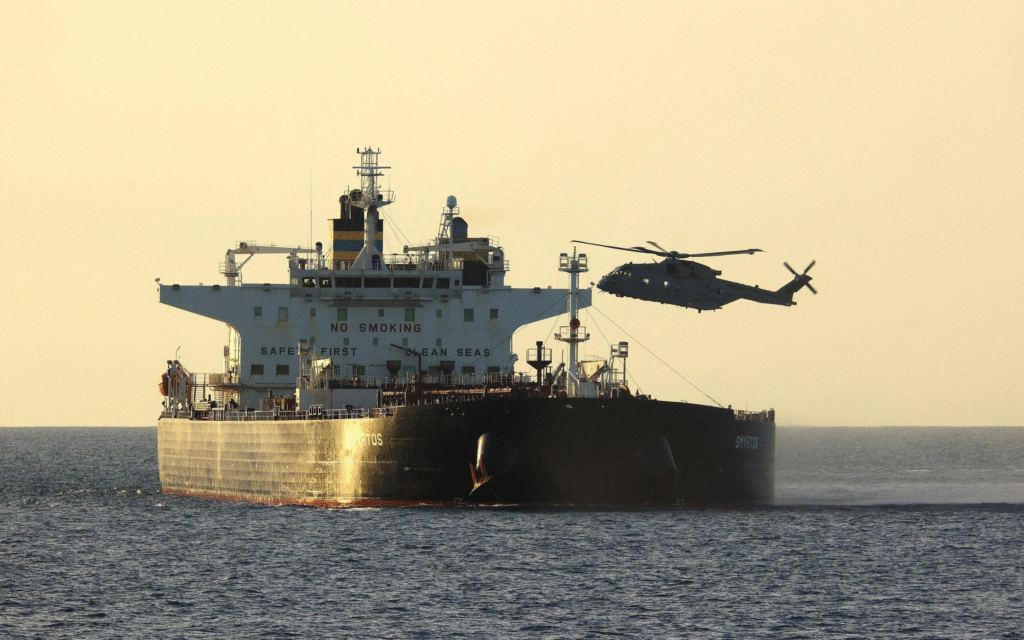
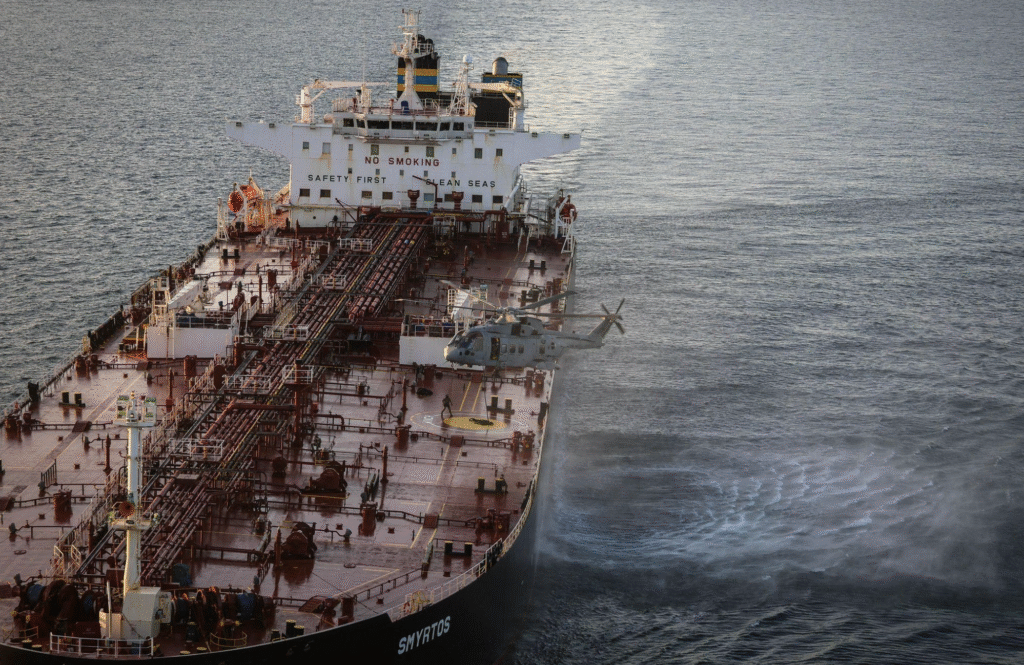
In June, British forces intercepted the sanctioned tanker Smyrtos after it travelled through British waters without a recognised national flag.
However, the Leruo’s passage near Shetland has raised questions about the effectiveness of Britain’s enforcement measures against vessels using alternative routes.
The tanker’s precise position relative to UK territorial waters has not been independently established, leaving it unclear whether British authorities had legal grounds to intervene.
In a parliamentary answer on October 15, Foreign Office minister Stephen Doughty said Britain had sanctioned 640 shadow fleet vessels and that restrictions had denied Russia access to at least $495 billion since February 2022.
Meanwhile, Russian refiners have reportedly increased diesel production following the agreement with Washington, with further shipments expected as Moscow seeks to take advantage of renewed access to international markets.
A British government spokeswoman defended the UK’s enforcement record, saying: “The UK is disrupting and deterring shadow fleet vessels and their harmful maritime activity, and since October 2024 we have challenged over 700 suspected shadow fleet vessels.
“We will not comment on specific operational planning or give a running commentary as this could compromise our ability to successfully take action against these ships, only benefitting our adversaries.
“Any target ship will be individually considered by law enforcement, military and energy market specialists before an operation is executed.”
