


Listen to the article
Britain’s nuclear deterrent, underwater communications cables and vital energy pipelines are at risk from Russian submarines because of serious gaps in the Royal Navy’s capabilities, MPs have warned.
A damning report by the Commons Defence Committee has raised doubts about whether Britain’s depleted fleet of warships and nuclear-powered submarines could defend the UK against a Russian attack in the North Atlantic and Arctic.
MPs warn that the Ministry of Defence has allowed critical anti-submarine warfare capabilities to decline at a time when Russia is expanding its military presence in the High North.
Britain may be unable to protect vital transatlantic supply routes, critical national infrastructure and its nuclear deterrent in the event of a conflict with Moscow, the committee warned.
The report also raises concerns about Britain’s ability to defend itself if the United States reduces its military commitment to NATO.
MPs say the UK must urgently address significant weaknesses in its maritime forces if the Government believes its own assessment that Russia could be capable of attacking NATO by 2030.
Tan Dhesi, the Labour MP who chairs the Defence Committee, said: “The High North poses a major strategic challenge for the UK’s security. This is a demanding, hostile environment, and one that our greatest adversary, Russia, is seeking to dominate for military advantage.
“The UK needs to be willing to address a hard truth: it does not currently have all the capabilities to operate successfully in the High North.
“Russian submarine and sabotage forces in the High North pose direct risks to the North Atlantic and the UK, including the nuclear deterrent.
“Despite this, the Ministry of Defence has accepted a serious anti-submarine warfare gap. Publicly available evidence of low availability among destroyers, frigates and attack submarines calls into question whether the UK can meet its commitments in the High North.”
The committee found that Britain has just five frigates equipped with towed-array sonar systems, which are used to detect and track hostile submarines, despite a requirement for eight.
The shortfall follows the retirement of ageing Type 23 frigates before their replacements, the more advanced Type 26 warships, have entered service.
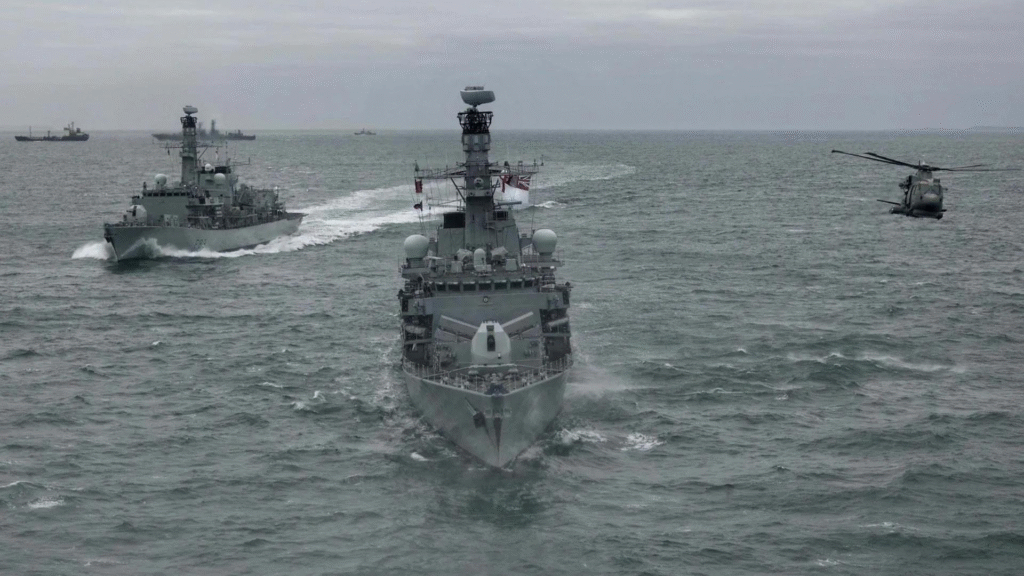
MPs are demanding that no further Type 23 frigates equipped with the specialist sonar systems be withdrawn until they can be replaced on a one-for-one basis.
The committee also found that the Royal Navy has allowed its ability to operate submarines beneath Arctic ice to lapse, despite the growing strategic importance of the region.
Without that capability, MPs fear Britain will struggle to challenge Russian submarines operating beneath the Arctic ice cap, where they can remain concealed from Western surveillance.
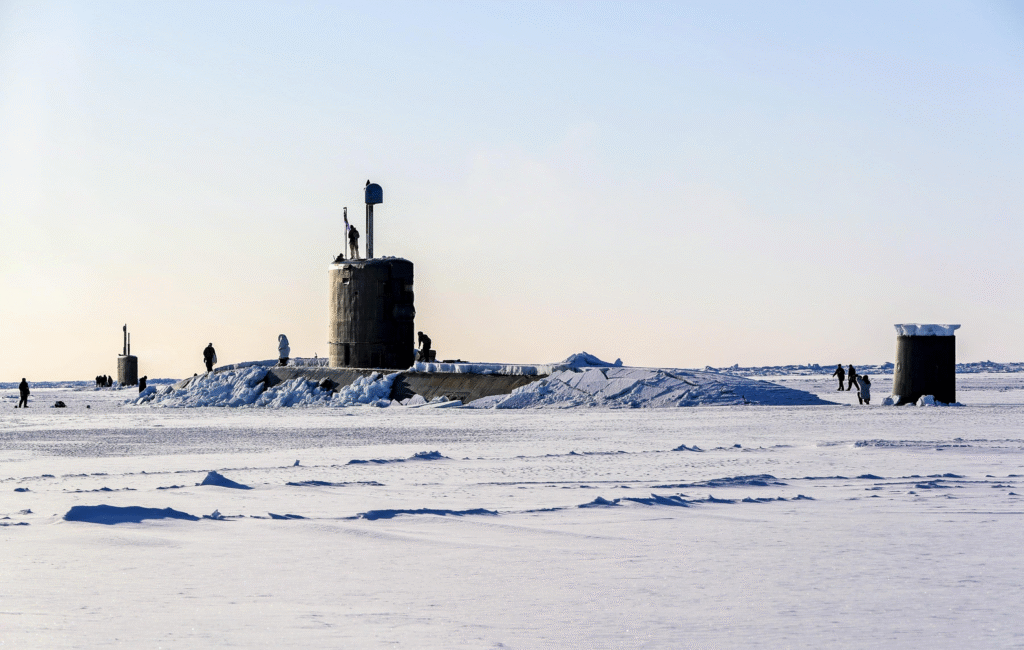
Russia maintains a powerful fleet of nuclear-powered submarines as part of its Northern Fleet, based on the Kola Peninsula, close to NATO territory.
These include ballistic missile submarines carrying nuclear weapons and attack submarines capable of threatening Allied warships and shipping.
Russian specialist underwater forces also pose a potential sabotage threat to communications cables and energy infrastructure beneath the Atlantic and North Sea.
The committee warns that a failure to deter such activity could leave Britain’s underwater infrastructure vulnerable even during peacetime.
In wartime, Russian submarine operations could threaten the sea routes used to transport American troops, weapons and equipment across the Atlantic to reinforce NATO forces in Europe.
Mr Dhesi said: “And if the UK government means what it says – that Russia could attack NATO as soon as 2030 – then work to rectify these vulnerabilities cannot start soon enough.”
The report also calls for a major reassessment of the British-led Joint Expeditionary Force (JEF), a military coalition of ten northern European nations established to respond rapidly to security threats.
The JEF includes Norway, Sweden, Finland, Denmark, Estonia, Latvia, Lithuania, the Netherlands and Iceland, alongside Britain.
Although originally intended to operate across the full spectrum of military conflict, the force has increasingly concentrated on countering hybrid threats, including sabotage and other hostile activities below the threshold of conventional warfare.
MPs believe it may now need to devote more resources to protecting the Arctic and North Atlantic, particularly if American support for European defence becomes less certain.
Mr Dhesi said: “Our Defence in the High North inquiry found that the UK-led Joint Expeditionary Force has not yet realised its full potential.”
He added: “Our report calls for the government to reassess the JEF’s role and consider whether it should focus more on countering threats in the High North, particularly if the UK has to plan for uncertainty over US support for NATO.”
Such a move could involve concentrating naval and other military assets on operations in the harsh Arctic environment, including tracking Russian submarines and protecting vital sea routes.
However, MPs acknowledge that shifting military resources northwards could weaken NATO’s defences in the Baltic region.
To compensate, the committee suggests that Britain may need to expand its military deployment in Estonia to a full brigade, potentially involving several thousand troops.
Germany is already undertaking a similar expansion of its permanent military presence in Lithuania as NATO strengthens its eastern flank.
The warnings come as Britain seeks to increase its military presence in the region.
Earlier this month, British troops took part in Exercise Lion Protector, involving Joint Expeditionary Force nations operating across the North Atlantic, High North and Baltic Sea.

The Ministry of Defence has also announced plans to increase its military presence in Norway and invest in additional anti-submarine warfare and underwater surveillance capabilities.
But the committee’s findings suggest the UK’s existing forces remain dangerously stretched, with shortages of available warships and submarines threatening Britain’s ability to meet its NATO commitments.
MPs want the Government to reassess the Joint Expeditionary Force’s contribution to European security within a year of taking command of NATO’s Joint Force Command Norfolk, which has responsibility for protecting vital North Atlantic sea routes.
The report concludes that unless Britain addresses its military weaknesses, Russia could exploit the gaps to threaten the UK’s security and undermine NATO’s ability to defend northern Europe.
