

Listen to the article
The British government has sanctioned nine people and three organisations accused of hostile activities for Iran.
The Foreign Office issued travel bans, asset freezes and director disqualification orders to nine people and three entities linked to “Iranian backed hostile activity”.
The move comes just days before the UK is expected to introduce new anti terror laws to ban state threats such as Iran’s Islamic Revolutionary Guards Corps (IRGC) in the next parliamentary session.
National Security News (NSN) understands that the new powers will be included in the government’s plans for legislation, which will be set out in the King’s Speech on 13 May.
A senior government source told NSN: “The IRGC has long been viewed by many within the intelligence and security community as a terrorist organisation and we plan to deal with that issue.”
The targets for the latest set of sanctions are accused of plotting attacks and financing efforts to destabilise Britain and its allies on behalf of Iran.
Those sanctioned include alleged members and associates of the Zindashti criminal network, accused of threatening, planning or conducting attacks against people and assets in Britain and elsewhere.
Naji Ibrahim Sharifi Zindashti, the network’s alleged leader, was sanctioned by both Britain and the United States in 2024. Authorities described him at the time as the head of an international drug and trafficking cartel directed by Iran’s Ministry of Intelligence and Security.
The European Union followed with its own designations last year.
London, Washington and Brussels have all accused the network of conducting assassination and kidnapping operations, targeting critics of the Iranian government.
Others sanctioned by the UK included five members of the Zarringhalam family, who are accused of helping finance destabilisation efforts.
Three of the family were sanctioned by the United States last year for their alleged role in Iran’s shadow banking network. Washington said it laundered billions of dollars through front companies in the UAE and Hong Kong.
Two exchange houses linked to the family’s network, Berelian Exchange and GCM Exchange, were also designated.
Also named are Turkish national Ekrem Oztunc, Namiq Salifov from Azerbaijan and Nihat Abdul Kadir Asan from Iran. All are accused of threatening, planning or conducting attacks in the UK or elsewhere.
The designations are the latest in a series of measures Britain has taken against Iran in recent months. They follow separate sanctions issued in February targeting members of Iran’s security apparatus for violently suppressing widespread pro reform protests earlier this year.
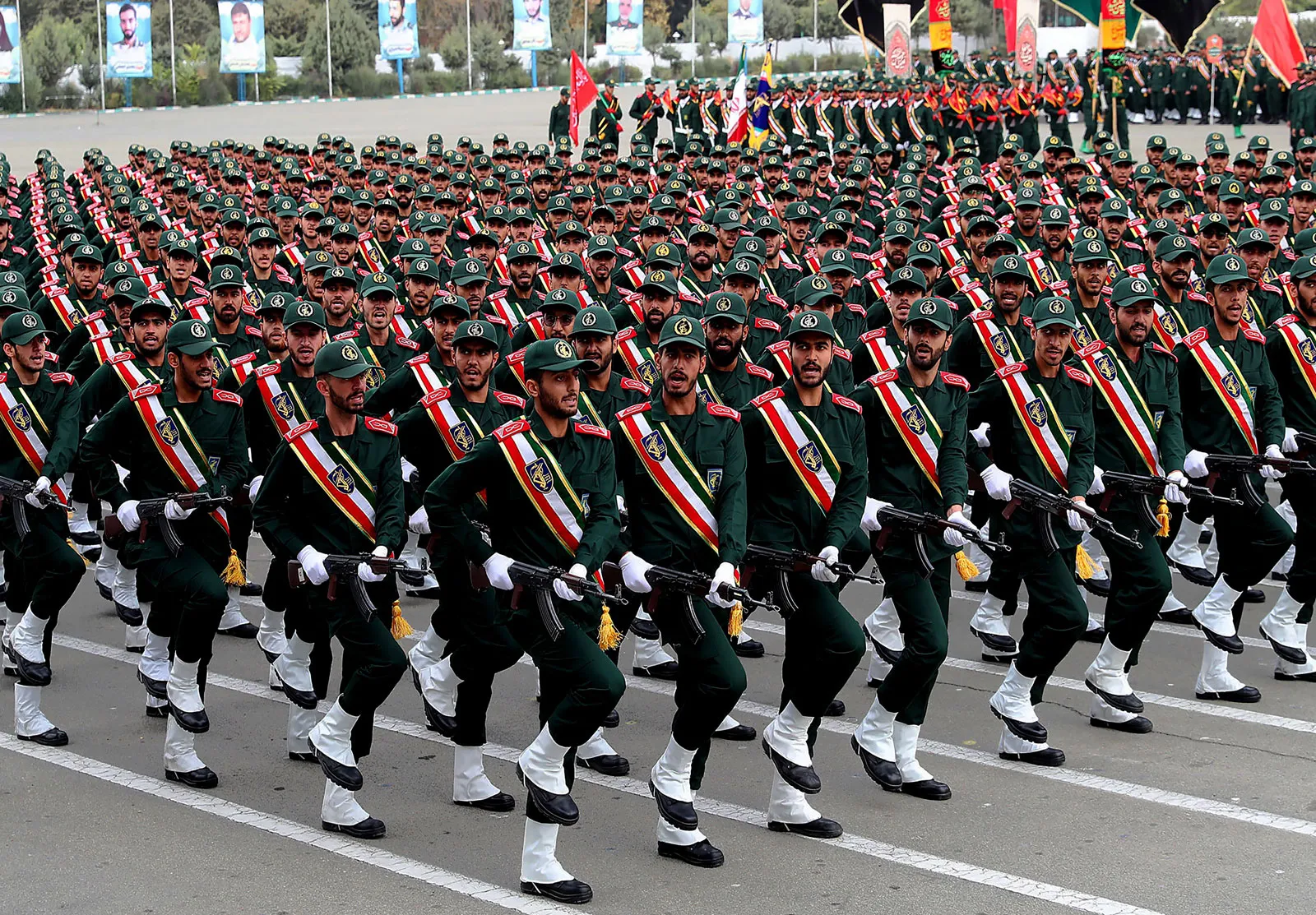
The IRGC was set up to defend Iran’s Islamic system and has become a major military, political and economic force in the country.
It is estimated to have tens of thousands of active personnel and has consistently been accused by Western nations of sponsoring terrorism abroad.
Labour MPs have been urging the UK government to ban the IRGC following a series of antisemitic attacks since the war in Iran started.
Sir Keir said he was “very worried” about the increasing use of proxies by the Iranian government.
“In relation to malign state actors more generally, we do need legislation in order to take necessary measures and that is legislation we’re bringing forward as soon as we can.
“We’re going into a new session in a few weeks’ time and we’re going to bring that legislation forward.”
The previous Conservative government did not proscribe the IRGC, despite suggesting it would do so in 2023.
Maintaining diplomatic relations with Iran has been cited as a reason for not proscribing the IRGC in the past.
The government already has powers to proscribe organisations under the Terrorism Act 2000.
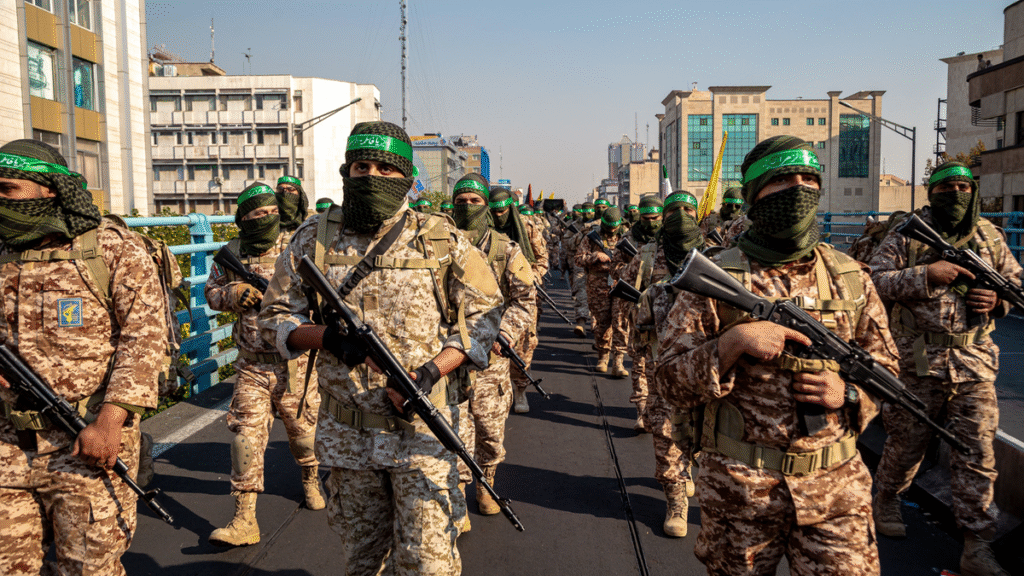
Other groups like the Iran backed Hezbollah have been banned under that law.
But last year, the government’s independent reviewer of terror legislation, Jonathan Hall KC, said new powers were needed to tackle state sponsored organisations.
In a report, Hall recommended a law change that would give the government powers “equivalent to proscription under the Terrorism Act 2000”.
“By way of example, this strong power would be available for use against the Islamic Revolutionary Guard Corps,” Hall said.
Yvette Cooper, when she was home secretary last year, said the government had accepted Hall’s recommendations.
In May last year, Cooper said the government would “draw up new powers modelled on counter terrorism powers in a series of areas to tackle these state threats”.
She added: “And crucially I can tell the House we will create a new power of proscription to cover state threats, a power that is stronger than current national security act powers in allowing us to restrict the activity and operations of foreign state backed organisations in the UK.”
