

Listen to the article
Reuters has exposed a hidden web of more than 5,000 military agencies slipping missile material past the US blockade. The two institutions that own the controlling stake in MTN Irancell sit at the core of this clandestine web.
This week, Reuters published one of the most consequential investigations of the Iran war. Working with risk consultancy 240 Analytics, its reporters identified more than 5,000 numbered agencies, each bearing the prefix “MOD” and registered to the Tehran address of the Ministry of Defence and Armed Forces Logistics (MODAFL).
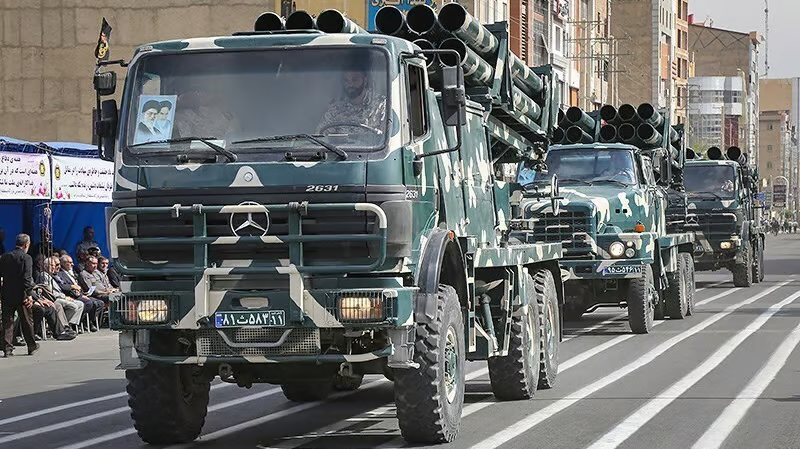
Since January 2025, this network has imported at least $2 billion worth of rocket-propellant precursors, explosives, Russian detonators, Chinese titanium, precision machine tools and heavy trucks that can double as mobile missile launchers. Imports continued after the war began on February 28 and, according to Reuters, have persisted despite the US naval blockade.
The scale is startling. A single agency, MOD 346428, imported $2.3 billion worth of goods over 18 months, placing it among Iran’s ten largest importers. Ninety-seven per cent of the shipments reviewed by Reuters were settled without cross-border currency transfers. Trusted intermediaries abroad used illicit oil revenues held in foreign banks to pay suppliers, while the goods were shipped to Iran.
Reuters found no evidence that any of the numbered agencies had been designated under Western sanctions. Its findings expose a procurement system that has helped sustain Iran’s missile and drone capabilities.
Two pillars of the regime
The investigation identifies two institutions central to this system. The first is MODAFL, whose Tehran address is shared by the numbered agencies. The second is Bonyad Mostazafan, the supreme leader’s multibillion-dollar foundation, which was sanctioned by Washington in 2020.
According to Iranian state media, its subsidiary, Sina Port and Marine Services Development Co, stored chemicals at Bandar Abbas that exploded in April 2025, killing at least 70 people. In the months preceding the explosion, MOD 346428 imported 886 tonnes of Chinese chemicals under a customs code covering perchlorates, a key ingredient in solid rocket fuel.

Bonyad Mostazafan is headed by Hossein Dehghan, a former Islamic Revolutionary Guard Corps (IRGC) commander who became defence minister in 2013, the year most of the MOD agencies were established.
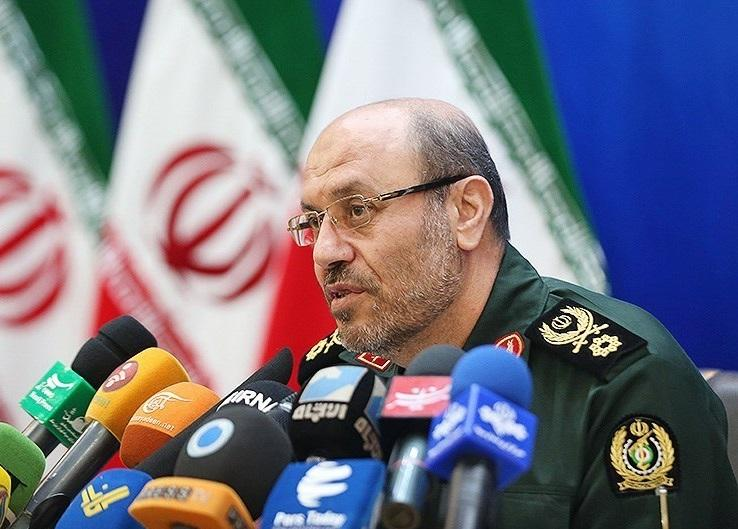
These same two institutions are also linked to the controlling stake in MTN-Irancell, Iran’s largest mobile telecommunications operator, which is led by a chief executive with an IRGC background.
Who owns MTN-Irancell?

MTN-Irancell is a joint venture. South Africa’s MTN Group holds 49 per cent, while the controlling 51 per cent belongs to an Iranian consortium, historically known as the Iran Electronic Development Company (IEDC) and now recorded as Kowsar Sign Paniz.
IEDC’s shareholders include Iran Electronics Industries, known as Sairan, a MODAFL subsidiary that manufactures electronics for weapons systems and is subject to EU sanctions, and Bonyad Mostazafan.
Put simply, the defence ministry whose address is used by the missile procurement network and the supreme leader’s foundation, whose port subsidiary was linked to the storage of rocket-fuel precursors, are connected to the majority ownership of a mobile network serving more than 57 million Iranian subscribers.
The network has roaming agreements with 223 operators across 133 countries and uses SS7, a telecommunications signalling protocol whose vulnerabilities can be exploited to obtain location information.
In July 2026, Mobile Surveillance Monitor, a non-profit organisation led by Gary Miller, reported a surge in SS7 location requests originating from Iran and targeting the phones of US military personnel and contractors in Bahrain and Iraq. The activity was also reported by the Financial Times.
These connections matter for three reasons.
First, money. MTN-Irancell is one of Iran’s largest companies. MTN valued its share of Irancell’s 2025 earnings at $136 million, none of which it could repatriate. The Iranian controlling shareholders’ share of the earnings is likely to be substantial, accruing to entities embedded in the country’s military-industrial and political system.
Profits from a consumer telecommunications business are fungible. A system capable of settling 97 per cent of its military imports without conventional cross-border currency transfers does not necessarily need dividends to leave Iran before those resources can be put to use.
Second, control of the population. Reuters traces the MOD procurement network to institutions within Iran’s military establishment, including the IRGC, which played a central role in suppressing protests earlier this year.
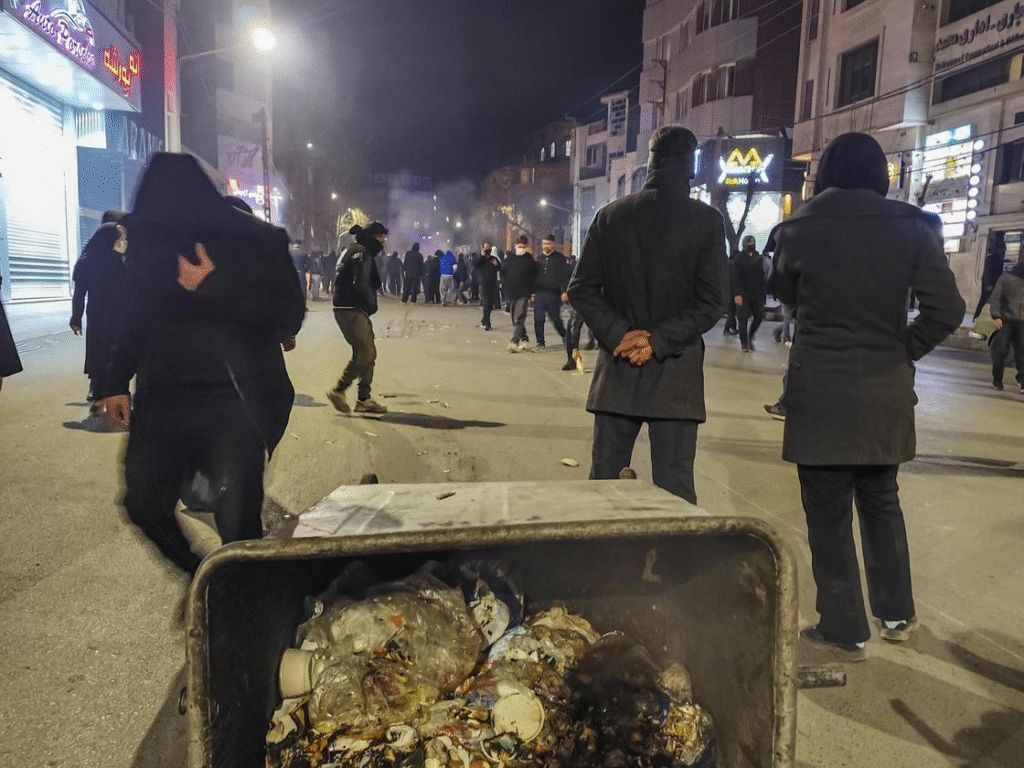
A mobile network majority-owned by entities connected to MODAFL and the supreme leader’s foundation cannot be considered in isolation from the state’s surveillance and communications-control capabilities. When the authorities restricted internet access in January, MTN-Irancell’s previous chief executive was reportedly dismissed for failing to comply quickly enough and replaced by a senior figure with an IRGC background.
Third, procurement. Sairan has a documented history of obtaining US electronics in breach of export controls, while earlier Reuters reporting described how embargoed American equipment reached MTN-Irancell.
The new investigation also identifies electronics among the imported goods, including a shipment from the UAE in June, following a suspension of the blockade.
Telecommunications supply chains contain technologies with both civilian and military applications. Investigators should now establish whether the consortium’s corporate identifiers appear in the MOD import and banking records, using the same 11-digit identity numbers that enabled 240 Analytics to identify the numbered agencies.
MTN says it has received no capital repayments or dividends from Iran since 2018. It has further written down the value of its stake this year and denies wrongdoing in connection with a US Justice Department grand jury investigation disclosed in 2025.
The Reuters findings nevertheless underline the seriousness of the questions surrounding MTN’s Iranian partners.
They are not merely unspecified “state-linked entities”. They include institutions connected to the military and political establishment at the centre of a procurement network that Reuters has documented as importing equipment and materials for Iran’s weapons programmes during the war.
The conflict has caused billions of dollars in damage to US bases and Gulf infrastructure and claimed the lives of 23 US service members.
Iran’s sanctions-evasion system was designed to operate behind charitable foundations, numbered agencies and joint ventures with established foreign partners. Reuters has now exposed important parts of that system.
The question is how far the links between Iran’s military procurement apparatus and the corporate structures behind MTN-Irancell extend.
