


Listen to the article
Taiwan is seeking to strengthen its maritime surveillance capabilities as Chinese Coast Guard patrols and research vessels increase their presence around the island.
Kuan Bi-ling, head of Taiwan’s Ocean Affairs Council, which oversees the Coast Guard, said the island needs greater control over maritime information to protect its security and economic stability.
Speaking at a sea drone forum in the southern city of Tainan on Monday, Kuan said: “Taiwan’s ocean must be surveyed by ourselves, and we must master our own information.”

Kuan said Taiwan’s resources, energy supplies and transport networks depended on its surrounding waters, which also serve as major international shipping routes.
“Therefore, protecting these waters concerns not only the daily lives of Taiwan’s people but also global economic development,” Kuan added.
Taipei has repeatedly accused Beijing of using so-called grey-zone tactics, including patrols and surveillance operations, to assert its territorial claims without provoking direct military confrontation.
Kuan said Taiwan’s Coast Guard required additional equipment and stronger intelligence capabilities to detect threats earlier and respond more effectively.
On Saturday, Beijing announced another Coast Guard patrol off Taiwan’s eastern coast, continuing operations that Taipei regards as attempts to assert Chinese jurisdiction over its waters.
Taiwan’s Coast Guard said two Chinese vessels were involved and that it had deployed its own ships to monitor their movements.
Chinese state media broadcast footage of one vessel transmitting a radio message describing its activities as law enforcement and offering assistance if required.
The footage also showed an unidentified fishing trawler, although it was unclear whether the message had been directed towards it.
Taiwan’s Coast Guard said China’s “attempts to harass ships at sea through radio communications are a clear expansion of power that violate international law, undermine regional peace and stability, and deviate from reality”.
“Our country holds sovereign rights and jurisdiction over the exclusive economic zone east of Taiwan, and China has absolutely no jurisdiction over any of Taiwan’s waters,” it added.
Chinese Coast Guard vessels have conducted regular patrols off Taiwan’s eastern coast since June, raising concerns in Taipei about preparations for a potential maritime blockade.
Taiwanese officials believe Beijing could use a combination of naval forces, Coast Guard vessels and civilian ships to restrict access to the island during a conflict.
Taiwan’s eastern waters are particularly important because they could provide access for military equipment and essential supplies from international partners in the event of a blockade.
In June, Taiwan’s defence minister, Wellington Koo, condemned Chinese Coast Guard operations in the area.
“First this is a provocative act, and second it is cognitive warfare,” Koo said.
“They are attempting to first claim the eastern waters as their domain, like casting a large spider’s web over the area,” he added.
Taiwan also reported another Chinese Coast Guard vessel approaching the Taiwan-controlled Pratas Islands in the South China Sea on Saturday.
According to Taiwan’s Coast Guard, Chinese vessels have been expelled from waters around the islands 13 times this year.
The Pratas Islands, located more than 400 kilometres from Taiwan, occupy a strategic position in the northern South China Sea and are considered vulnerable to Chinese military action because of their distance from the main island.
The islands have no permanent civilian population and lie roughly between southern Taiwan and Hong Kong.
Taiwanese authorities have also reported several incidents involving Chinese research vessels operating near the island this year.
China’s military maintains an almost daily presence around Taiwan, regularly deploying aircraft and naval vessels into the surrounding region.
Beijing considers Taiwan part of its territory and rejects the island’s claims to separate sovereignty. China says it favours peaceful reunification but has never ruled out using force.
Taipei argues that Chinese Coast Guard operations are intended to normalise Beijing’s presence in waters where it claims sovereignty or jurisdiction.
Unlike conventional naval deployments, Coast Guard patrols can be presented as routine law enforcement activities, allowing China to reinforce its territorial claims without directly engaging Taiwan’s military.
Taiwan is also developing unmanned maritime systems capable of monitoring vessel movements and collecting information without relying exclusively on conventional patrol ships.
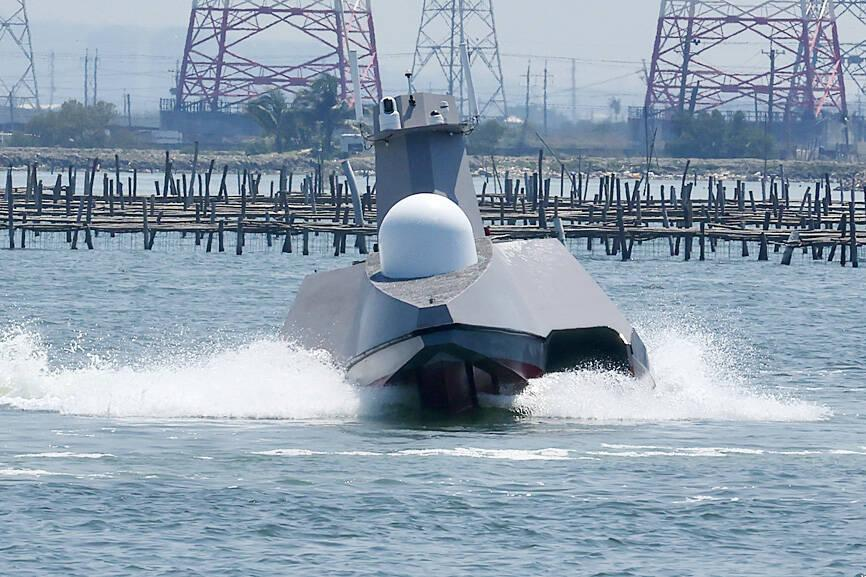
Such capabilities could improve the Coast Guard’s ability to identify unusual activity and respond to potential threats.
Any disruption to commercial traffic around Taiwan could affect regional trade, energy supplies and international supply chains.
As Chinese maritime operations continue, Taipei is seeking to strengthen its ability to monitor surrounding waters while reducing the risk of a wider confrontation.
