

Listen to the article
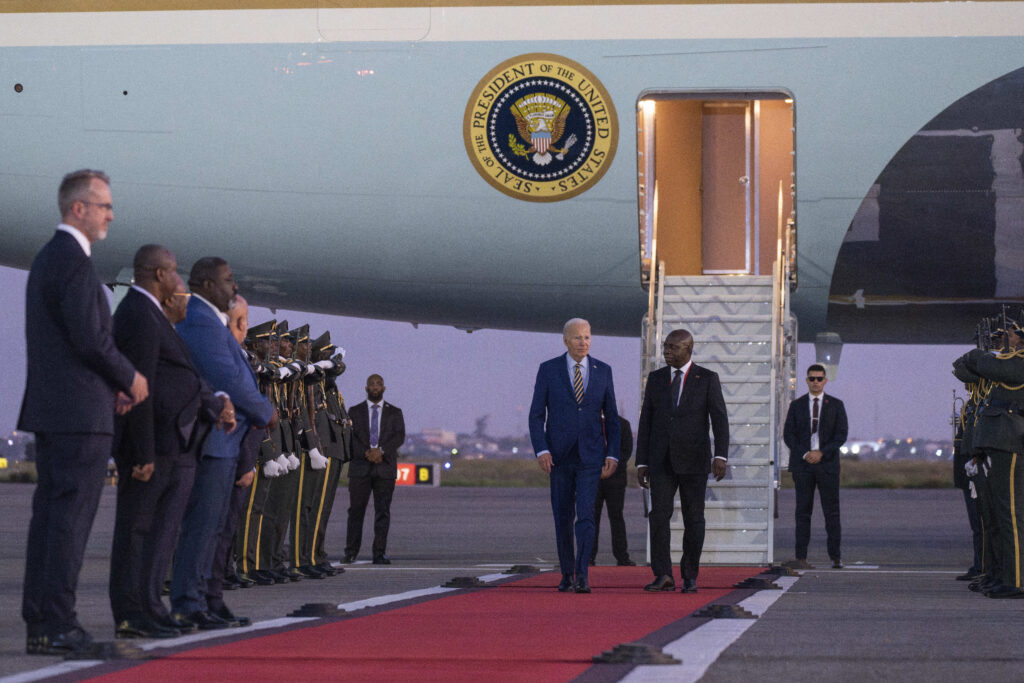
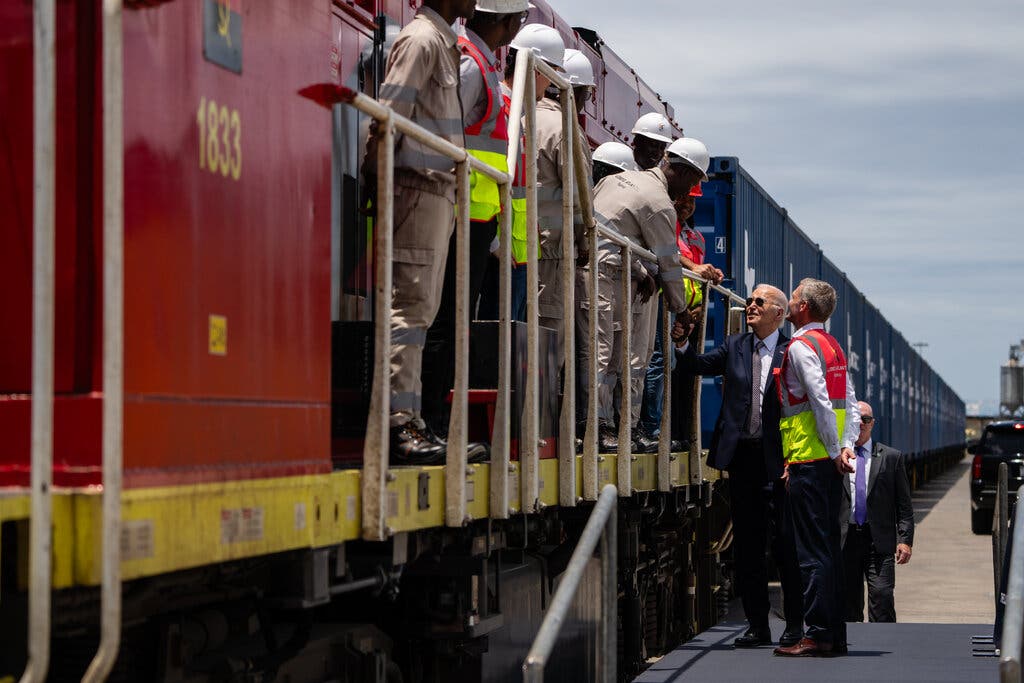
President Joe Biden’s visit to Angola this week highlights the Lobito Corridor Project and unveils $560 million in new funding for infrastructure initiatives along the corridor. This brings the total US investment in the project to $4 billion. It marks a strategic initiative by the US and the EU to counter China’s extensive infrastructure presence in Africa. The project is not just about building infrastructure but also a calculated move to leverage Africa’s critical minerals, which are essential for global technological advancements and clean energy transitions.
Lobito Corridor: The first direct competition between the US and China in African infrastructure
The Lobito Corridor infrastructure projects represent “the largest infrastructure project engagement by the US in many, many years,” according to Dr. Jakkie Cilliers, the head of the African Futures and Innovation Programme at the Institute for Security Studies in Pretoria. The project represents a significant US investment aimed at enhancing regional connectivity and facilitating the export of critical minerals from Angola, Zambia, and the Democratic Republic of the Congo.
“It is the first time that we see the Americans, really, in a sense, directly competing with the Chinese on infrastructure in Africa,” he said. It is not only a showcase for the Americans but also for the Europeans, he said, because “it involves some EU funding and the ability to compete with China in establishing a corridor which will, in theory, take critical minerals to the West Coast.”
The Lobito project offers, according to Dr. Cilliers, an opportunity for Africa, as there is a commitment by the Americans to industrialise and build local capacity for the beneficiation of minerals. This, he told National Security News in an interview, “is quite different from how the Chinese are seeing this.”
Competing for Africa’s critical minerals amid China’s infrastructure dominance
Africa is home to 30% of the world’s critical mineral reserves, including lithium, cobalt and nickel, which are crucial for technologies like electric vehicles and renewable energy systems. With the global demand projected to rise significantly, with projections indicating a tenfold increase in lithium demand by 2050. It positions Africa as a pivotal player in the global supply chain for critical minerals. The continent, is according to Dr. Cilliers, “the next big global future market particularly for information technology, artificial intelligence and of course, as a source of critical minerals. Much of the minerals are, he said, however refined in China, not in the US.
China’s critical infrastructure investments in Africa are primarily driven by its Belt and Road Initiative (BRI) which aims at enhancing connectivity and cooperation across the continent. Chinese investment spans several sectors including transportation, energy and digital infrastructure.
One of the most notable projects is Kenya’s Standard Gauge Railway, funded by China’s Exim Bank, which connects Nairobi to the port of Mombasa. China has also invested in major road infrastructure projects including Maputo–Katembe bridge and Algeria’s East-West Highway. Additionally, China is developing Algeria’s El Hamdania Central Port, enhancing regional trade connectivity. Other investment focuses on power generation, especially hydropower and the Chinese are driving smart city infrastructure across Africa facilitated by Huawei.
Africa struggles for relevance in Washington
Angola was chosen by Biden for a last-gasp visit as US president – it is his only trip to sub-Saharan Africa during his presidency, according to Dr. Jakkie Cilliers, due to the significance of the Lobito Corridor Project. The Lobito Corridor project is a major infrastructure initiative involving an $800 billion investment. Dr. Cilliers told National Security News in an interview that he believed Africa wasn’t a priority for the United States. “It is only a priority in terms of competition with China,” he said.
American trade with Africa was overtaken by China in 2013, and while US investment in Africa is steadily declining year on year, that with China is, of course, increasing. There is the issue of critical minerals. There is the issue of competition with China in Africa for the next big global future market.”
Africa struggles for relevance in Washington, he said, and that is a problem. According to Dr. Cilliers, “with a very transactional President Trump coming in, the problem, the question is what can Africa, South Africa in particular, but others in Africa, offer the US that will represent a business case for investment and engagement.”
US unlikely to increase security engagement in Africa
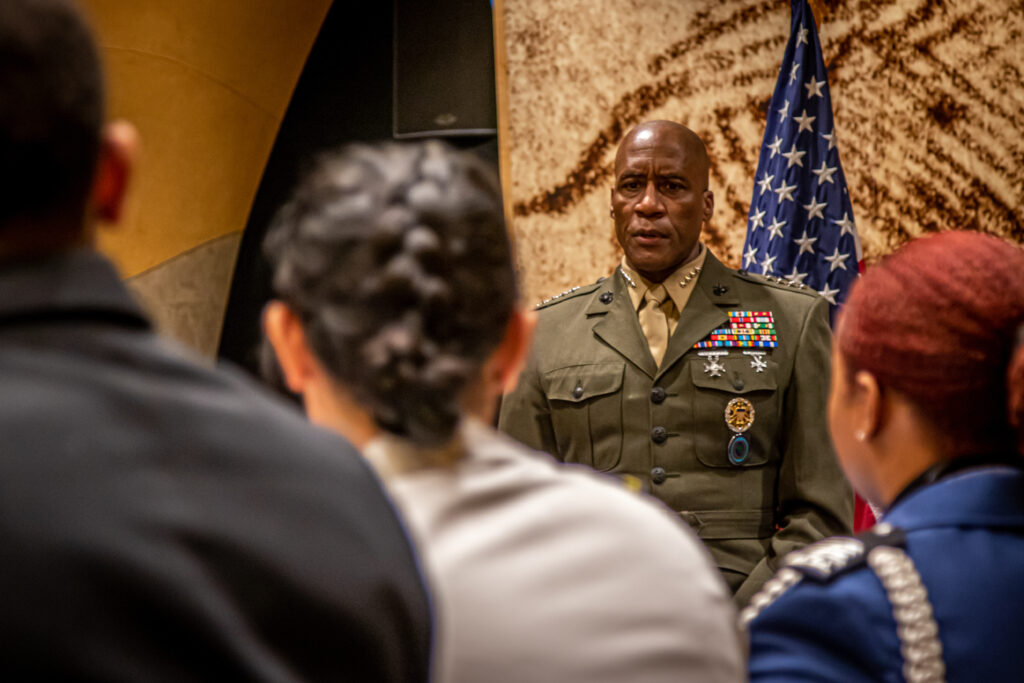
The US has seen its military influence in Africa wane with closures of its bases. It was forced to “reset and recalibrate some of our assets,” according to AFRICOM’s Gen. Michael Langley, after military regimes took over in Niger and Chad, formerly key regional allies, and embraced Russian forces and paramilitaries.
Dr. Cilliers said the “Russians don’t really represent an alternative, they are there very much in their own interest and are continuing with a proxy war against the Europeans and the Americans from Ukraine to the Sahel. Africa, he said, is ending up as a battlefield for others, which is a problem.”
He did not foresee any additional US security engagement with Africa when Donald Trump takes over the presidency in the US.
“Trump and the populists are not really there in one sense isolationist. They don’t want American foreign military adventures or engagement. Remember that he withdrew the American soldiers from Somalia. I don’t think we will see additional security engagement in Africa.”
Why Biden skipped South Africa, but hopes high for Trump
Biden would politically have had a problem visiting South Africa, “given South Africa’s position on what is happening in Israel,” according to Dr. Cilliers. He, however, thinks it was not a major consideration for Biden. The visit to Africa was all about the Lobito Corridor Project.
He did not think Biden’s decision not to visit South Africa should be regarded as a snub but says Biden would have had a problem had he decided to come to South Africa. “The pro-Israeli lobby would have given him problems.”
South Africa will hand over the presidency of the G20, which it had taken over this week from Brazil, to the United States in November 2025. Normally it would mean that Trump would visit Johannesburg as he prepares to assume leadership of the G20. But it is not certain whether he would attend.
Despite some disparaging remarks by Trump towards Africa, President Ramaphosa is keen for Trump to come to Johannesburg for a state visit when 40 heads of state are expected to travel to South Africa for the G20 summit. He also said he is ready to point the golf-loving Trump towards South Africa’s best course where they can talk business in between rounds.
Dr. Cilliers said Africa needs to be careful because “what could happen is that Trump will act in America’s interest. For example, there has been speculation that he agreed to recognise Morocco’s sovereignty over Western Sahara in exchange for Morocco recognising the existence of Israel.”
“Nobody knows what is going to happen because the one thing that we can be certain about,” Dr. Cilliers concluded, “is that we don’t know what Trump is going to do.”
