


Listen to the article
By Ben Farmer
African nations risk being dragged into the spreading Middle East war as the conflict’s tentacles cross to the Horn of Africa.
Security crises on either side of the Red Sea are increasingly entangled, with geopolitical tensions now bouncing back and forth across the Bab el-Mandeb Strait, experts warn.
Gulf rivals competing to support warring factions in Sudan’s catastrophic war and a marriage of convenience between Yemen’s Houthis and Somalia’s al-Shabaab link conflicts in the Arabian Peninsula and Africa.
“What is happening in the Middle East now is not going to stay in the Middle East,” said one international diplomat, who declined to be named.
“The Red Sea is only a couple of dozen miles across and what we have seen on the Arabian Peninsula is spilling over. Sudan has already shown what can happen when an African conflict becomes a wider proxy war.”
Alan Boswell, Horn of Africa director at International Crisis Group, said earlier this month that the region was increasingly becoming blurred with the Arabian Peninsula.
He wrote in Foreign Affairs: “Wars on one side of the sea increasingly alter the military calculations on the other.”
The United Arab Emirates and Saudi Arabia have long sought alliances and influence in the Horn, but this has accelerated since the United States and Israel declared war on Iran and as relations between Riyadh and Abu Dhabi have soured.
The former Gulf allies are now accused of backing opposing sides in Sudan and could end up on opposing sides if rekindled conflict in Ethiopia sees Addis Ababa go to war with Eritrea.
Mr Boswell said: “The question now is whether the various powers can find a way to manage their different interests to defuse conflict—or whether, conflict by conflict, they will continue to discover that wars launched on one side of the Red Sea no longer remain contained there, forcing millions of civilians throughout the Horn to pay the price.”
In another link, United States officials have meanwhile accused Yemen’s Iranian-backed Houthi rebels of forming a loose alliance with the al-Qaeda-aligned al-Shabaab militia in Somalia to trade weapons, training and reach.
The two groups’ sectarian differences make them unlikely partners, but intelligence experts say they are united by a hatred of America and Israel.
Al-Shabaab, which controls swathes of southern and central Somalia, has been using its relations to seek sophisticated weapons and training to use against an embattled government in Mogadishu.
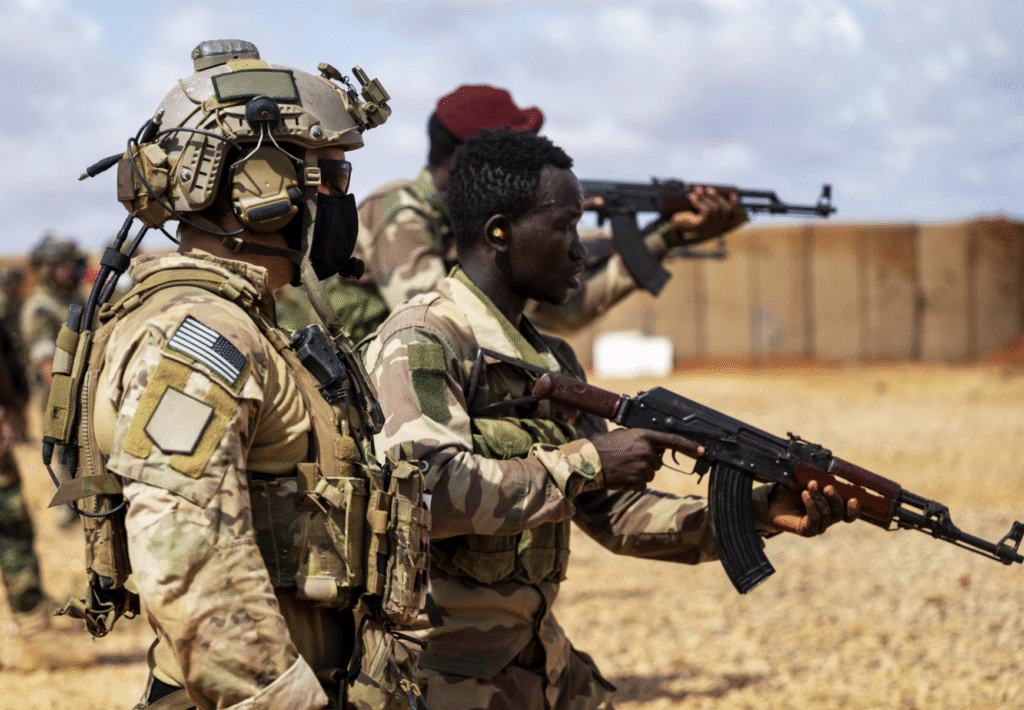
“You have al-Shabaab, al Qaeda’s largest and most lucrative affiliate, gaining access to more sophisticated weapons and training,” Gen Dagvin Anderson, commander of American forces in Africa, told The Wall Street Journal last month.
“On the other side, the Houthis are extending their geographic reach, gaining a foothold that could further destabilise one of the world’s most critical economic choke points,” he said. “This isn’t just a regional problem. It has global implications.”
A recent report to the United Nations Security Council raised concerns that links with the Houthis “could enhance Al-Shabaab’s operational capabilities, posing an increased threat to Somali security forces and [peacekeeping troops] in Somalia”.
Hundreds of al-Shabaab fighters are reported to have received training from the Houthis. The Somali fighters have been seeking help to improve the range and accuracy of their mortars and have also been trying to get drone-jamming technology.
