

Listen to the article
British defence companies supplying military equipment to Ukraine are facing a growing threat of firebombing and sabotage attacks by Russian agents and their proxies, MI5 has warned.
Military contractors, weapons manufacturers and companies involved in the defence supply chain have been urged to strengthen security at their British facilities following a spate of attacks across Europe.
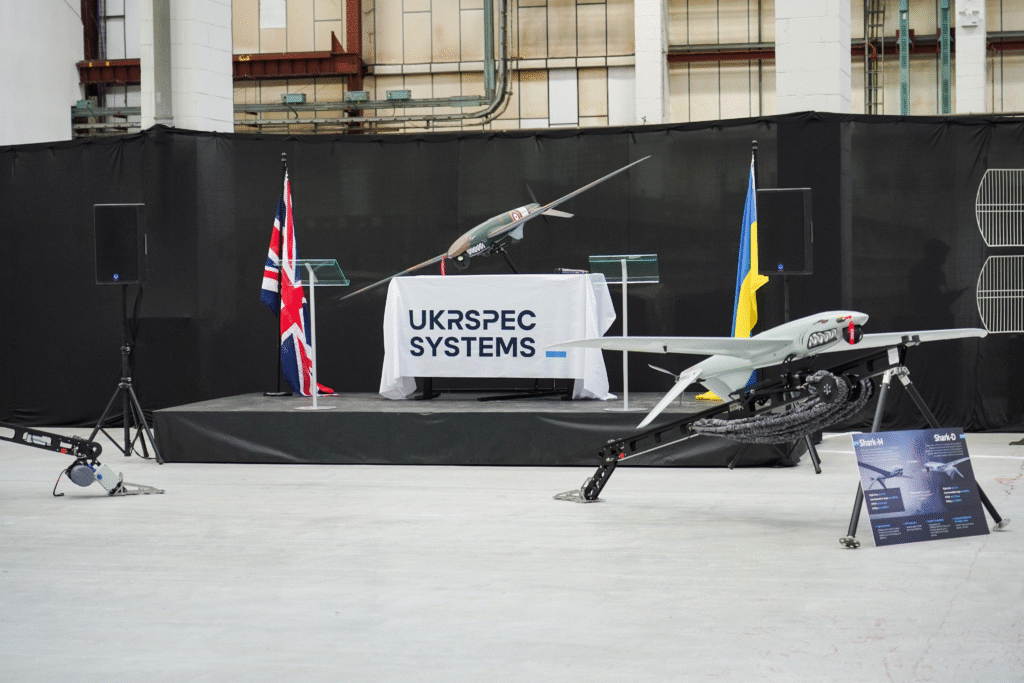
A joint security alert issued on Tuesday by MI5 and the Ministry of Defence warned that the Kremlin was targeting companies supporting Ukraine’s war effort, including manufacturers of ammunition, drones and robotic technology.
The alert said: “In recent months Russia has increased attempts to conduct sabotage against European defence-related facilities.
“If your organisation supports military procurement or supplies equipment to Ukraine’s armed forces, it could be a target. This includes organisations in the supply chain. Act now to reduce opportunities for hostile actors to identify your organisation or people as targets, conduct hostile reconnaissance and attack people, sites or operations.”
A senior intelligence source warned that Russia’s increasingly aggressive sabotage campaign risked triggering a direct military confrontation with the West.
The source told National Security News: “This, in many ways, is a failure of deterrence. Putin believes he can get away with behaving like this because he believes the West will not respond. But there is always the risk of an accident spiralling out of control and leading to open conflict between Russia and the West.
“Russia behaves like this because it wants to flex its muscle. It has become that annoying, anti-social neighbour nobody wants to live by.
“Russia is trying to test Western security to see how it responds to these incursions, sabotage operations and cyberattacks. We have to be prepared and ready for conflict with Russia, and Russia has to believe that the West is ready.”
It is understood to be the first time MI5 has explicitly identified Russia as responsible for hostile activity in such a security alert, reflecting growing concern within the intelligence services over the scale of the threat.
Sir Ken McCallum, the director-general of MI5, has previously warned about Russian sabotage operations and attempts by Moscow’s intelligence services to recruit proxies to carry out attacks.
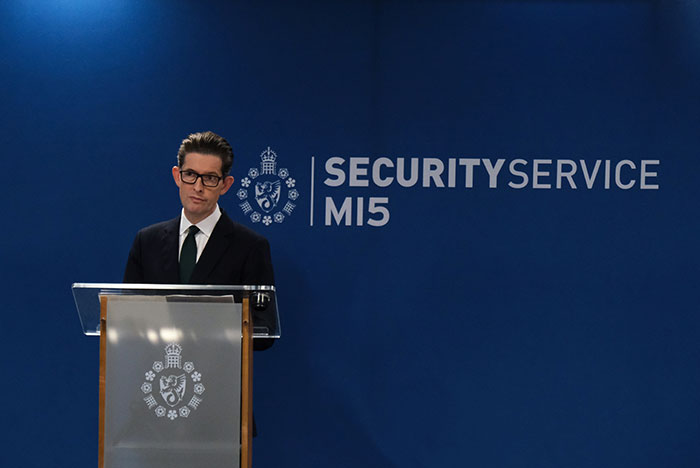
The National Protective Security Authority (NPSA), an arm of MI5, said relatively simple and inexpensive security measures could help deter attacks and reduce the vulnerability of British companies.
The warning follows a series of attacks against European defence manufacturers and military supply networks which Western security officials believe are part of a Russian campaign designed to undermine support for Ukraine.
More than a dozen attacks or attempted attacks have been recorded across at least nine European countries since the summer. Russia has been formally implicated in several incidents, while possible links to Moscow remain under investigation in others.
In August, German authorities uncovered a suspected sabotage plot involving Ukrainian military cargo aircraft at Leipzig airport.
Alexander Dobrindt, the German interior minister, said the incident followed the “well-established pattern of Russian hybrid operations in Europe”.
During the following two months, fires broke out at factories involved in the production of ammunition, drones and other military equipment in Bulgaria, Estonia, Slovakia, Poland and Romania.
Facilities associated with Elon Musk’s Starlink satellite communications network, which is widely used by Ukrainian forces, have also been targeted in incidents linked to Russia’s hybrid warfare campaign.
Earlier this month, Estonia announced that it would close all land border crossings with Russia from December 1 following an attempted sabotage attack against Threod Systems, a manufacturer of military reconnaissance and attack drones.
British counterterrorism police have also been investigating suspected Russian plots against the UK defence industry.
In September, Joshua Cammidge, 31, from Swindon, Wiltshire, was charged under the National Security Act with allegedly planning attacks against drone factories on behalf of the Russian intelligence services. He has denied wrongdoing.
In October last year, six men were jailed for their involvement in a Russian-directed arson attack on a warehouse in east London which was supplying aid to Ukraine.
Ministry of Defence officials are due to brief representatives of the British defence industry on Tuesday about the increased threat and the measures companies can take to protect themselves.
The threat extends to smaller businesses within the defence supply chain, which may not have the same security arrangements or resources as Britain’s largest weapons manufacturers.
The NPSA has advised companies to review the amount of information they make publicly available about their operations, personnel and manufacturing facilities.
Employees should also be briefed on the Russian threat and encouraged to report suspicious activity around their workplaces.
Companies have been urged to strengthen perimeter security, ensure surveillance systems are operating effectively and identify which parts of their operations require additional protection.

Louise Sandher-Jones, the armed forces minister, said: “Britain’s adversaries are not limiting themselves to military targets. They are prepared to use cyberattacks, espionage, sabotage and hostile reconnaissance against the companies, technology and supply chains that underpin our national security.
“Our defence industry is a strategic asset and protecting it is fundamental to our military strength. That means government and businesses sharing information, identifying vulnerabilities and working together to ensure we can continue to operate when hostile actors try to disrupt us.
“Protecting defence no longer stops at the gates of a military base. We are determined to make the entire defence enterprise harder to target, harder to disrupt and better prepared to respond.”
