

Listen to the article
An Iranian journalist has been forced to spend more than two years moving between safe houses and hotels, sometimes under armed police protection, following repeated threats to his life from the Tehran regime.
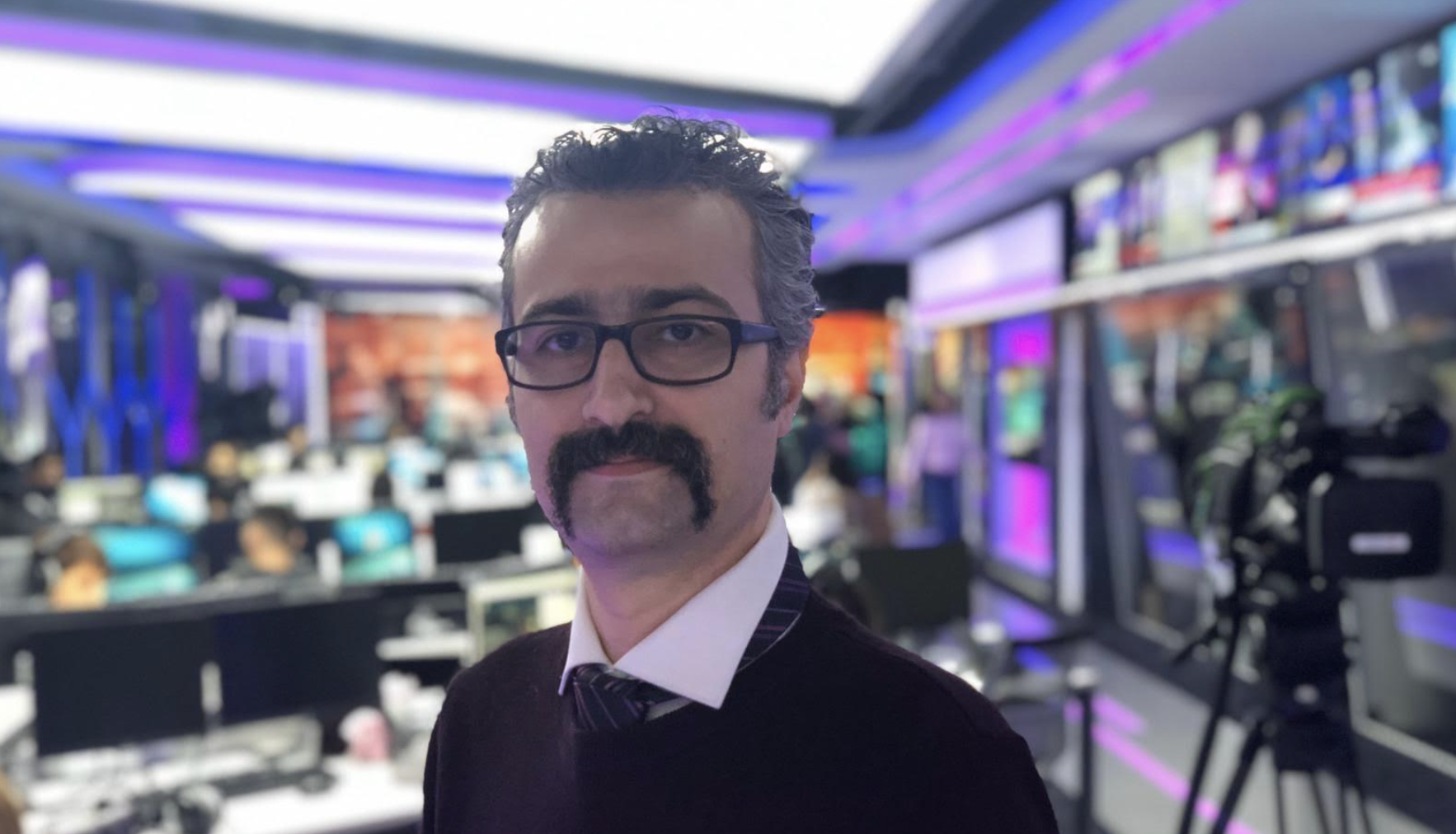
Mojtaba Pourmohsen, 47, who works for the London-based broadcaster Iran International, has been forced to cut contact with his family, abandon his home and broadcast from hotel rooms after counterterrorism police warned that he was at risk of assassination.
Pourmohsen warned that Iran was likely to intensify its attacks in Britain as the regime comes under increasing military pressure in the Middle East.
“I think the threats [to the UK] will increase,” he told The Sunday Times. “The fact that their proxies, like Hezbollah, are losing ground in the Middle East makes the regime more dangerous.”
At one stage, the British-Iranian journalist was moved to a new location every three days amid fears that Iranian intelligence operatives or criminal gangs recruited by the regime could track him down.
His ordeal began in May 2024 when Metropolitan Police counterterrorism officers arrived unannounced at his home in Brentford, west London, and ordered him to leave because of a credible threat to his life.
Pourmohsen was moved into a safe house that day and has not been able to resume a normal life since. He said that over the past two and a half years he had encountered more police officers and bodyguards than ordinary members of the public.
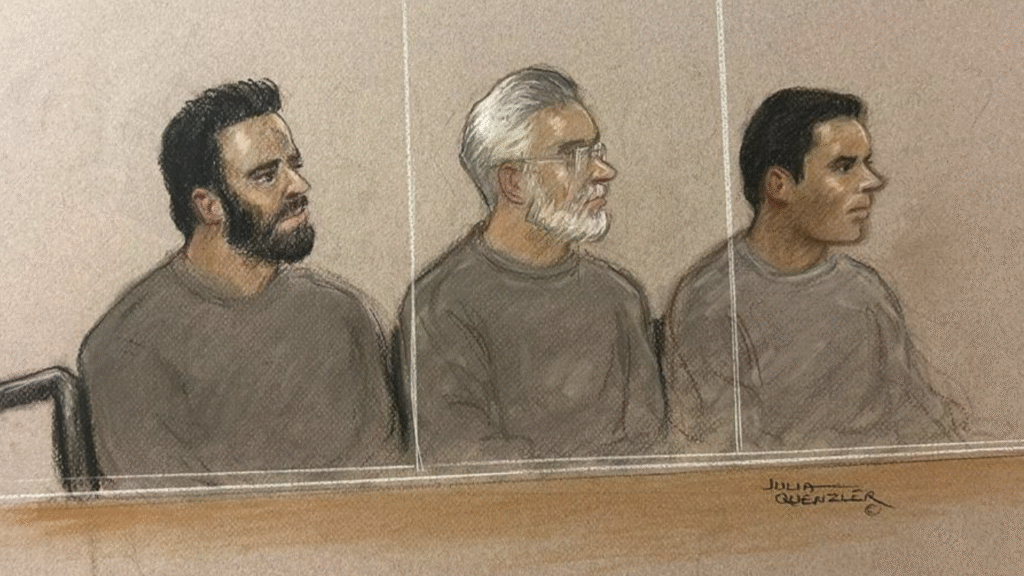
His account comes after two Iranian migrants were convicted this month of spying on Pourmohsen and a fellow Iran International journalist on behalf of the Islamic Revolutionary Guard Corps (IRGC).
One of the men, Mostafa Sepahvand, 41, who entered Britain illegally in the back of a lorry, told his Iranian handlers that he would “finish off” the journalists in return for £150,000.
Sepahvand and Farhad Javadi Manesh, 46, were convicted at Woolwich Crown Court on November 12 of assisting a foreign intelligence service.
Pourmohsen believes he would have been murdered had counterterrorism officers failed to disrupt the plot.
His colleague, Kambiz Hosseini, 51, a satirist and broadcaster who was also placed under surveillance, subsequently left Britain for the United States.
The convictions have raised further concerns about the Iranian regime’s attempts to murder and intimidate its critics living in Britain.
An investigation by National Security News earlier this month revealed how the IRGC and other Iranian intelligence organisations have increasingly recruited criminals to carry out assassinations and surveillance operations across Britain, Europe and the United States.
Sir Ken McCallum, the director-general of MI5, revealed in October 2025 that the Security Service had identified more than 20 potentially lethal Iran-backed plots in Britain during the preceding 12 months.
In a further warning in 2026, the Security Service disclosed that operations linked to Iran had resulted in more than 50 arrests in Britain over the previous year.
Among the most serious incidents was the stabbing of Pouria Zeraati, another Iran International journalist, outside his home in Wimbledon, south-west London, in March 2024.
Zeraati was stabbed three times in the leg by attackers who subsequently fled Britain.
Two Romanian nationals, George Stana and Nandito Badea, were convicted in June this year of carrying out the attack and subsequently sentenced to 12 and eight years in prison.
Prosecutors said the stabbing had been planned and coordinated by individuals acting on behalf of the Iranian state.
In March this year, four ambulances belonging to the Jewish volunteer emergency service Hatzola were destroyed in an arson attack in Golders Green, north London.
The attack was claimed by Harakat Ashab al-Yamin al-Islamiyah, also known as the Islamic Movement of the Companions of the Right, a group which British authorities believe was directed by the IRGC’s Quds Force.
British intelligence officials believe the use of criminal gangs allows Tehran to attack its opponents while making it more difficult to establish a direct link between those responsible and the Iranian government.
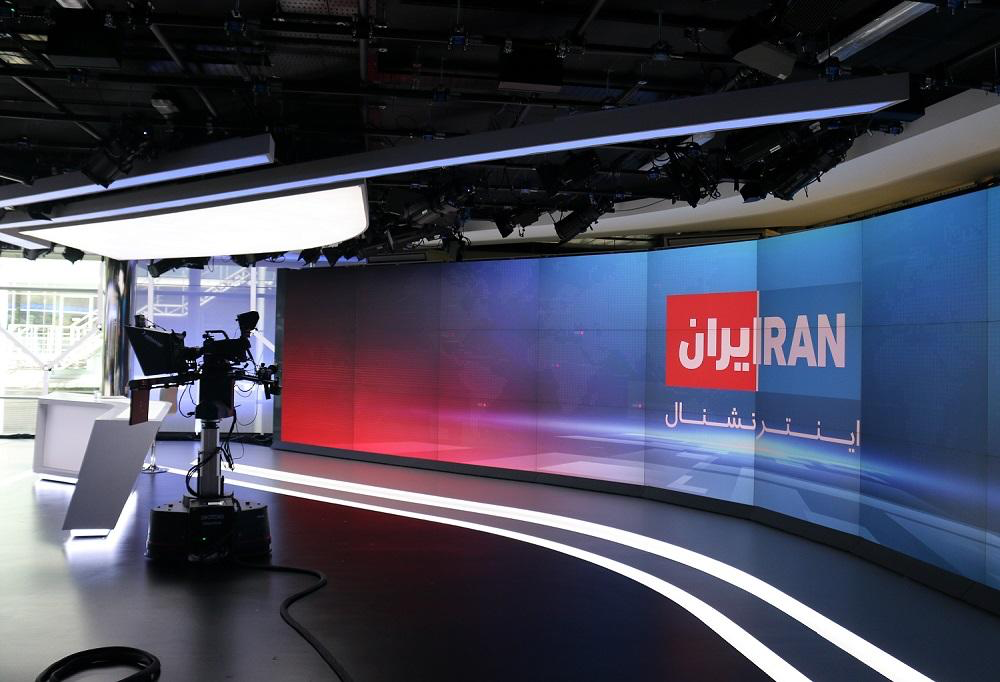
Iran International, which broadcasts independent news and political analysis into Iran, has been a particular target. Tehran has designated the broadcaster a terrorist organisation.
Pourmohsen has been critical of the Iranian authorities for almost two decades.
He previously worked for Gilan Today, an independent provincial newspaper in Iran, but was arrested in 2009 and sentenced to 12 months in prison after being accused of threatening national security.
In 2019, he was offered a job with Iran International in London, but feared that his criminal conviction would prevent him from leaving Iran.
To escape the country, he told Iranian intelligence officials that he was travelling to Istanbul on honeymoon. Once in Turkey, he collected a British work visa and flew to London.
The Iranian authorities discovered his departure only after the broadcaster announced his appointment.
According to Pourmohsen, Iranian intelligence officers subsequently threatened his relatives in an attempt to force him to abandon his journalism and return home.
“They tried to persuade them to make me give up my job and return to Tehran,” he recalled. “They even said they would snatch me off the street in London if I refused to go back voluntarily.”
His sister, a university academic, was warned that her career would be ruined unless she persuaded him to return.
The threats continued for several years, prompting Pourmohsen to contact the Metropolitan Police, who advised him on personal security and recommended that he carry a panic alarm.
The danger increased sharply in May 2024 when police ordered him to leave his home, just two months after Zeraati was stabbed outside his property in Wimbledon.
Pourmohsen was initially moved between safe houses, with his employer paying for accommodation and former military personnel to provide round-the-clock protection.
The upheaval came at a particularly difficult time because his father was seriously ill in hospital in Iran and had fallen into a coma.
In January 2025, police warned Pourmohsen that his location had been compromised and placed him under armed protection for two weeks.
The threat forced him to abandon any attempt to establish a permanent home and begin moving regularly between hotels approved by Scotland Yard.
“It’s after this that my big journey really started,” he recalled. “For the next six months, I moved [location] every three days, staying at hotels approved by Scotland Yard. For the following six months, I moved every week.”
The constant moves made it increasingly difficult for him to work. Unable to travel safely to Iran International’s studios in north-west London, he began presenting his daily programme from hotel rooms.
He stopped using credit cards, avoided restaurants and paid for purchases in cash to minimise the risk of his whereabouts being discovered. He also stopped putting his name on utility bills and avoided meeting friends and colleagues.
Describing the restrictions on his movements, Pourmohsen said: “The last time I went for dinner in a restaurant was more than two years ago — it was near Kew Bridge. I’ve not been to the office since December 2025. I can’t put my name on any utility bills. I don’t use my credit card; I only use cash.
“I’ve been living like a ghost in London. It’s really scary; it’s like having a killing squad following you around.”
The restrictions have also affected his physical and mental health.
He receives counselling and takes vitamin D supplements because he spends so much time indoors. Pourmohsen believes the Iranian authorities are deliberately trying to isolate him and undermine his mental health in an attempt to force him to abandon his work.
In July 2025, Pourmohsen cut off all contact with his family in Iran after his younger brother was threatened with arrest. He said he missed his relatives but feared that any further contact could place them in danger.
His phone was also hacked, with private photographs and messages subsequently published by Iranian state-backed media.
A hacking group linked to Tehran accused him of working for Mossad, the Israeli intelligence agency, an allegation he strongly denies.
Despite the threats, Pourmohsen has continued investigating the Iranian regime, including allegations concerning Yahya Panjaki, an Iranian intelligence officer accused of involvement in plots targeting dissidents abroad.
He acknowledged that friends and colleagues had become reluctant to meet him because they feared being caught up in an attack. Some have questioned why he continues working as a journalist when doing so could cost him his life.
Pourmohsen said he had no intention of abandoning his investigations because he believed he had a duty to expose corruption and wrongdoing within the Iranian government.
He was granted British citizenship last year and praised the police officers responsible for protecting him throughout his ordeal.
But despite the protection he receives, he believes that the threat against him will remain for as long as the current Iranian government stays in power.
“Unfortunately, as long as this regime in Iran remains in power — and I do the same work — I will not have an ordinary life in the UK.”
