

Listen to the article
Pakistan’s first astronauts to fly to the PRC’s space station are being billed as a scientific milestone. Both candidates on the mission are air force pilots, and that is the real story of the PRC’s first foreign guest on the Tiangong space station.
By André Pienaar
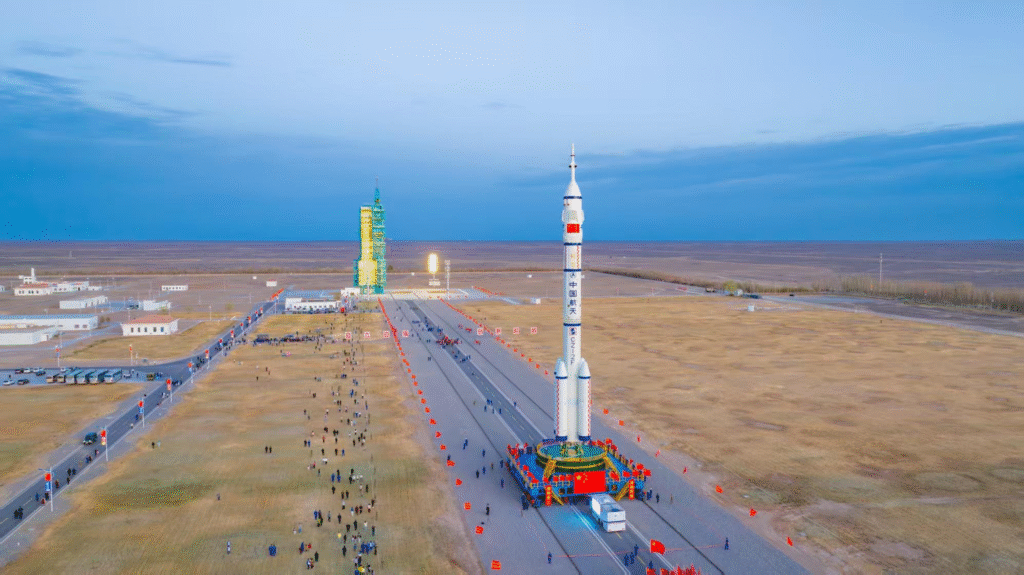
On or around 25 November, a Long March 2F rocket is expected to lift off from Jiuquan carrying the crew of Shenzhou-24 and, with them, the first foreigner ever to board China’s Tiangong space station. He will be Pakistani. Beijing and Islamabad have wrapped the occasion in the language of science and friendship: a one-week stay, a payload specialist’s role, four experiments in biotechnology for food security and climate resilience, and a new chapter in the “all-weather” relationship written in orbit.
All of that is true. It is also the least interesting part of the story. The detail most coverage has passed over is who the two candidates are.
Two pilots, one seat
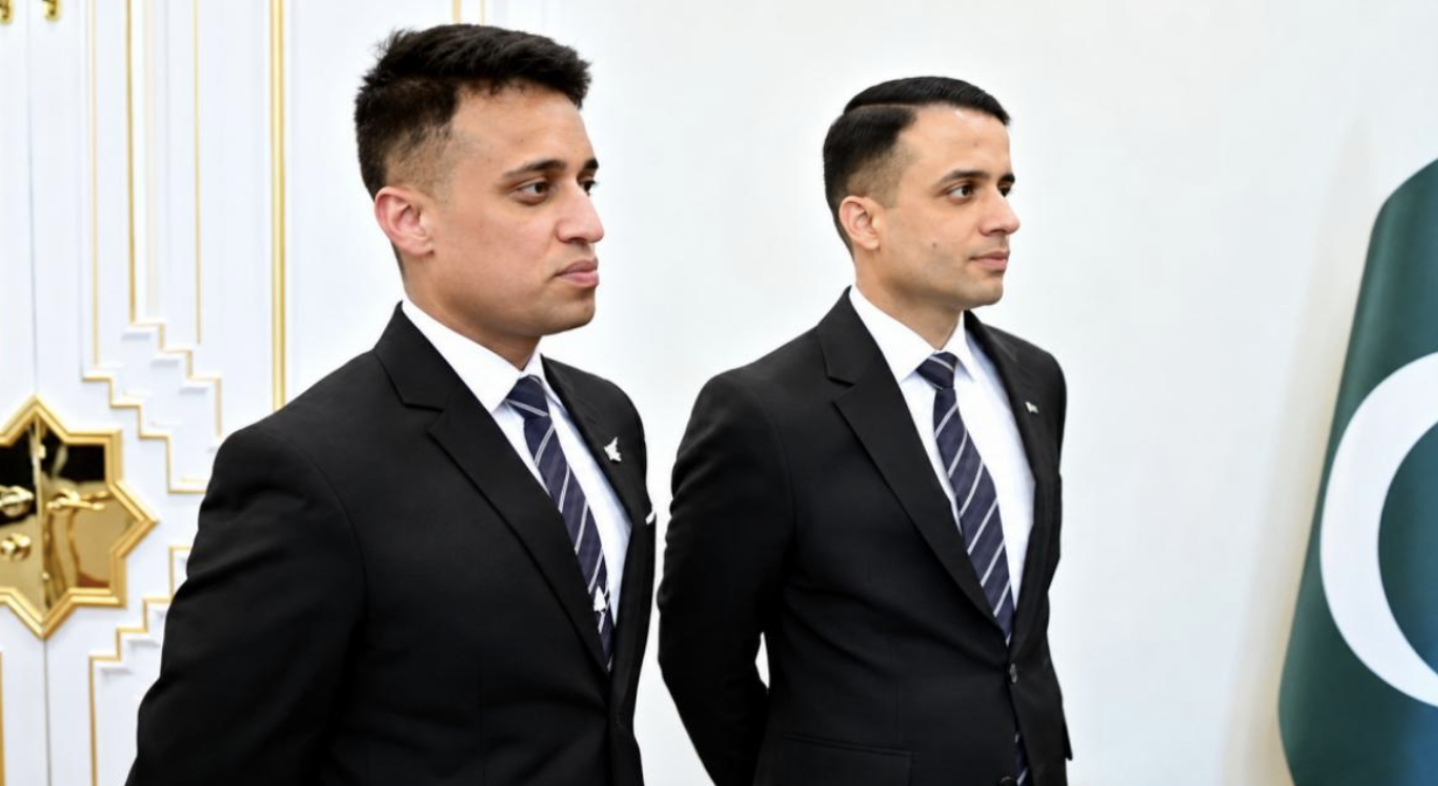
Both men in the final pair, Muhammad Zeeshan Ali and Khurram Daud, are Pakistan Air Force pilots. They were chosen from roughly 20 finalists drawn from a pool of pilots and scientists, and SUPARCO, Pakistan’s space agency, has been candid that their high-speed flying backgrounds — and the g-tolerance that comes with them — were decisive. The PRC’s state media describe them simply as “pilots”; some outlets call them former officers. Their ranks, squadrons and aircraft types have not been disclosed. In a programme otherwise eager for publicity, that silence is itself worth noting.
Look, too, at who has done the talking. When the two candidates cleared China’s secondary selection in February, the announcement came not from a science ministry but from Inter-Services Public Relations — the media wing of Pakistan’s armed forces. SUPARCO itself sits within the strategic apparatus that answers to the National Command Authority, the body that controls Pakistan’s nuclear arsenal. Pakistan’s human spaceflight programme is, in institutional terms, a military programme with a civilian face.
On the other side of the docking port, the picture is the same. China’s human spaceflight effort has never had a civilian firewall. The China Manned Space Agency is embedded in the People’s Liberation Army’s equipment system. The PRC’s astronauts are all PLA officers, most of them former air force pilots. The Jiuquan launch centre is a PLA installation. Shenzhou-24 is therefore not a scientific exchange between space agencies in the NASA–ESA mould. It is the integration of serving or recently serving military aviators of one nuclear-armed state into the military-run spaceflight system of another nuclear-armed state.
The next rung on the ladder
To be fair, military test pilots have filled astronaut corps since Gagarin and Glenn. India’s Shubhanshu Shukla, who flew to the International Space Station (ISS) on Axiom-4 last year, is an Indian Air Force group captain. The UAE’s first astronaut, Hazza Al Mansouri, flew F-16s. The pilot background alone is not the story. What matters is the institutional wrapper around it, and the trajectory it reveals.
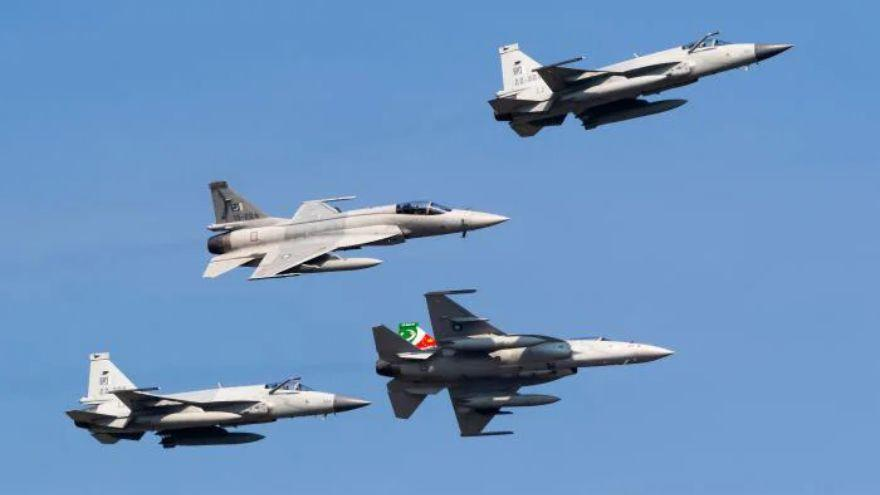
That trajectory runs in a straight line. Pakistan’s air force already flies the JF-17, co-developed with China, and the Chinese J-10C. In the May 2025 air battle with India, Chinese-built fighters and PL-15 missiles were Pakistan’s front line. Beijing watched the combat data with intense interest. Pakistan’s military navigation increasingly runs on the PRC’s BeiDou satellite network. Pakistan’s satellites ride Chinese rockets. A Pakistani-built rover is due to fly on China’s Chang’e-8 lunar mission around 2028. Islamabad has signed up to the China-led International Lunar Research Station. A seat on the PRC’s Tiangong (Heavenly Palace) space station is not a departure from this pattern. It is the next rung on a ladder in a fast-evolving PRC-Pakistani military integration that began with co-produced fighters and now reaches orbit.
Each rung deepens interoperability: shared procedures, shared training, shared language — the Pakistani candidates have spent months learning Mandarin at the Astronaut Research and Training Centre in Beijing — and, above all, shared trust between two officer corps. That trust is the real payload. It is what turns a supplier–client arms relationship into an alliance in all but name.
A station as a reward
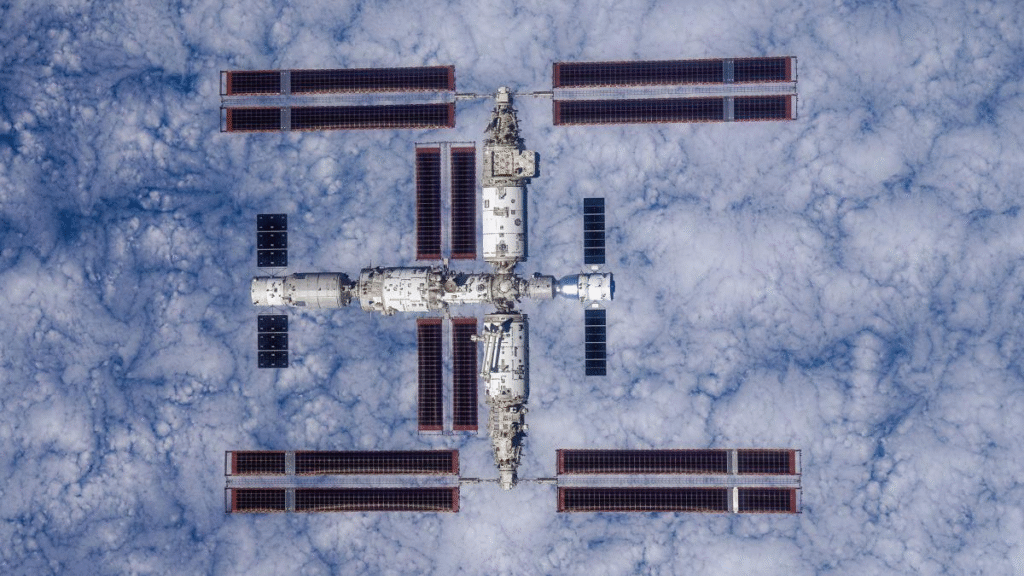
Beijing’s purpose is equally clear. Barred from the ISS by the USA’s Wolf Amendment, China built its own station and is now opening it to friends. Other governments have already asked for seats. With the ISS due to be retired in the next few years, there is a serious risk that Tiangong may soon be the only government-run crewed outpost in low Earth orbit with a long-term future. China intends to offer it as a reward for alignment — a Belt and Road initiative in orbit, with membership to this elite club signalled by who flies to Tiangong.
For India and Israel, the symbolism is pointed. New Delhi and Tel Aviv each sent an air force officer to orbit on an American commercial mission with Axiom Space. Islamabad is sending an air force officer on a Chinese state mission. South Asia’s rivalry now has a crewed spaceflight dimension, and each side has chosen its ally.
What the West should do
Western governments should draw five conclusions.
Read Tiangong manifests as defence-cooperation indicators. Who China chooses to fly next — a Gulf state, a Central Asian partner, an African government — will say more about strategic alignment than any communiqué.
Look past the “payload specialist” label. The professional profile of foreign flyers, and the institutions that select and announce them, deserve the same scrutiny we give foreign officers at Chinese staff colleges.
Compete for the swing states amongst allies. Commercial space stations and space flight are the West’s only answer to Tiangong diplomacy and the replacement of the ISS. Governments should treat access to them as an instrument of statecraft, not merely as a market.
The USA needs a space station to replace the ISS as a strategic priority. The US has to remain in the space station business by ensuring through public-private partnerships and a new space alliance amongst space-faring allies like Japan that there are new space stations in orbit to replace the ISS. The absence of a US-led space station will cede the high ground to the PRC and the axis of aggressors.
Factor space into South Asian crisis management. As both nuclear-armed rivals tie their air forces more closely to great-power space systems, the space domain becomes another channel through which a local crisis can draw in outside powers.
When the Pakistani astronaut floats into the Tianhe core module later this month, the cameras will show a smiling payload specialist and a banner celebrating friendship. The more accurate image is two air forces, one in uniform and one barely out of it, rehearsing in orbit the military partnership they have already built on the ground. We should report the science. But we should not miss the presence of the fighter pilots.
