

Listen to the article
A Russian cruise missile has crashed in Poland during a major attack on Ukraine, as Western forces conduct military exercises near the border.
Three objects, believed to be two missiles and a drone, entered Polish airspace during a major Russian attack on Ukraine on Friday, prompting accusations of a deliberate provocation and demands for additional NATO support.
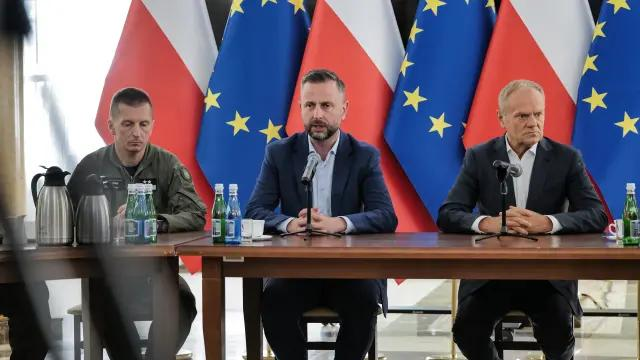
Polish Prime Minister Donald Tusk suggested the timing was no coincidence, particularly as troops from 11 European countries were conducting military exercises in the region.
Tusk said: “It is no coincidence that these objects landed near the site where military manoeuvres by a ‘coalition of the willing’ supported by Polish troops are taking place in Nowa Dęba.”
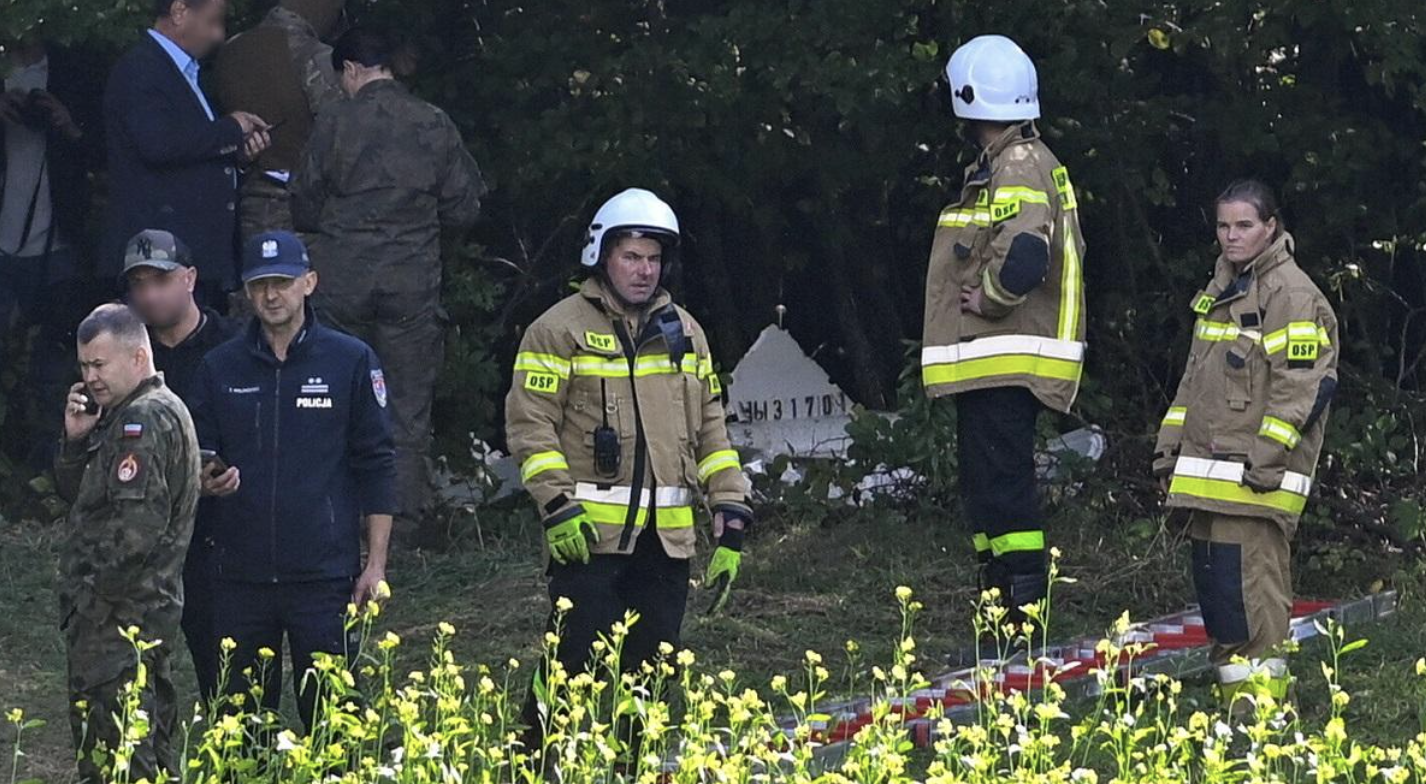
Polish authorities identified one of the objects as a Russian Kh-101 cruise missile, which came down near Nowy Lipowiec in southeastern Poland, close to the Ukrainian border.
A second suspected missile fell near Rudnik nad Sanem, while a suspected jet-powered drone came down near Mołodycz.
No injuries or damage were reported.
The incursions occurred during one of Russia’s largest aerial attacks on Ukraine since the beginning of the war.
Lieutenant General Ireneusz Nowak, Poland’s operational commander, said Russian forces had launched 26 Kalibr cruise missiles, 72 Kh-101 missiles and 503 drones during the attack.
Eleven objects were assessed as threatening Polish airspace, with three crossing the border.
Polish F-16 fighter jets and Swedish Gripen aircraft were deployed, supported by a Dutch refuelling aircraft and a Saab early-warning plane.
Patriot air defence systems near Rzeszów-Jasionka Airport and Świdnik were also activated.
Nowak said no weapons were fired because the conditions required for engagement had not been met.
Poland’s Defence Minister Władysław Kosiniak-Kamysz has since announced plans to request additional NATO forces and equipment for Eastern Sentry, the alliance’s operation to strengthen security along its eastern flank.
The requests come as approximately 2,800 troops from 11 countries participate in Exercise Koalicja, a British and French-led military exercise in southeastern Poland.
The drills are testing the movement of personnel and equipment, command structures, air operations and counter-drone defences.
They form part of the Coalition of the Willing’s preparations for a possible multinational force to support Ukraine’s security following a ceasefire.
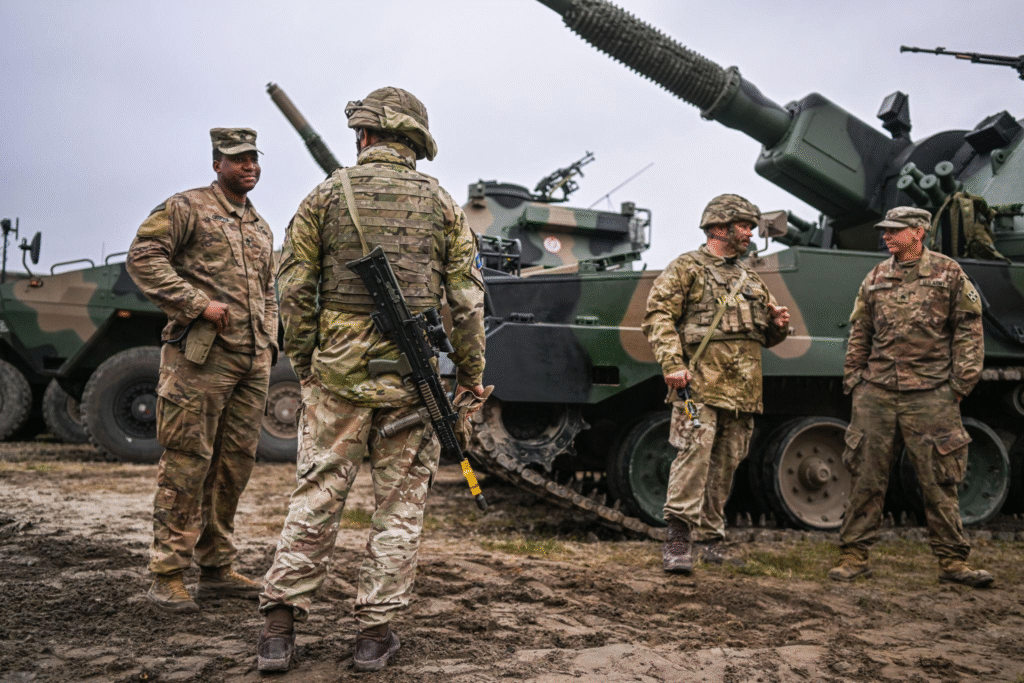
The proposed force would help strengthen Ukraine’s military and provide security assurances under a future peace agreement, although no deployment has been agreed.
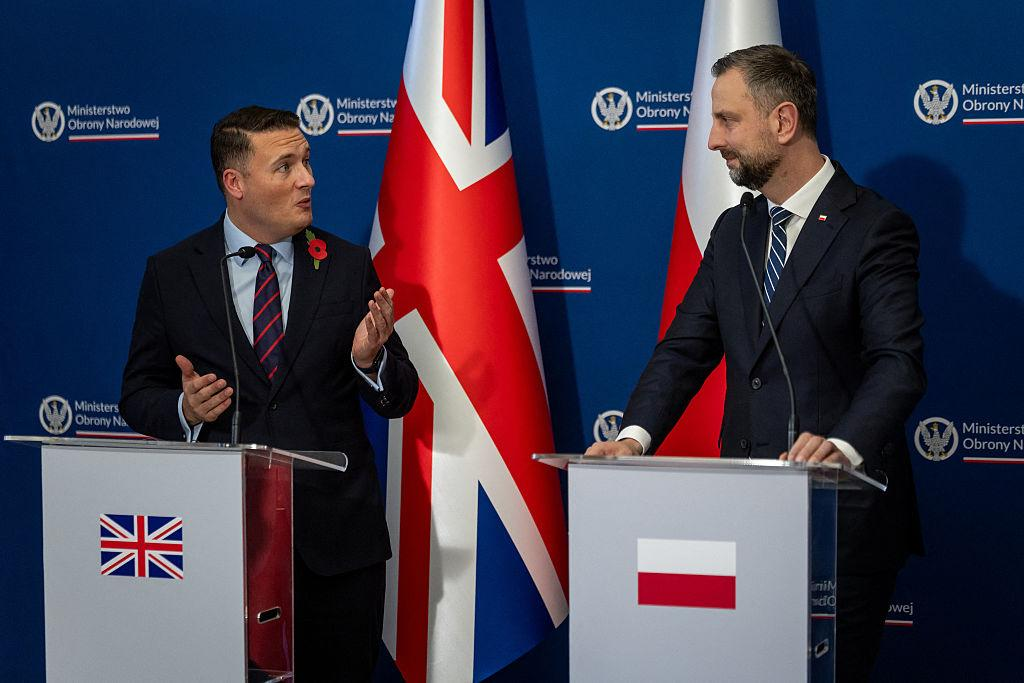
British Defence Secretary Wes Streeting, who attended the exercises alongside Air Chief Marshal Sir Richard Knighton, the Chief of the Defence Staff, condemned the incursions.
Streeting said: “The impact of Russia’s illegal war is being felt across Ukraine and increasingly in neighbouring countries.”
British Prime Minister Andy Burnham described the airspace violations as “utterly unacceptable”.
Rzeszów-Jasionka Airport, a major logistics hub near the Ukrainian border, temporarily suspended flights during Friday’s military response.
The incidents have raised questions about the security of Western military supply routes and NATO’s ability to respond to repeated airspace violations without risking a direct confrontation with Moscow.
Although there is no evidence that the objects targeted military supply infrastructure, the incursions have raised concerns about the security of Western military supply routes.
Dr Julian Pawlak, a researcher at the German Institute for International and Security Affairs (SWP), warned of the consequences if Russian forces targeted Western military supplies inside NATO territory.
He told National Security News: “A direct military attack on Western military supply would represent an attack on NATO.”
Pawlak also highlighted the threat posed by sabotage and other hostile activities.
He said: “Looking at the number of military threats and grayzone attacks like sabotage, there are likely approaches trying to limit Western support of Ukraine.”
The incursions follow previous violations of Polish airspace, including multiple Russian drones entering the country in September 2025, prompting a major response by Polish and allied forces.
A Russian cruise missile also landed in Poland in July 2026 during an attack on western Ukraine, adding to concerns about the risks posed to neighbouring countries.
NATO Secretary General Mark Rutte described the latest incident as “clearly dangerous” and expressed solidarity with Poland.
Pawlak warned that NATO needed to consider the wider pattern of Russian military activity and other hostile operations rather than responding to each incident separately.
He told NSN: “NATO and the Western allies have to see beyond the single incidents – and look at the large and developing number of incursions, sabotage, and hybrid actions as a growing issue.”
