

Listen to the article
China has little incentive to help end the war in Ukraine, despite its growing leverage over Moscow, according to the director of Chatham House.
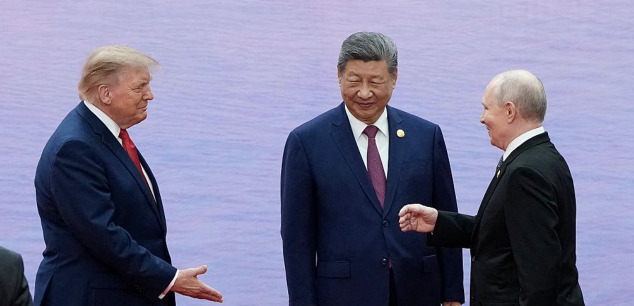
Bronwen Maddox’s assessment comes after United States President Donald Trump, Russian President Putin and Chinese President Xi Jinping met in China without announcing any new agreement on Ukraine.
The three leaders met in Shenzhen to discuss nuclear security and the wars in Ukraine and the Middle East.
The meeting produced a four-point declaration addressing United Nations reform, nuclear risks, energy production and the immunity of state officials before international courts.
The leaders agreed that a nuclear war could not be won and must never be fought, while expressing support for further dialogue on reducing nuclear risks.
The declaration contained no reference to Ukraine, despite Trump raising the war during separate discussions with Putin and Xi.
Trump had earlier suggested that Washington and Beijing could work together to help end the war.
Speaking alongside Xi, the US president said: “We’re looking to both help with respect to the war with Russia and Ukraine.”
He added: “I’d like to see it ended. I think I can speak for both of us very much.”
China has become an important supplier of electronic components and industrial machinery that can be used in civilian manufacturing as well as Russian weapons production.
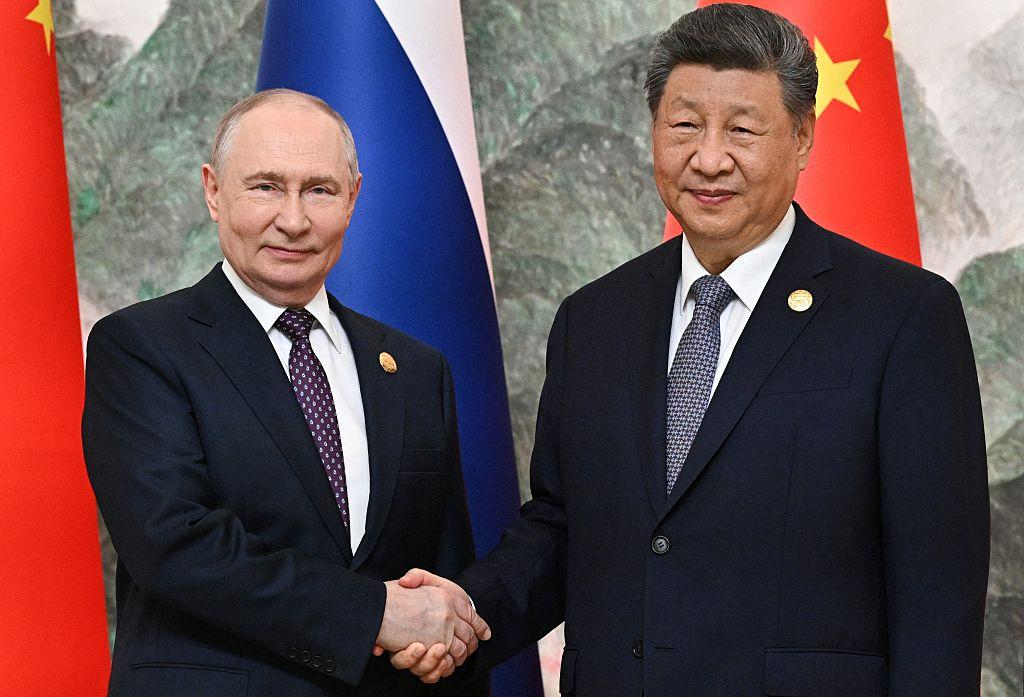
Western governments have accused Chinese companies of helping sustain Russia’s war effort through the supply of such equipment, although Beijing denies providing lethal weapons to Moscow.
Maddox, director and chief executive of Chatham House, argues that Beijing benefits from maintaining close ties with Moscow while European governments remain preoccupied with the war.
Maddox said: “Beijing is quietly stirring the conflict in Ukraine, helping Russia by buying its oil and selling it engines and components used in aerial warfare. Having Europe preoccupied with the conflict suits China fine.”
Chinese purchases of Russian oil have provided Moscow with an important source of revenue since the full-scale invasion of Ukraine, while Western sanctions have increased Russia’s reliance on Chinese technology and industrial equipment.

The US-China Economic and Security Review Commission, which advises Congress, examined Russia’s growing reliance on Chinese technology in its annual report published this week.
The commission reported that China facilitated more than 90 per cent of Russia’s imports of sanctioned technology in 2026.
China has supplied Russia with semiconductors, electronic circuits, drone components and machine tools, according to the commission.
Such equipment can be used in civilian manufacturing but also supports the production of military systems, including drones and other weapons.
The commission found that Beijing has used Russia’s growing dependence to strengthen its bargaining position, particularly in negotiations over energy supplies.
The proposed Power of Siberia 2 pipeline, which would transport Russian natural gas to China, illustrates Beijing’s growing bargaining power.
China has reportedly sought lower prices for Russian gas, while Moscow is seeking a long-term agreement to increase exports following the loss of much of its European energy market.
The commission assessed that Russia needs the pipeline more urgently than China, giving Beijing greater influence over the terms of any agreement.
China has also expanded cooperation with Russia in the Arctic, where Moscow has traditionally been cautious about allowing other countries to develop a significant presence.
The commission reported that Russia’s economic isolation had forced Moscow to accept greater Chinese involvement in Arctic energy projects and shipping.
Chinese state-owned companies hold a combined 20 per cent stake in the Arctic LNG 2 project, which is subject to American and European sanctions.
The two countries are also developing commercial shipping along the Northern Sea Route, including plans for vessels capable of operating in Arctic conditions.
Beijing has repeatedly called for a negotiated end to the war while maintaining close economic and diplomatic ties with Russia.
Jeremy Hunt, the former British foreign secretary and chancellor, criticised Thursday’s summit.
Speaking to BBC Radio 4’s World at One programme, Hunt described the meeting as “a summit that should never have happened”.
He said the talks were “a gift to Vladimir Putin, who is responsible for the biggest war on the European continent since World War Two”.
Hunt argued that the meeting “gives him credibility which will strengthen his position and probably mean that the war goes on for longer”.
Meanwhile, Ukrainian President Volodymyr Zelensky arrived in Berlin on Thursday for further discussions with European allies and American representatives.
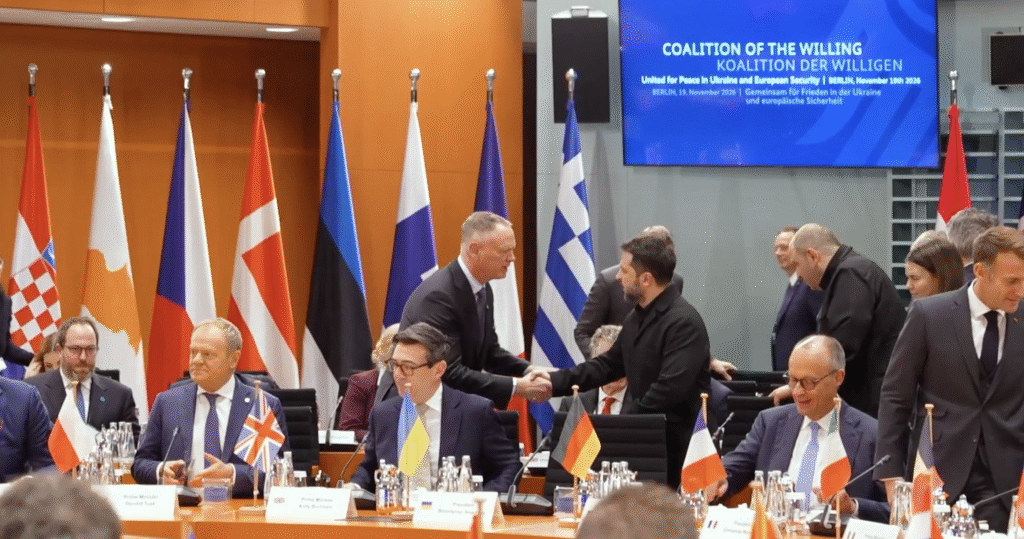
The meeting of the Coalition of the Willing brought together representatives from more than 40 partner countries, with discussions focused on military assistance, air defence, energy and financial support, and diplomatic efforts to end the war.
The Shenzhen summit ended without an announced agreement on Ukraine, leaving Beijing’s economic relationship with Moscow unchanged.
