

Listen to the article
The Royal Navy will launch a fleet of ‘drone’ submarines to protect vital undersea cables from attacks by Russia’s ‘shadow fleet’.
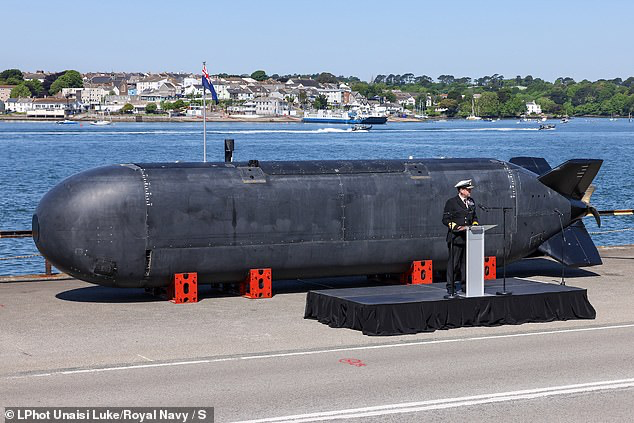
A prototype of the unmanned 19-tonne vessel, named Excalibur, was launched at Devonport naval base last week and will pave the way for the production of an entire squadron.
The vessels are designed to safeguard critical subsea infrastructure, according to the Ministry of Defence (MoD), and will be central to the Government’s new defence plans.
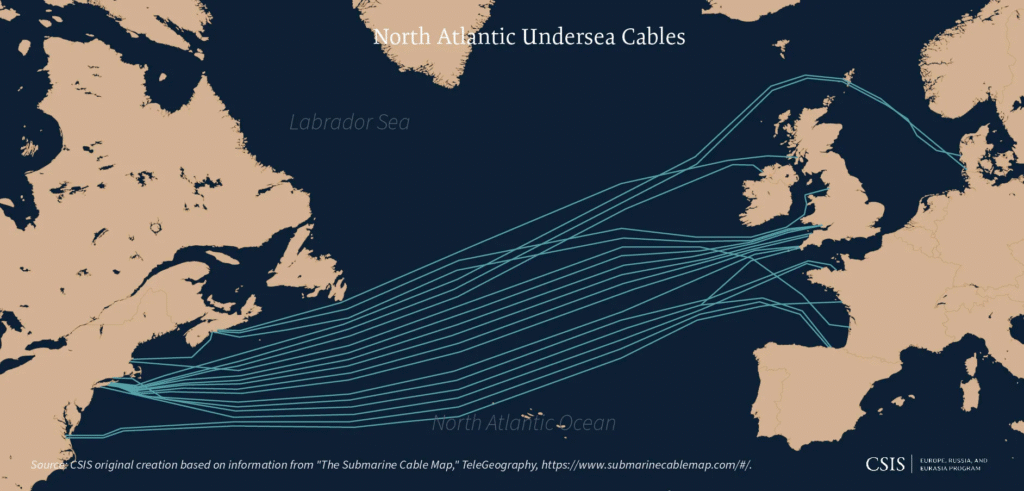
Underwater fibre-optic cables, which lie on the ocean floor, enable global communication and internet connectivity between continents, while other cables are responsible for carrying electricity.
Excalibur will now embark on two years of trials as the Royal Navy seeks to strengthen its capabilities in the ‘underwater battlespace’, amid increasingly bold incursions from Russia’s ‘dark fleet’, which transmits false data to avoid detection.
The move comes as the Government prepares to reveal the results of its Strategic Defence Review (SDR), which is expected to focus on homeland security, protecting national assets, and traditional war-fighting capabilities.
Ministers are expected to emphasise the need for Britain to move to a ‘pre-war footing’ of increased military preparedness, as fears mount that Russia could extend its attacks beyond Ukraine.
It is anticipated that measures to protect the UK’s undersea cables from attack will be highlighted in the SDR, including plans to introduce a volunteer ‘home guard’ to safeguard locations where the cables come ashore.
A MoD spokesperson said the SDR will set out “a path for the next decade to transform the armed forces to ensure we’re prepared for emerging threats, making Britain secure at home and strong abroad”.
Previous attacks on key underwater infrastructure have raised concerns over the level of protection in place.
In 2022, a series of underwater explosions targeted the Nord Stream pipeline, causing gas leaks on three of the four natural gas pipelines and rendering them inoperable.
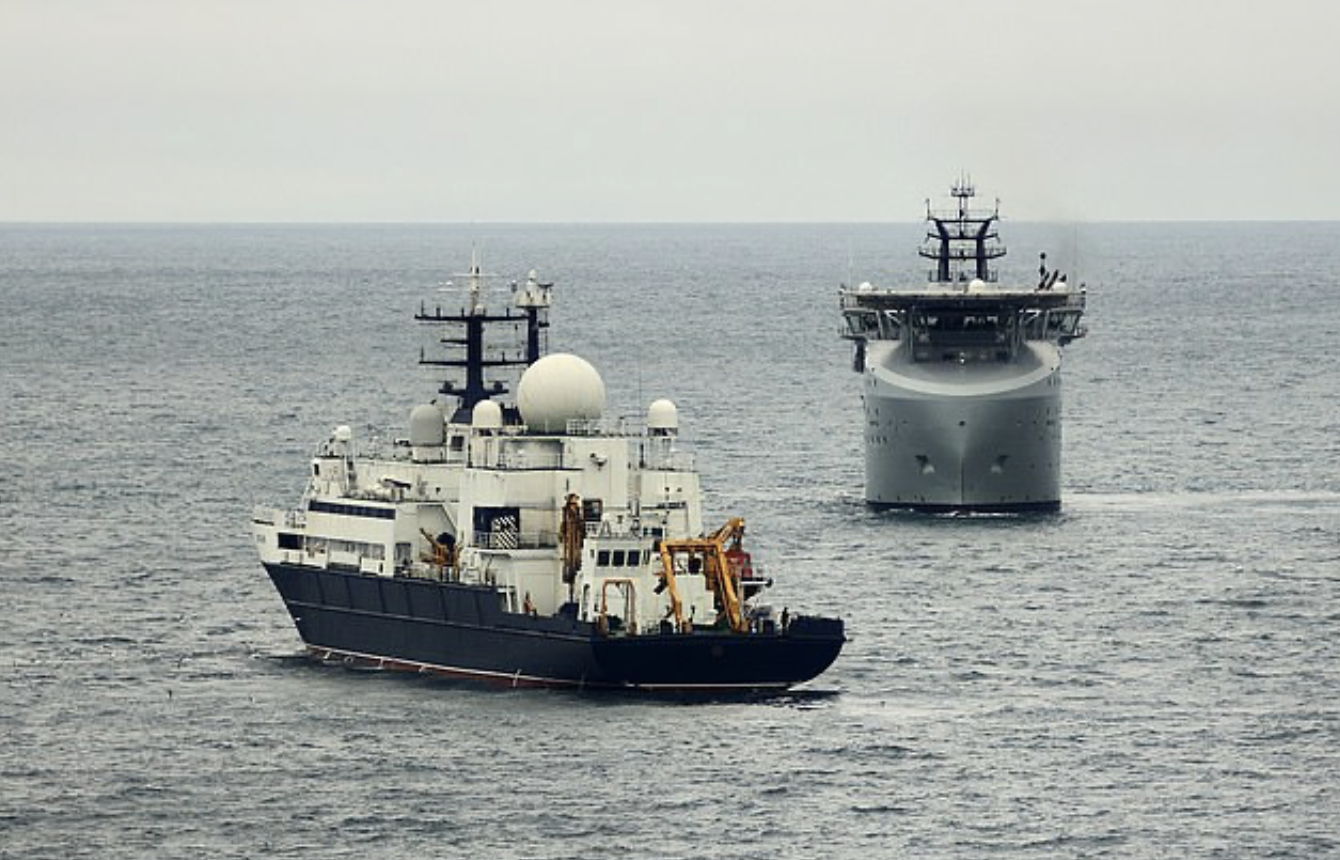
Fears were heightened again last year when a Russian spy ship entered an area of the Irish Sea where critical pipelines and cables located in the Baltic Sea had been damaged.
These two incidents prompted a ten-nation initiative, led by the UK, to monitor suspicious Russian vessels in the English Channel, North Sea, and Baltic Sea.
Excalibur is battery-powered and was built by Plymouth-based MSubs as part of a £15 million contract.
It boasts a range of 1,000 miles and measures 39 feet long by 6.5 feet wide, making it the largest unmanned submersible ever operated by a European navy.
Yet it still fits into a standard 40ft shipping container, making it easy to transport.
Batteries are carried in packs along each side of the vessel, and it features two pressurised compartments for computing and control equipment.
The compartments are separated by a central storage bay, which could carry mines, deployable sensors, and smaller underwater drones.
Excalibur will have greater diving capabilities than any of the Navy’s manned submarines and is designed to allow the storage section to be doubled if necessary. For example, additional space could be used to house more batteries, extending the amount of time it can remain at sea.
The Royal Navy said testing of the craft will strengthen “efforts to remain ahead of potential foes beneath the waves, safeguarding key infrastructure, protecting British and allied ships and submarines, and gathering intelligence”.
Excalibur is expected to influence the design of a hunter-killer submarine being developed under the Aukus security pact with Australia and the US. Representatives from both countries attended the launch last week.
The new ‘drone’ submarines will supplement Proteus, a Royal Fleet Auxiliary ship launched in 2023 that is used to deploy smaller underwater surveillance vessels and equipment.
The Government’s defence plans are also expected to propose an increased role for private investment.
This could encourage global technology companies to help fund the protection of the cables – which are vital to their business – using radars, sensors, and underwater vehicles.
Defence Secretary John Healey last week announced the establishment of a Defence Industrial Joint Council, which will coordinate public-private investment. The council is set to meet for the first time in June.
