

Listen to the article
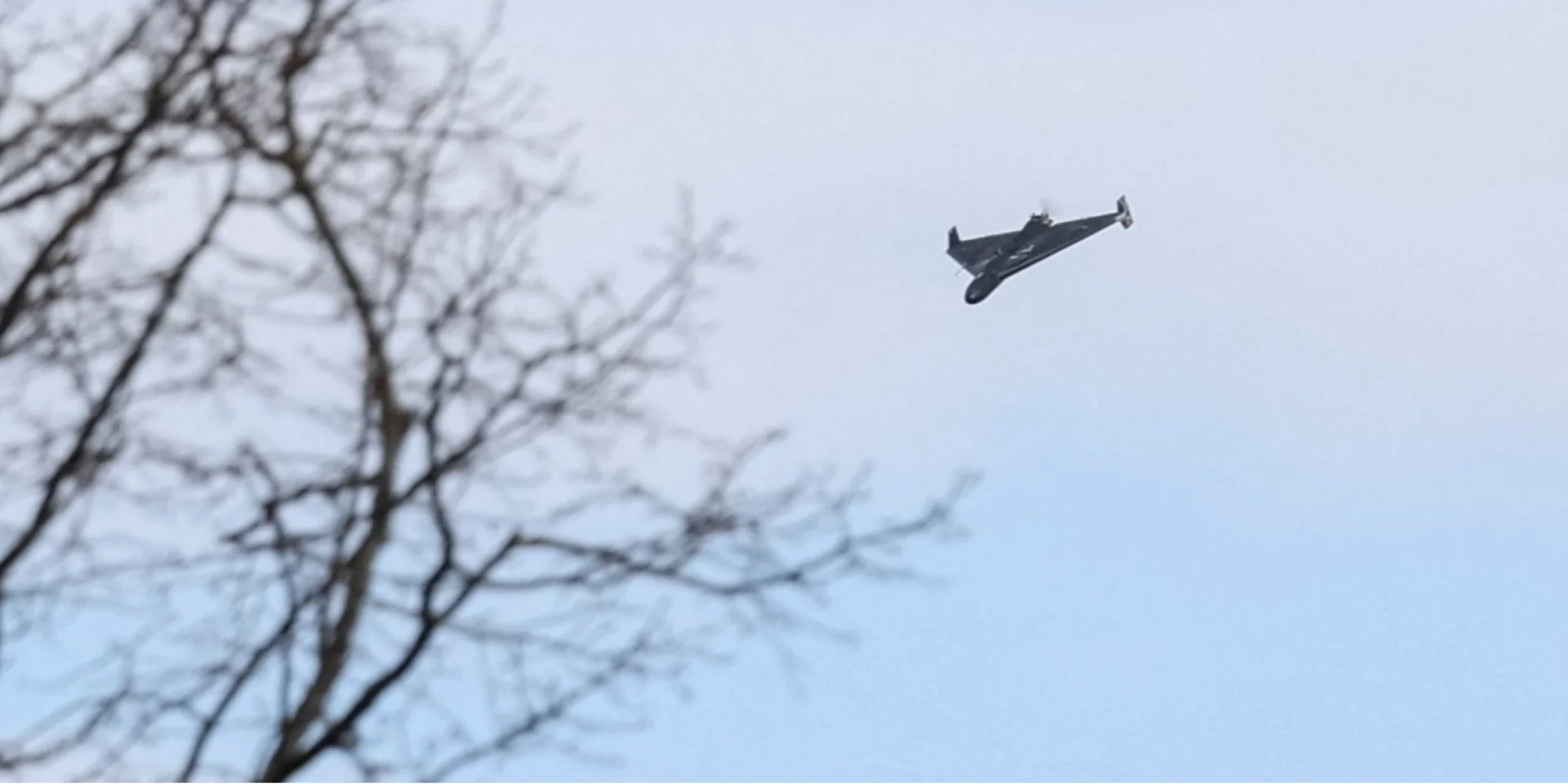
Russia has dramatically increased its use of jet-powered attack drones against Ukraine, deploying thousands of high-speed weapons capable of overwhelming air defences and striking targets hundreds of miles behind the front line.
The new generation of Russian Geran drones can travel at up to 600km/h, carry warheads weighing as much as 90kg and, in some variants, fly almost 1,000km, giving Moscow a weapon that combines some of the capabilities of a cruise missile with the lower cost and mass production of a drone.
Their emergence in large numbers is regarded as a significant development because their speed means many can no longer be reliably destroyed by the cheap interceptor drones that have become one of Ukraine’s principal defences against Russian Shaheds.
Russia used jet-powered drones against Ukraine every day throughout August, according to analysis of Ukrainian Air Force data. Ukrainian military figures indicate their use increased from about 350 in June to 1,600 in July and 2,800 in August.
The attacks have continued into September. During a Russian assault on 2 and 3 September, about half of the 163 drones launched were reported to be jet-powered. Six days later, jet drones continued to threaten Kyiv into the afternoon during an attack that killed five people and injured dozens.
Dr Marina Miron, a military technology expert at King’s College London, said: “The reason for turning to jet-powered drones is that they are much faster than the previous generation and it makes it much more difficult for Ukraine to intercept them.”
Russia has developed at least three principal jet-powered variants, the Geran-3, Geran-4 and Geran-5, using technology originally derived from Iran’s Shahed programme.
The Geran-3, the Russian version of the Iranian Shahed-238, can carry between 50kg and 90kg of explosives. Different configurations are reported to reach speeds of between 300km/h and 600km/h, with some estimates putting its maximum range as high as 2,500km, although performance varies considerably depending on engine, payload and configuration.
More concerning for Ukraine is the Geran-4, specifically developed to defeat drone interceptors. Ukrainian Defence Intelligence said the aircraft has a reinforced, more aerodynamic airframe and Chinese-made Telefly turbojet engines. It can reach 500km/h, climb to 5,000 metres and carry either a 50kg high-explosive or thermobaric warhead, or a larger 90kg thermobaric weapon, over a range of about 450km.
Serhiy Beskrestnov, an adviser to President Zelensky on defence technology known as “Flash”, has said newer Geran-4s may reach 550km/h. He said Russia was attempting to develop cheap strike weapons with speeds approaching those of subsonic cruise missiles.
The Geran-5 is larger still, measuring about 6.5 metres long and weighing up to 850kg. Ukrainian intelligence assesses that it has a cruising speed of between 450km/h and 600km/h, a range of about 950km and a 90kg warhead. It can operate at altitudes of up to 6,000 metres.
The significance lies not simply in their speed but in the economics of air warfare.
Ukraine has successfully developed cheap interceptor drones capable of destroying the slower propeller-driven Shahed-136 and Geran-2. But some of those interceptors have maximum speeds of around 300km/h, leaving them unable to catch the fastest Russian jet drones.
Colonel Yurii Ihnat, a spokesman for the Ukrainian Air Force, said: “These drones are no longer within the reach of interceptor drones, whose speed is up to 300 km/h.”
“That means mobile fire groups and anti-drone interceptors can no longer be relied upon,” he added. “Missiles have to be used.”
That creates an uncomfortable equation for Kyiv. Russia can launch comparatively inexpensive drones in large numbers, forcing Ukraine either to allow some through or expend scarce and far more expensive surface-to-air missiles to destroy them.
In some Russian attacks, jet-powered aircraft have already accounted for as many as two-thirds of the one-way attack drones, according to Ihnat.
Beskrestnov estimates that Russia can now manufacture about 3,000 jet drones a month and could produce between 36,000 and 40,000 annually.
The Center for Strategic and International Studies said Russia’s Geran programme demonstrated how Moscow was rapidly adapting weapons in response to Ukrainian defences, testing modifications in combat and quickly mass-producing those that worked.
The result is an increasingly blurred distinction between drone and missile warfare. Russia does not need its jet drones to match the performance of sophisticated cruise missiles. It needs them to be fast enough to penetrate Ukraine’s cheaper defences, destructive enough to damage important targets and inexpensive enough to be launched by the hundred.
For Ukraine, that means the race to build cheap drone interceptors is already entering its next phase.
