

Listen to the article
Russian and Iranian propaganda operations have sought to exploit the violent protests sweeping France, spreading misleading claims and fabricated news reports to portray the country as descending into chaos, according to a new assessment by the Disinformation Commission.
The report reveals how Russian-linked networks, Iranian government officials and far-right social media influencers have used the unrest to spread false information to millions of people across Europe and beyond.
It also warns that Russian propaganda has appeared among sources retrieved by artificial intelligence search engines, raising concerns about attempts to influence information presented to the public.
The 15-page assessment, dated October 18, concludes that the protests are a domestic uprising rather than a foreign-directed operation, but that Moscow and Tehran have exploited the violence to pursue their own political objectives.
The document states: “The unrest in France is a home-grown protest movement. We found no evidence that a foreign state started it or directs it.”
The report adds: “Russia and Iran are exploiting it openly, but the widest distortion came from far-right influencers in France and abroad, who passed off old videos as the riots to paint a migrant ‘civil war’.”
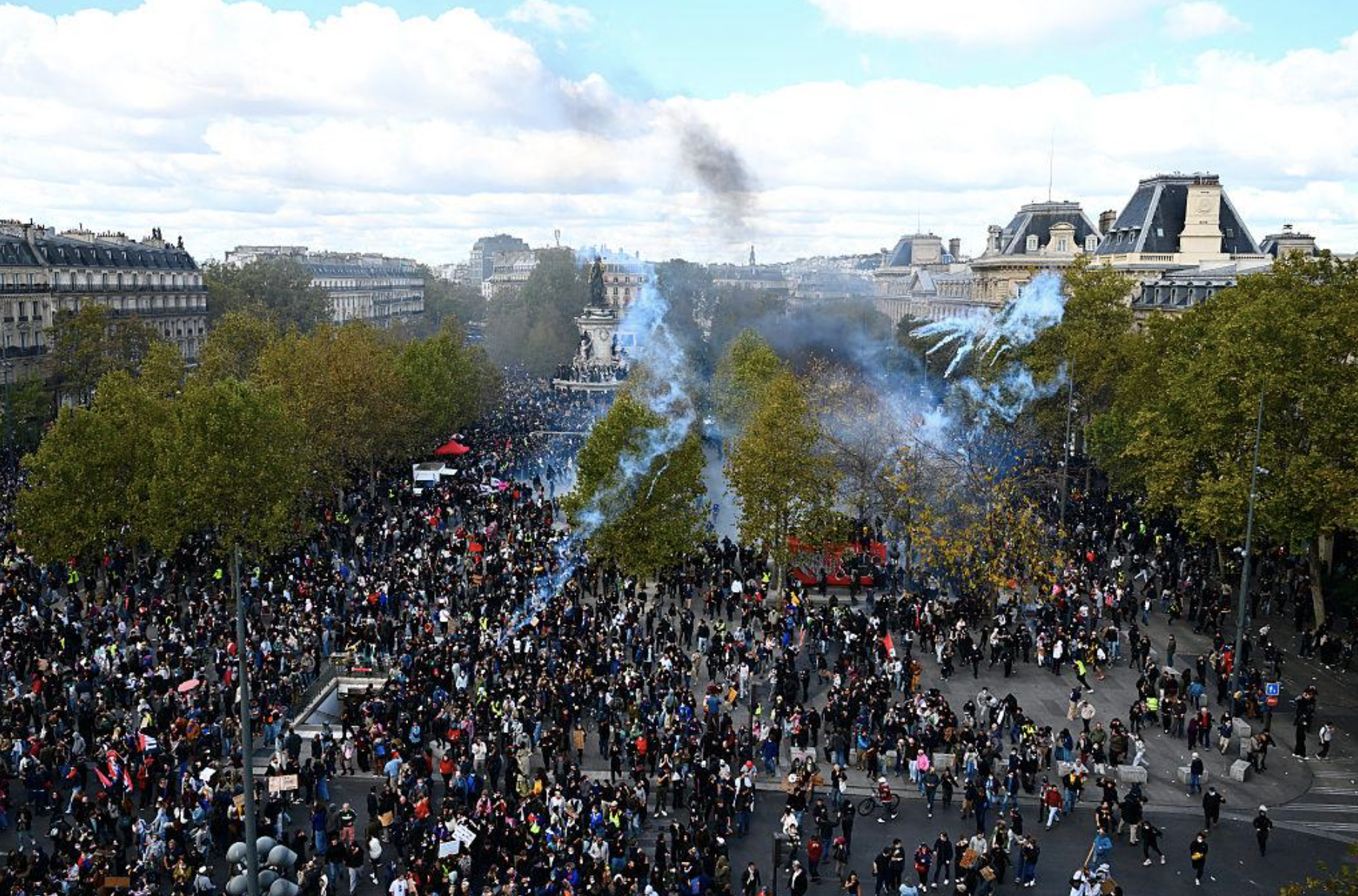
The findings follow weeks of escalating violence in France, where protests that began with a teachers’ strike at a secondary school in Créteil on September 17 developed into a nationwide movement involving hundreds of schools.
On Saturday, an estimated 550,000 people joined demonstrations across the country, according to police, while trade unions put the figure at 800,000.
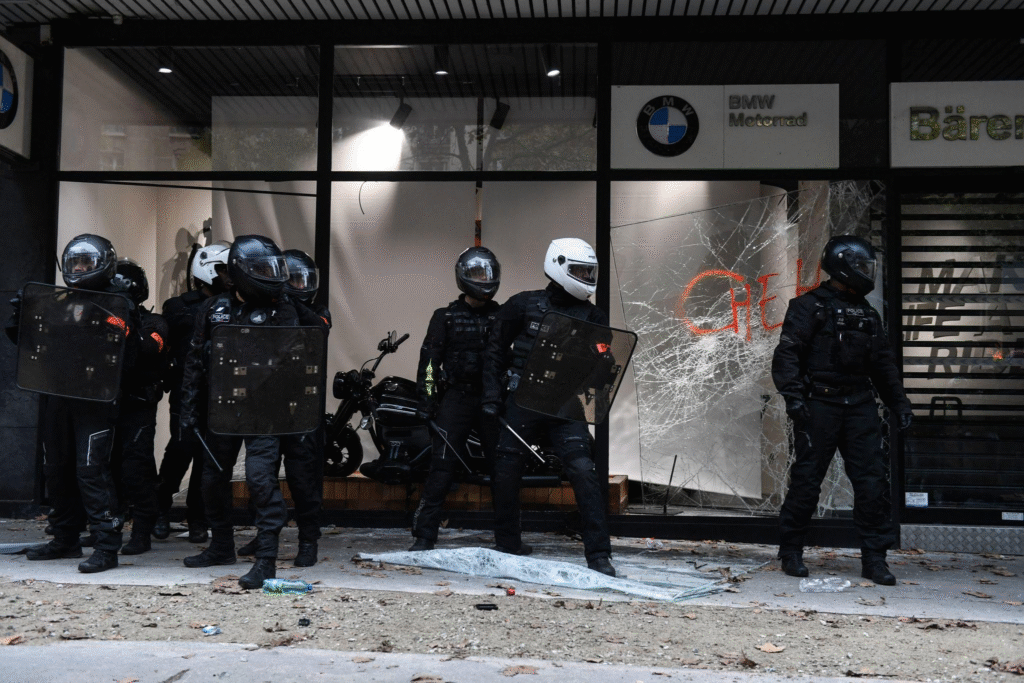
The protests descended into widespread rioting, with town halls attacked, shops looted and hundreds arrested.
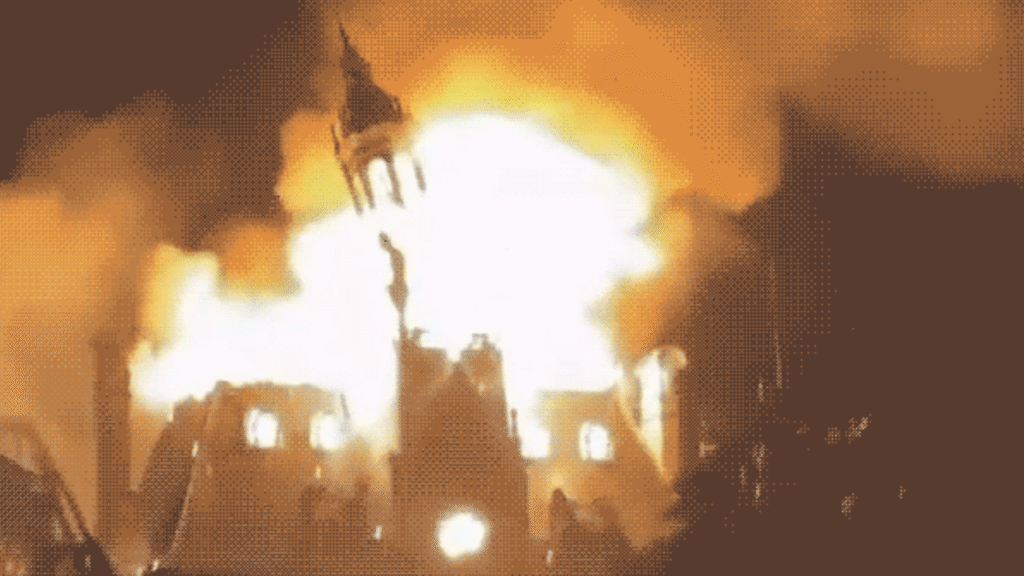
In Limoges, the town hall was set alight and its campanile collapsed. Buildings were attacked in Marseille, Lille and Bordeaux, while serious clashes took place near the Élysée Palace in Paris.
The French government subsequently reported approximately 1,200 arrests and 150 injured police officers and gendarmes, figures the assessment said required further verification.
According to the report, a Russian disinformation operation known as Matryoshka produced around 20 fabricated news reports in just two days.
The false stories impersonated established international news organisations, including Agence France-Presse, Deutsche Welle and Le Monde.
Among the fabricated claims were allegations that 54 French teachers had been killed, that former prime minister Gabriel Attal had financed the riots and that the Pope had abandoned a visit following attacks by Muslim pupils.
The assessment states: “This is Matryoshka’s usual method: impersonate trusted media, then tag fact-checkers to draw attention.”
However, investigators found that the operation attracted relatively little online traffic.
A separate Russian propaganda network, known as Pravda or Portal Kombat, published 21 items about the October 17 disturbances across two French-language websites.
These included reports originating from Russian military bloggers, state-linked media and pro-Kremlin commentators.
The material combined genuine accounts of the violence with unverified allegations and descriptions of France being engulfed by disorder.
The report warns that the network’s principal objective is to have its material picked up by internet search engines and AI systems.
Investigators tested ChatGPT, Google’s Gemini and Perplexity, examining 24 responses to questions about the unrest.
Although none repeated the false allegations, Perplexity included a Pravda-network website among its sources on both occasions when asked whether Russia was responsible.
The report states: “This is the network working as designed: being retrieved when someone asks the exact question it exists to shape.”
Russian officials and pro-Kremlin Telegram channels also used the disturbances to promote claims about European decline.
Maria Zakharova, the Russian Foreign Ministry spokeswoman, questioned why European Union officials had remained silent about French police actions against demonstrators.
Iran conducted a separate campaign through its foreign ministry and diplomatic missions, publishing 34 social media posts between September 21 and October 9.
These attracted more than 1.3 million views and accused France of hypocrisy over its treatment of protesters.
The campaign prompted a diplomatic confrontation, with Paris summoning Iran’s ambassador on October 7 over what it described as “false content disseminated online by official accounts of the Iranian Foreign Ministry”.
However, the report concludes that the most widely circulated misleading material originated not from Moscow or Tehran but from far-right influencers.
It names British activist Tommy Robinson and American commentators Alex Jones and Benny Johnson among those who shared or promoted old footage presented as evidence of the latest unrest.
One video showing burning vehicles actually dated from Kurdish demonstrations in Paris in December 2022.
According to the assessment, Robinson’s post attracted approximately 800,000 views, while another account sharing the same footage received more than eight million.
Footage of a burning bus from January 2023 was also recycled, while video of Paris Saint-Germain football celebrations in May 2026 was falsely presented as evidence that France had descended into disorder.
The assessment states: “Foreign far-right influencers are the biggest distorting force.”
It estimates their misleading content attracted roughly ten times the audience of the state-linked propaganda examined.
Investigators also identified commercial accounts, including operations linked to West Africa, distributing misleading material to generate advertising revenue.
Despite these findings, the report stresses that investigators found no evidence of cooperation between Russian or Iranian state operations and far-right influencers.
It concludes: “The most likely explanation is that this is an organic protest, and that separate actors are exploiting it to distort the information space, each for its own reasons.”
The assessment also questions claims by the French government that the left-wing party La France Insoumise orchestrated the protests, saying the intelligence evidence cited was geographically limited.
The authors warn that with authentic footage of serious rioting now widely available, future manipulation may increasingly focus on identifying the protesters as migrants, Islamists or foreign agitators.
The report recommends further investigation of online networks ahead of a French Senate debate on October 27 and another nationwide strike planned for November 5.
