

Listen to the article
Ukraine has launched its biggest drone attack of the war on Moscow, striking a major oil refinery and killing three people.
The attack came as Russians voted in parliamentary elections presented by Vladimir Putin as a test of support for the war.
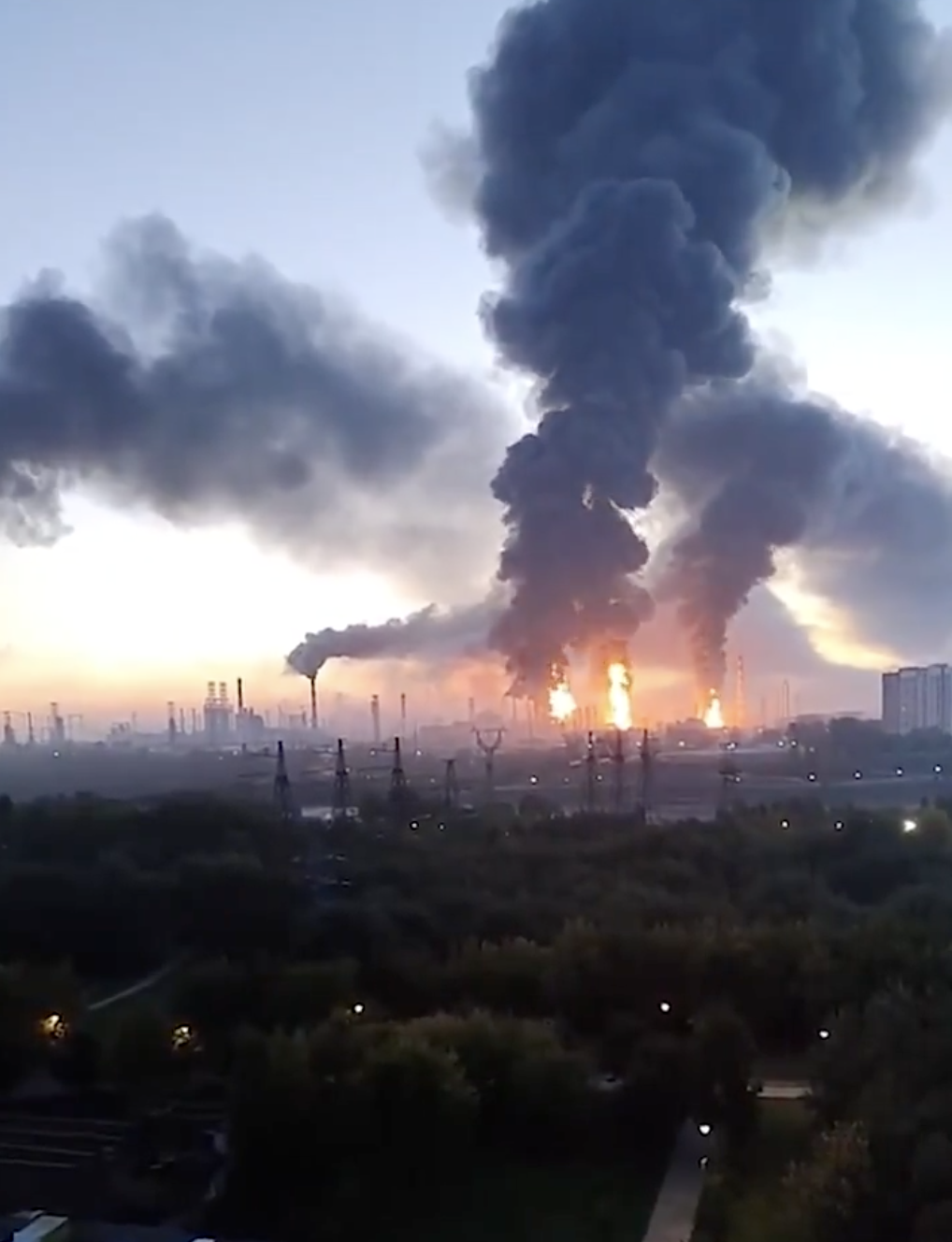
Hundreds of drones swept towards the Russian capital in an unprecedented overnight bombardment, overwhelming air defences and setting part of the Moscow Oil Refinery ablaze.
Sergei Sobyanin, the mayor of Moscow, said Russian forces had destroyed more than 1,600 drones since Saturday, including 450 heading towards the capital. Several nevertheless broke through, hitting the refinery and a residential building.
“The unprecedented attack was clearly planned with the aim of disrupting the elections,” Sobyanin said. “The adversary failed to achieve this.”
Andrei Vorobyov, the governor of the Moscow region, said three people were killed. Hundreds of residents were evacuated after drones damaged apartment buildings, including a 21-storey block in Ramenskoye.
Ukraine acknowledged carrying out long-range strikes against Russian oil and logistics infrastructure.
President Zelensky said Ukrainian forces had used a range of domestically produced weapons, including Flamingo cruise missiles and long-range drones, to strike facilities supporting Russia’s military effort.
“These are billions of dollars that sustain the war machine,” Zelensky said, describing the attacks as part of Ukraine’s campaign to reduce Moscow’s ability to finance and supply its forces.
The Moscow refinery, in the southeast of the capital, is one of Russia’s most important fuel plants and has been attacked several times during the war. It processed 11.6 million tonnes of crude in 2024 and produced 2.9 million tonnes of petrol and 3.2 million tonnes of diesel, according to the latest available figures.
Ukraine has increasingly targeted refineries and other energy facilities deep inside Russia in an attempt to cut revenues, disrupt military logistics and create fuel shortages.
The Russian defence ministry said it had destroyed 1,110 Ukrainian drones across Russia, Crimea and the Black Sea during the attack. It also said Ukrainian forces had used Flamingo cruise missiles and vowed to intensify strikes against Ukrainian military targets.
The assault was particularly sensitive for the Kremlin because it came on Sunday, the third and final day of Russia’s first State Duma election since Putin launched the full-scale invasion of Ukraine in February 2022.
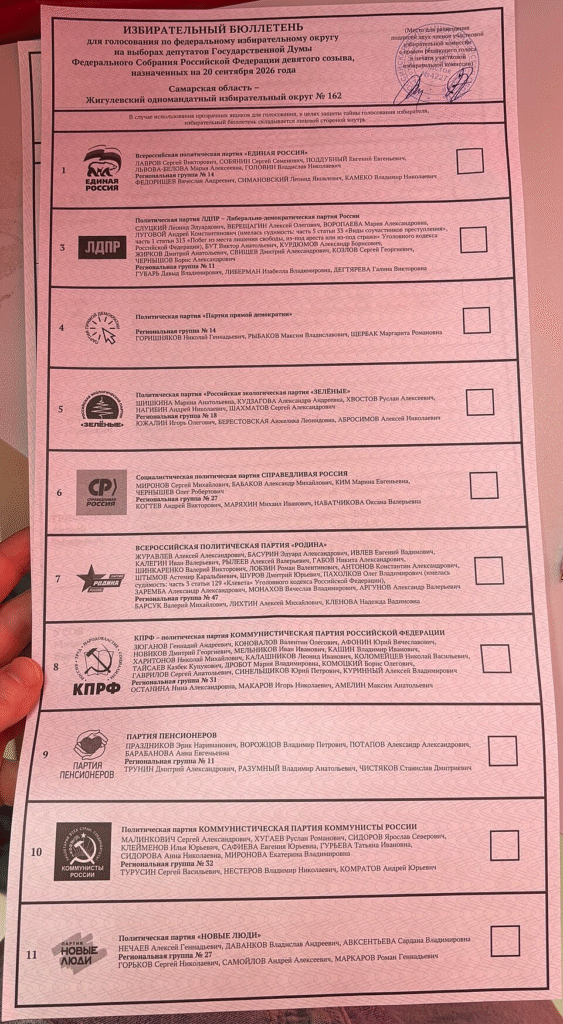
Putin had explicitly linked the ballot to the war. In a televised address before voting began, he urged Russians to take part and said the result would demonstrate the country’s unity.
“Your choice and your will will once again demonstrate that millions of people stand behind our soldiers, that we are a united people bound together by shared values, historical memory, and love for our homeland,” Putin said.
All 450 seats in the State Duma, Russia’s lower house of parliament, were contested. Half are elected from party lists and the remainder from individual constituencies.
Most prominent anti-war candidates were excluded from the election. The liberal Yabloko party, which has called for a ceasefire, was barred from contesting the nationwide party-list vote after Russia’s Supreme Court ruled that it had breached electoral regulations.
Voting was also held in Russian-controlled areas of Donetsk, Luhansk, Zaporizhzhia and Kherson, Ukrainian regions that Moscow claims to have annexed. Kyiv rejects the annexations and says voting conducted there is illegal.
Ella Pamfilova, chairwoman of Russia’s Central Election Commission, said Ukrainian attacks had failed to deter voters.
“The more pressure they put on us, the more we are seeing an unprecedented level of what I would call public unity,” she said.
Near-complete results released on Monday showed United Russia, the party aligned with Putin, receiving 57.83 per cent of the vote, compared with 49.8 per cent in the previous parliamentary election in 2021.
The Central Election Commission said the result would give United Russia 355 of the Duma’s 450 seats, comfortably retaining the two-thirds constitutional majority that allows it to approve constitutional amendments without support from other parties.
The attack on Moscow came as Russia continued its own long-range bombardment of Ukraine. Tymur Tkachenko, head of Kyiv’s regional administration, said a Russian drone strike killed a woman and two children, with another child later dying in hospital.
The escalating exchange of drone and missile strikes underlined how the war, now in its fifth year, is increasingly being fought hundreds of miles beyond the front line, with both sides targeting infrastructure intended to sustain the other’s military campaign.
