

Listen to the article
The United States has blocked Iran’s nuclear chief from attending a major UN atomic energy conference in Vienna as the Trump administration prepares a $2.8 billion weapons package for Israel containing more than 40,000 heavy bombs.
The developments come as a Pentagon report reveals that US military operations against Iran had already cost an estimated $33.4 billion by the end of June, including more than $22 billion in munitions.
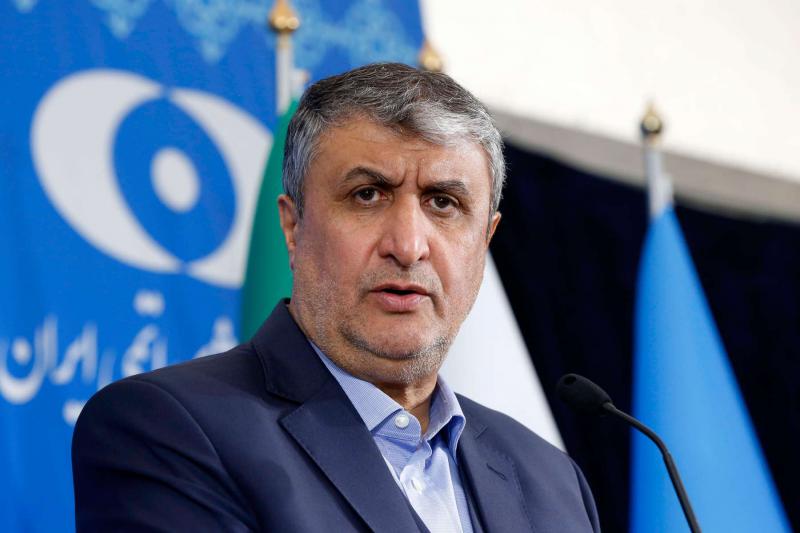
Mohammad Eslami, head of the Atomic Energy Organization of Iran, had been due to attend the International Atomic Energy Agency’s General Conference in the Austrian capital this week.
Eslami is subject to UN sanctions and requires an exemption from a travel ban to enter Austria. Vienna sought permission from the UN Security Council sanctions committee for him to attend, but the exemption was not granted after the United States objected.
Christian Ebner, Austria’s ambassador to the IAEA, said that under the committee’s rules, “Austria was obliged to deny one member of the Iranian delegation the entry into its territory”.
Preston Wells Griffith III, the US ambassador to international organisations in Vienna, said: “His participation would have only resulted in Iran exploiting IAEA proceedings as a stage for propaganda while sidestepping substantive cooperation, undermining the credibility of the very body charged with verifying its nuclear commitments.”
Iran protested the decision and summoned Austria’s chargé d’affaires in Tehran.
Reza Najafi, Iran’s ambassador to the IAEA, described the decision as “a clear sign of politicization” and said it seriously violated Iran’s rights as a member of the UN nuclear watchdog.
The diplomatic confrontation comes amid continuing uncertainty over Iran’s nuclear programme following US and Israeli strikes on Iranian nuclear facilities and mounting pressure on Tehran to cooperate with international inspectors.
At the same time, the Trump administration is preparing another major transfer of American weapons to Israel as the country rebuilds munitions stocks following prolonged military operations across the region.
According to a US official familiar with the proposed sale, the Trump administration is planning a $2.8 billion package containing 20,000 MK-84 bombs and 20,000 BLU-117 bombs, both weighing 2,000lb.
A further 20,000 I-2000 penetrator warheads, designed to attack hardened targets, have also reportedly been included in the package.
The proposed transfer has been informally presented to congressional committees responsible for reviewing major US arms sales.
Much of the purchase would be financed through US foreign military assistance, under which Israel uses American funding to acquire US-made weapons.
The package would replenish Israeli stocks after years of fighting Hamas and Hezbollah and more recent military operations against Iran.
Heavy munitions such as the MK-84 provide Israel with the ability to strike reinforced structures and underground facilities. The I-2000 is specifically designed to penetrate hardened targets before detonating, making such weapons particularly relevant against bunkers and other protected military infrastructure.
The proposed sale follows Trump’s reversal of a Biden administration decision to suspend a shipment of 2,000lb bombs to Israel in 2024. The Biden administration had raised concerns about their use in densely populated areas of Gaza.
Israel has maintained that heavy munitions are necessary in some operations because Hamas and Hezbollah have developed extensive networks of tunnels, bunkers and other underground facilities.
The latest package is being considered as the Pentagon faces separate questions over the pressure placed on American weapons inventories by the war with Iran.
A report released by the US Department of Defense Inspector General found that Operation Epic Fury had cost approximately $33.4 billion between February 28 and June 30.
Of that total, around $22.3 billion was attributed to expended munitions, while a further $3.7 billion resulted from equipment losses.
“The munitions expenditure on OEF has resulted in strategic inventory shortfalls and revealed industrial base bottlenecks for munitions resupply,” the watchdog said.
The report also documented extensive damage to the American military presence across the Middle East.
Iranian strikes “damaged and destroyed hundreds of buildings and structures” at US bases in Kuwait, Bahrain, Qatar, the United Arab Emirates, Saudi Arabia, Iraq, Oman and Jordan, according to the report.
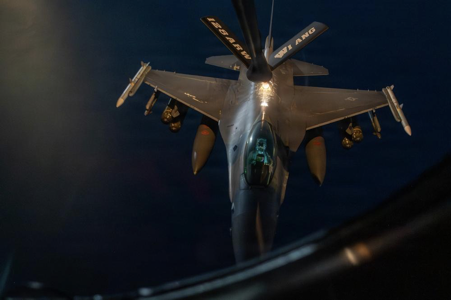
American aircraft losses included four F-15 fighter jets destroyed, one F-35 damaged, seven KC-135 tanker aircraft damaged and as many as 30 MQ-9 Reaper drones destroyed.
The Pentagon estimate does not include the full cost of repairing infrastructure damaged in Iranian attacks, meaning the eventual financial cost of the war could be higher.
The report said the war had also displaced more than 20,000 US military and diplomatic personnel, with around 5,000 flights used to move personnel from bases in Europe and elsewhere as Washington reinforced its presence in the region.
General Frank McKenzie, the former head of US Central Command, warned in 2024 that “the United States will not be able to maintain these bases in a full-throated conflict, because they will be rendered unusable by sustained Iranian attack”.
The report’s findings have renewed scrutiny of the capacity of the US defence industrial base to replace weapons expended in the Middle East while continuing to supply allies.
Trump has rejected suggestions that the United States is running short of weapons, saying the US had “a virtually unlimited supply” of certain munitions and that “wars can be fought ‘forever,’ and very successfully, using just these supplies”.
The Pentagon report nevertheless identifies supply-chain bottlenecks and shortages in some weapons inventories, increasing pressure on manufacturers to accelerate production.
