


Listen to the article
Millions of Ukrainians received false warnings of an imminent Russian nuclear attack after a suspected cyberattack compromised an app used to alert civilians to incoming air strikes.
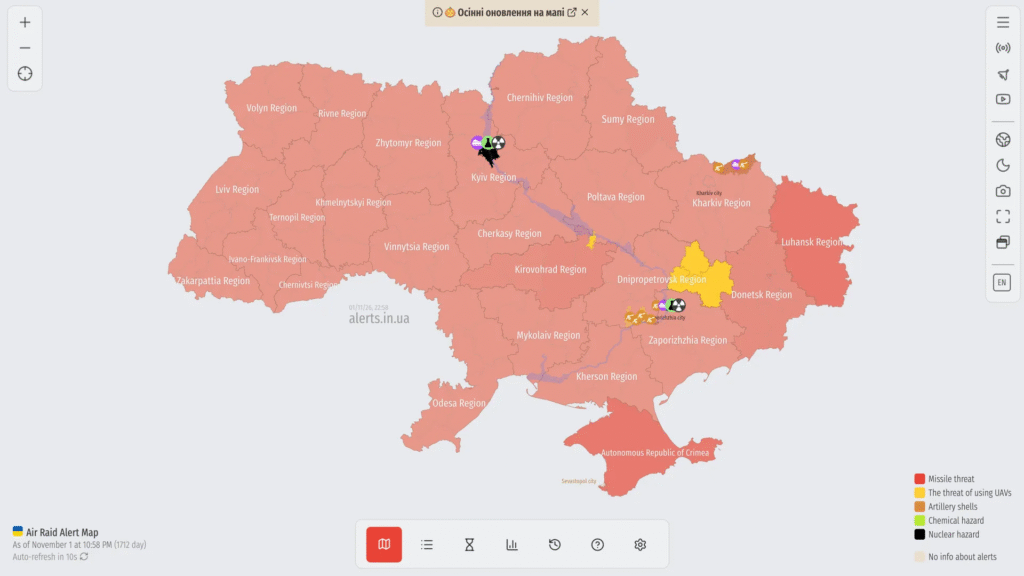
Four messages appeared on the Air Alert app at 10.48pm local time on Sunday, including warnings of radioactive fallout, a chemical attack and street fighting. One claimed that a Russian Oreshnik missile was overhead and that a nationwide nuclear alert had been activated.
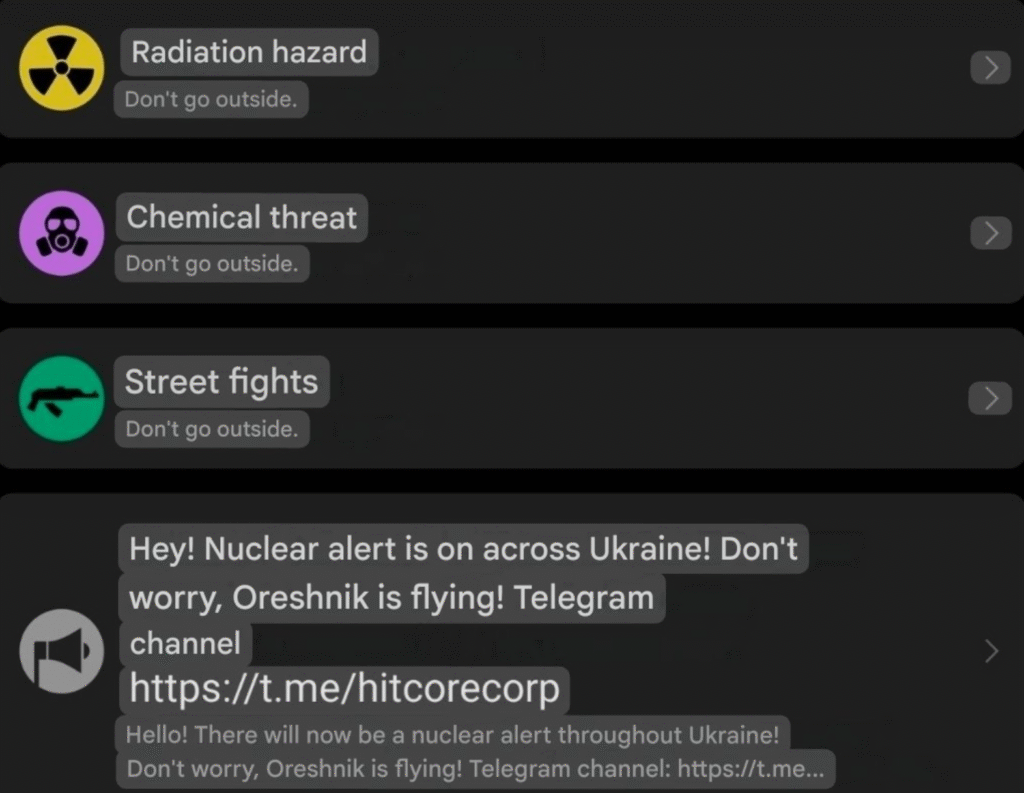
Ukraine’s air force warned about ten minutes later that the app appeared to have been subjected to Russian interference and told the public there was no radiation threat.
“The Air Alert app appears to have been subjected to enemy influence,” it said on Telegram. “There is no radiation threat! Stay calm and follow our updates on our channel!”
The incident affected a system that Ukrainians rely on for immediate warnings of Russian attacks. Notifications can leave residents with only minutes to reach shelter before missiles or drones arrive.
According to its developer, Ajax Systems, Air Alert has about seven million daily users and has been downloaded 46 million times. The incident is believed to be the first time the app has been hacked.
One of the false notifications, written in Russian, said: “Don’t worry, an Oreshnik is overhead! A nuclear alert has been activated across Ukraine.”
An earlier message warned of radioactive fallout and instructed people to remain indoors, put on gas masks and take iodine. Another notification combined warnings of a chemical attack and fighting in the streets, telling residents to find the nearest shelter and cover their faces with cloth.
The instructions were contained in the false messages. Ukrainian authorities subsequently told residents that there was no radiation danger and directed them towards official updates.
Regional officials also moved to reassure the public as the alerts circulated. The governor of Ivano-Frankivsk, in southwestern Ukraine, said the situation in the region was calm.
“Reports indicate a cyberattack on the notification app,” the governor said.
Ukraine’s Centre for Strategic Communications, known as SPRAVDI, blamed Moscow in a post on X. The air force’s initial statement described suspected enemy interference rather than setting out a technical explanation of how the messages had been sent.
The use of Russian in one of the false alerts immediately raised suspicions of Kremlin interference because Ukrainian is compulsory for official communications in Ukraine.
There were also reports of false nuclear warnings in Russia. Moscow said the mobile app operated by its emergencies ministry had been targeted in a cyberattack.
Russian state media reported that the ministry was working to restore the service. It was not clear whether the incidents involving the Russian and Ukrainian apps were connected.
The Ukrainian alerts referred specifically to Oreshnik, a Russian missile, but authorities rejected the warning that a nuclear strike or radiation emergency was under way.
The messages presented users with several purported emergencies: a missile overhead, radioactive fallout, a chemical attack and street fighting. Officials focused on correcting the warnings and reassuring residents.
The false alerts came as a pause in fighting in the southern Kherson region ended on Sunday night.
The truce, which began on Tuesday and was brokered by Melania Trump, had allowed a humanitarian mission to reach the Russian-occupied city of Oleshky. It was described as the longest ceasefire between Russia and Ukraine since the war began.
Civilians receiving the app’s notifications were advised to remain calm and consult the Ukrainian air force’s Telegram channel for updates. Regional authorities also reassured residents that the messages did not reflect a radiation threat.
Ukraine’s attribution of the incident to Moscow remains an allegation by its authorities. Neither the technical cause of the apparent compromise nor a connection with the reported disruption in Russia has been established. Further details were not immediately available.
