

Listen to the article
In a bid to fortify the nation’s security, the Ministry of Defence (MoD) has issued a Request for Information (RFI), aiming to bolster the United Kingdom’s security measures by acquiring cutting-edge underwater defence capabilities.
The RFI outlines a critical need for advanced technologies to safeguard the nation’s undersea infrastructure, inviting responses from experts and innovators by the 5th of January, 2024.
The Royal Navy, through its UW PROTECT division, is on the lookout for innovative technologies that can bolster Underwater Force Protection.
They’re seeking versatile systems that can detect and track various underwater objects, from larger vessels to smaller devices and even individual divers. These systems must operate effectively in both shallow and deep waters, offering ease of use and quick deployment on Navy vessels, ensuring safety in both domestic and overseas waters.
Simultaneously, the MoD is interested in exploring ways to safeguard critical maritime infrastructure and military ports from potential threats lurking underwater. These efforts aim to ensure early detection and prevention of any malicious activities in these vital areas.
The urgency for such advanced capabilities stems from recent incidents that exposed vulnerabilities in undersea infrastructure.
The European Parliament has highlighted the vulnerability of undersea cables and pipelines and warned of the “potential for sabotaging undersea cables during times of conflict.”
In Recent Years: Attacks on pipelines and cables have highlighted the risks associated with our reliance on these underwater networks.
- In September 2022, an attack on the Nord Stream pipelines, which carry natural gas from Russia to Germany, caused significant disruption to European energy supplies.
- October 8th of this year, the Balticconnector gas pipeline and a communications cable between Finland and Estonia was damaged.
Historical instances of disrupting submarine cables, dating back to the late 19th century, have resurfaced as contemporary geopolitical concerns.
Suspicions often gravitate towards Russia, with some sources reporting this as “Russia’s latest weapon.” In May 2023, NATO official David Cattler stated that Russia is “actively mapping gas pipelines and internet cables.”
Nevertheless, securing our underwater infrastructure is crucial, regardless of the suspected perpetrators.
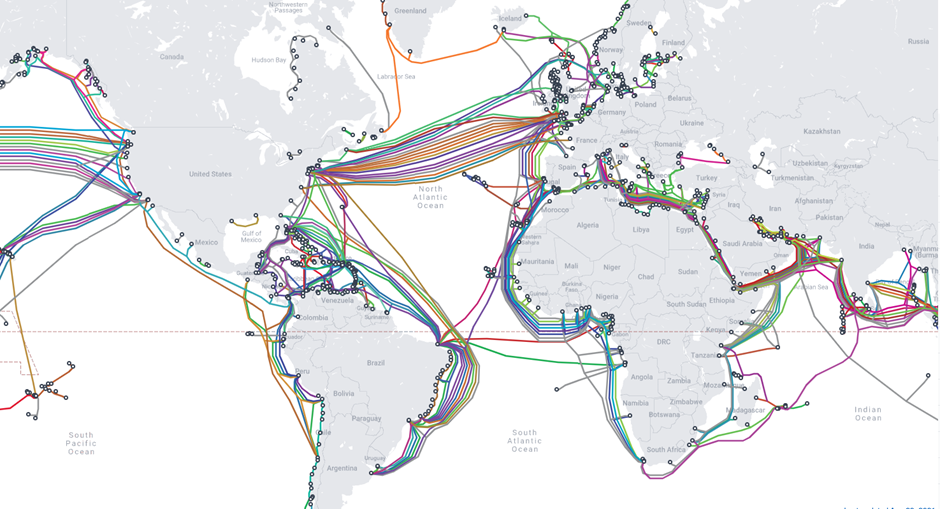
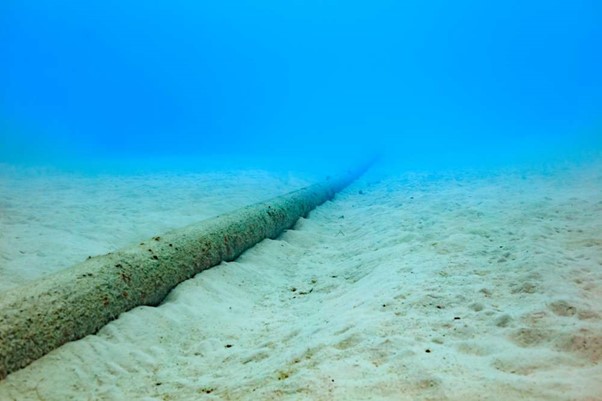
Why is it important? The cables are unseen but they are vital, and the vulnerability of these undersea assets cannot be overstated.
- There are 420 submarine lines spanning 1.3 million kilometres worldwide.
- A whopping 99% of worldwide internet traffic flows through underwater cables.
- About 77% of the UK’s gas imports arrive via North Sea pipelines from Norway.
- The cables facilitate over USD 10,000 billion in global financial transactions.
- These factors collectively illustrate why they are a prime target for malicious attacks.
The UK hosts approximately 60 undersea cables, the disruption or severance of which would yield catastrophic consequences.
Developments in 2023:
- In May, UK and Norway agreed to develop a strategic partnership “to counter shared threats in the undersea domain” including threats to undersea infrastructure.
- In a joint Franco-British programme, autonomous mine hunting systems were successfully demonstrated. They are able to locate, identify and neutralise mines and underwater explosive devices, particularly in UK waters.
- MoD launched a ship in October, specifically to detect threats to the seabed and cables. RFA Proteus is described as “the first of a new generation of survey and surveillance ships harnessing leading-edge technology and dedicated to monitoring underwater in areas of UK sovereign interest.”
How Others Are Responding: The strategic significance of safeguarding undersea infrastructure has garnered international attention.
- NATO set up a Critical Undersea Infrastructure Coordination Cell at its headquarters to “boost the security of Allied undersea infrastructure.”
- The European Commission updated its Maritime Security Strategy, pledging to promote the development of capabilities for securing critical seabed infrastructure by 2024.
The MoD’s latest effort to explore and procure advanced underwater force protection capabilities is not merely a response to existing threats but a proactive step towards safeguarding the UK’s critical national infrastructure. Information gathered from this RFI will shape future investments, ensuring the UK remains resilient against emerging threats in the underwater domain.
