

Listen to the article
Commodity traders and the mining industry have adopted a cautious approach to investment in new projects due to geopolitical uncertainty, according to mining industry leader Mark Cutifani. He stated: “There is a significant change in policy position unfolding before us, and in many cases, commodity players aren’t quite sure how to think about tariffs.”
Cutifani, who led Anglo American for nearly a decade and currently serves as the Chair of Vale’s base metals division, among other board positions, said there was uncertainty about whether tariffs represent a “three-month negotiating process or a long-term structural change to the cost of doing business.”
He told National Security News in an interview that a change in government had been anticipated in the US 18 months ago, but many commodity traders were caught off guard by the strength and conviction of the Trump administration in using tariffs as a tool to manage a whole range of issues.
The commodities targeted by the Trump administration include steel, aluminium, and copper, with the potential for tariffs on a variety of other sectors, including agricultural products, oil and gas, medicine and pharmaceuticals, semiconductors, and lumber.
According to a tariff tracker by Reed Smith, tariffs have been imposed on Canada, Mexico, and China, while several other countries and regional blocs, including the United Kingdom, Australia, and the European Union—Western allies of the US—as well as BRICS nations, are facing the threat of tariffs aimed at reducing the US trade deficit.
How resource companies can mitigate the risk of geopolitical shifts in the Trump era
Mark Cutifani advises miners and companies to navigate shifting geopolitical dynamics in the mining industry by fully accounting for the risks in their capital planning.
“Make sure that you’re on the bottom half of the cost curve in terms of your competitive position. So, even though demand for copper [for example] may ebb and flow a little bit, the demand fundamentals for copper are very strong,” he explained.
Cutifani highlights the significance of sustaining a business by aligning with strong demand fundamentals while preparing for potential price fluctuations. He advises companies to return to basics.
“They are the sorts of things you have to think through, but you do have to get it back to the basics. Can you build the project for what you thought you were going to build it? Can you put yourself in the bottom half of the cost curve? Are you reasonably certain on the demand profile that there won’t be too much volatility that materially impacts your returns? What you hope for is that policy settings at a broader level remain sensible, and that’s not always a reliable place to be either.”
Stable regions and countries likely to attract investment
Cutifani remarked that a country has been aggressively marketing its position as a stable investment destination is Saudi Arabia.
“Politically, they are very stable… and they have relationships with China and with Europe, so they’ve been very sophisticated in the way they’ve positioned themselves politically. They’ve made it very attractive to invest in the country and have good geology, which is helpful when you’re looking at mining projects,” he said.
Other countries that Cutifani has singled out as good investment locations are Chile and Peru. What mining countries are looking for, he says, is “consistency in their policy frameworks, comfort that you retain the rights to your assets over the long term, but at the same time, are prepared to be open and make sure that they’re giving you feedback so that you don’t end up in a situation where things have to stop. You can work together and adjust for any issues that may not be working out.”
From a government perspective, he said it is important to have consistency of policy between administrations, and he emphasised the importance of dialogue and responsibility on both sides to get the relationship right.
Cutifani remains ‘optimistic on Africa,’ invests $21.5 Million with mining veterans in Congo Brazzaville
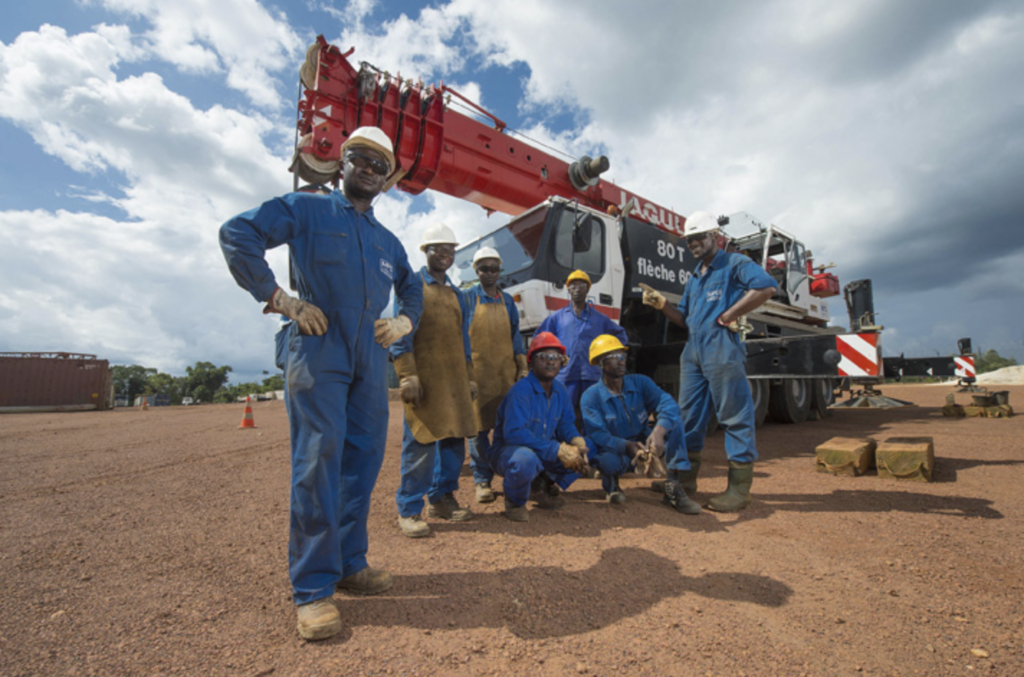
Cutifani, along with other former mining CEOs, Tony Trahar, another former Anglo American CEO, and Mick Davis, the ex-boss of Glencore and Xstrata, have given a boost to one of the world’s largest untapped iron ore deposits by investing in Zanaga Iron Ore Co in Congo Brazzaville. A large chunk of the money will be used to buy out Glencore’s 43 per cent stake in Zanaga. Tony O’Neill, Anglo’s former technical director, and Phil Mitchell, an ex-Rio Tinto executive with experience, are also involved.
Cutifani described it as a great opportunity in Africa that is “good for the community and good for the continent.”
While acknowledging the complexities across the continent regarding policies and the political framework, he said he remains optimistic about Africa, which has 40 per cent of the world’s natural resources.
“There are lots of opportunities in Africa, and I think if we can, through other countries that have the ability to invest, create constructive relationships where the local communities benefit and the country benefits, then on a much broader basis, that’s good for the world.”
South Africa has a development problem, not a land problem
Commenting on the current dispute between South Africa and the United States regarding its land expropriation bill, Cutifani said South Africa does not have a land problem; it has a development problem.
What South Africa needs, he says, is investment to help develop the land, agriculture, and industrial activity. Redistribution of land doesn’t make sense and is not going to work, according to Cutifani. “In fact, that will scare investors away,” he said.
A much broader approach, he said, needs to be considered for South Africa and the rest of Africa, with spending focused on ensuring that the needs and requirements of the local population are addressed.
Coal will be needed for some time, while uranium is becoming more important
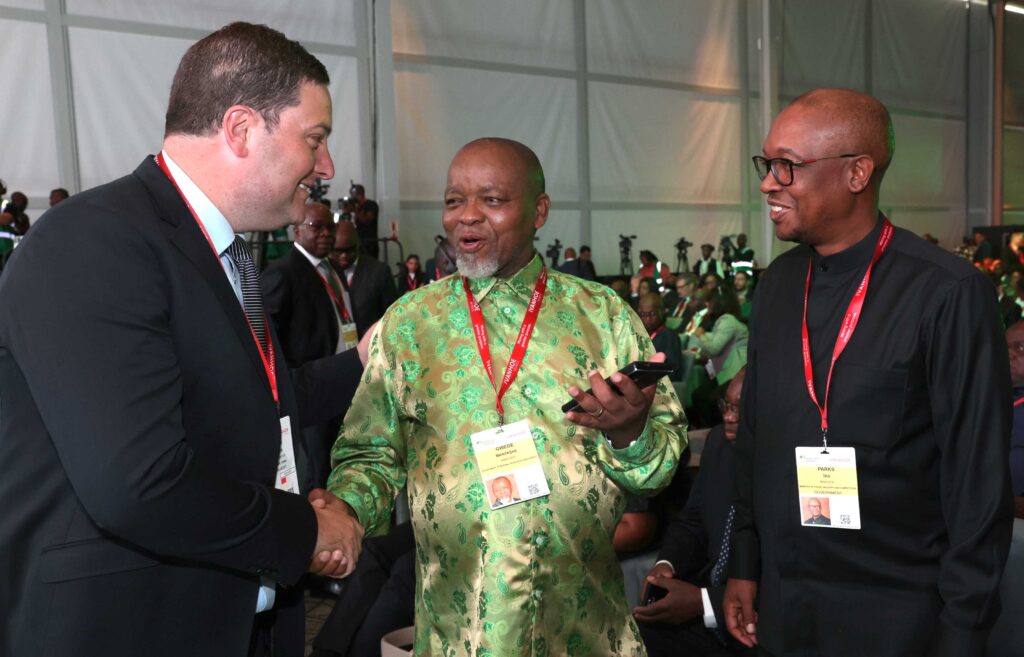
Cutifani said he understands that for countries like South Africa, which are energy-poor, coal “will be needed for some time.” However, he pointed out that the growth of coal has dropped quite significantly, indicating that a change is occurring, but probably not quickly enough.
He said natural gas should be an important fuel in the transition to new energy sources. South Africa, he said, is facing a specific energy challenge that it has to work through, and he understands that South Africa’s Minerals and Petroleum Resources Minister, Gwede Mantashe, who has recently declared that “King Coal is back,” has specific challenges that require a shorter-term focus on providing coal to ensure they don’t run short of energy.
Uranium, Cutifani said, is becoming more important as a primary fuel because of the new technology being developed with small nuclear reactors. He noted that issues that were previously worrisome have been materially improved. Nuclear energy should be seen as a primary source of energy, according to Cutifani but “like all technologies, appropriate safeguards should be in place.”
Cutifani expressed hope that with the geopolitical changes taking place and “some aggressive conversations,” “we can dial down the aggressiveness and rebuild the collaborative nature of those conversations to create more opportunities on a much broader basis. I hope we can get there fairly quickly,” he concluded.
