

Listen to the article
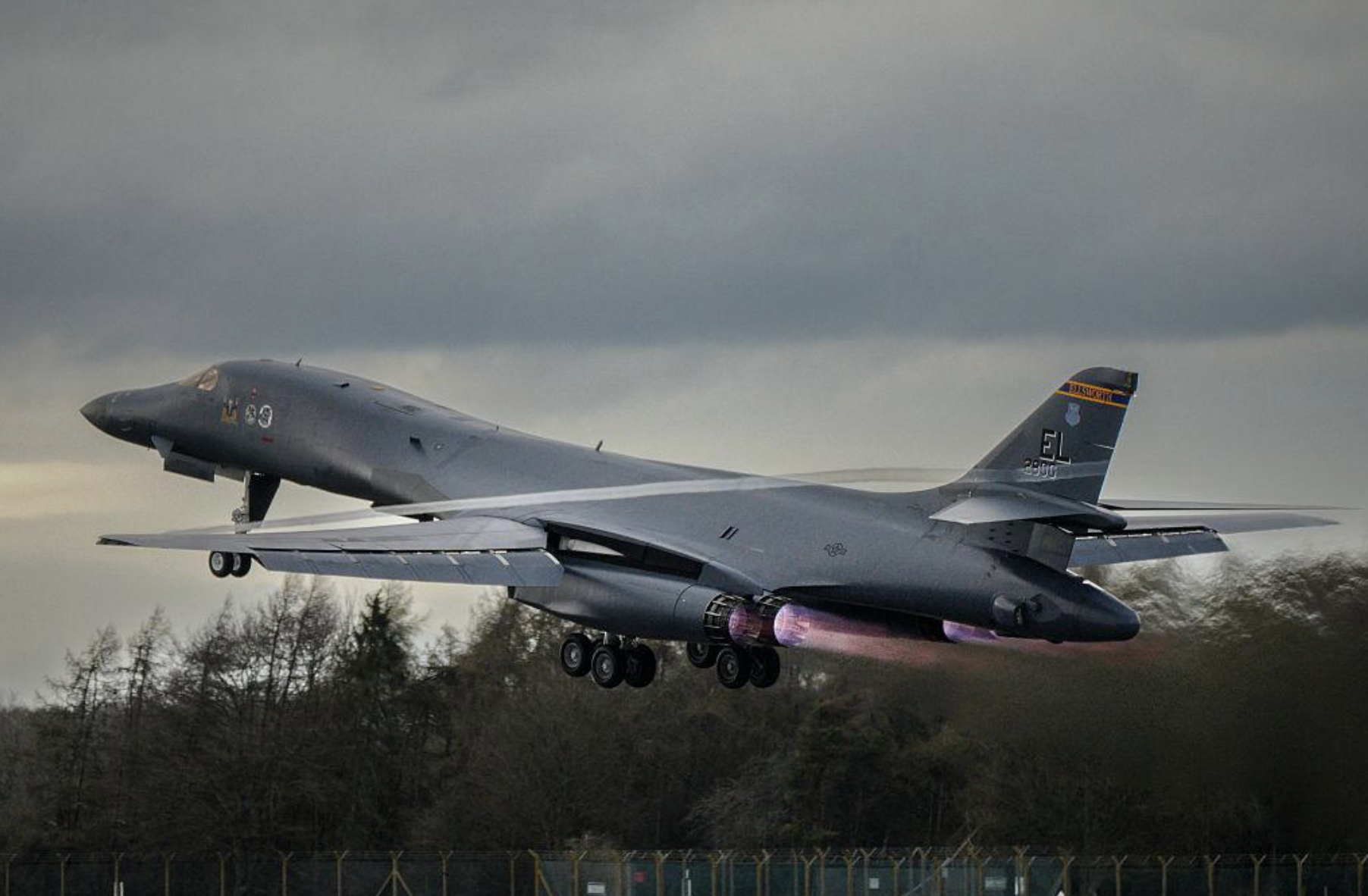
The US has withdrawn all of its bombers deployed to RAF Fairford, the UK military base at the centre of an incident being investigated by counter-terror police.
A Pentagon official confirmed that the US had removed all 12 B-1 bombers from the base and returned them to their home stations in America.
The US did not give a reason for the withdrawal, but it follows a major incident on 27 September when police were alerted to three “suspicious vehicles” near the airbase.
Five men were initially arrested on suspicion of terror offences near the base and subsequently released on bail. A sixth man, a UK-Iranian national, was later arrested and also released on bail.
Whitehall sources have not disputed that Washington’s decision was in response to the incident at the airbase in Gloucestershire.
National Security News has also been told it was a military rather than a political decision, taken at an operational level and communicated by the US military to its British counterparts.
But senior defence sources played down suggestions that Washington had ordered the withdrawal of the B-1 bombers in response to threats from Iran.
One source told National Security News: “The US still has plenty of assets in the UK such as those based at RAF Lakenheath and RAF Mildenhall. These are fully operational military bases which are still functioning and house thousands of US personnel.
“It should also be noted that other assets have been removed from the the Gulf region which suggests more of a pause on operations, possibly until after the US midterm election which take place early next month. Admittedly the Pentagon’s timing isn’t great on this and there could be firmer pushback from both the Whitehouse and the Pentagon on this issue.”
The UK’s Ministry of Defence has not commented.
Tracking websites showed B-1 bombers, worth around £300 million each, flying out of RAF Fairford on Sunday.
The New York Times reported that US commanders had received new threats about an Iran-backed plot against RAF Fairford, according to two US officials.
The newspaper reported that the new information was part of the same threat warnings from three weeks ago, but that officials acted quickly after specific details emerged in the previous 24 hours.
The planes reportedly took off while aerial refuelling aircraft were still being scrambled to support their flights to the US.
Days after the incident at RAF Fairford, Prime Minister Andy Burnham said there were “strong indications” that Iran had played a part in the incident but did not provide further details. Tehran has strongly denied any involvement.
Initially, five men aged between 23 and 25 were arrested in the early hours of the morning after vehicles were reported to be travelling towards the base operated by the US Air Force (USAF). All five were UK nationals from London.
They were arrested on suspicion of explosives offences and later on suspicion of preparing a terrorist act, before being released on bail in what police called an “investigative decision” that was “grounded in experience and strategy”.
The sixth man, aged 25, was arrested in London on Thursday on suspicion of preparation of terrorist acts. Counter-terror police confirmed on Saturday that he had also been released on bail.
RAF Fairford has been used as a forward operating location by the USAF for decades.
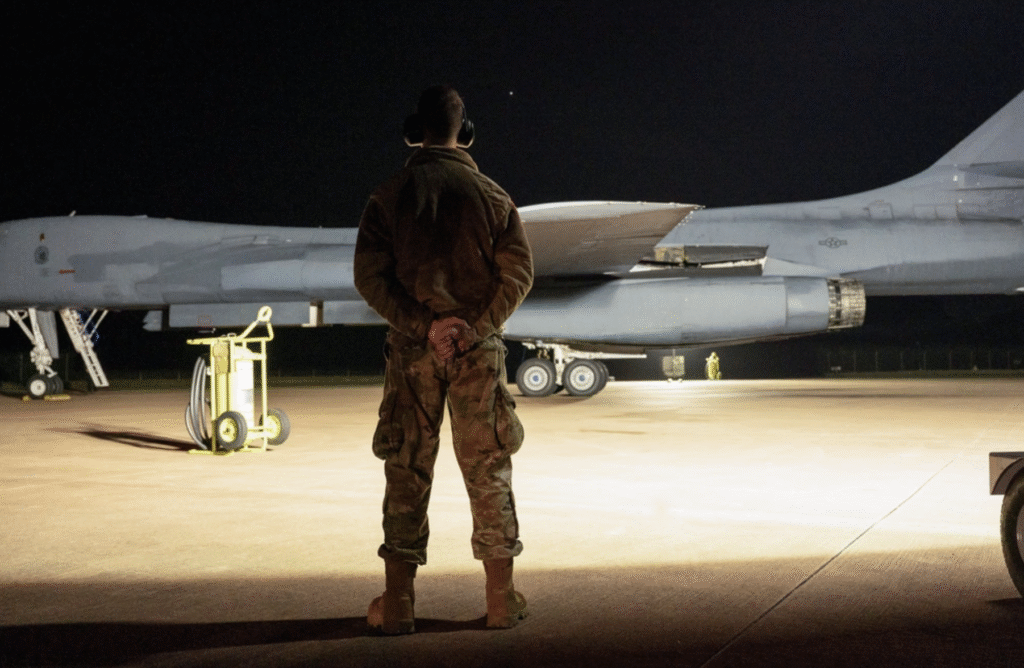
In recent months, the US has flown B-1 and B-52 bombers from the base for operations in the Middle East, after the UK approved a US request to use it for defensive strikes on Iran.
The withdrawal of the bombers comes as the US tries to recover from damage inflicted on its aircraft by Iranian precision strikes.
It is technically possible for the US to conduct precision strikes directly from the US without a UK base, as it did during Operation Midnight Hammer last year.
But the removal of the bombers from RAF Fairford reduces the US’s forward-deployed bomber presence in Europe.
In July, Iran said “any base used for aggression against Iranian territory constitutes a legitimate target for our forces”.
Days after the incident, and before the arrest of the sixth man, US Secretary of State Marco Rubio said on Fox News that it “clearly involve[d] the hands of a foreign actor”.
Rubio did not provide further details, saying at the time that he was limited in what he could say on air.
US President Donald Trump separately said he was “surprised” the five men had been released on bail.
“We know everything about them, we would not have released them,” he said, adding that the UK had worked with the US “very closely” on this.
Many B-1 bombers flown from the UK were armed with precision-guided “bunker busting” bombs, with thicker casings designed to penetrate hardened or buried targets such as weapons stores.
They also carried air-to-surface missiles used against more heavily defended targets deeper inside Iran.
Each bombing mission, depending on the location of the target, would likely have taken around 12 to 15 hours for the round trip, with air-to-air refuelling in both directions.
The Pentagon has stressed that its bombing aircraft remain able to conduct missions “anywhere, anytime”, including through “operations that launch and recover from the continental United States”.
RAF Fairford was occupied by USAF Strategic Air Command during the Cold War and was later used during the first Gulf War in 1991.
B-52 bombers were most recently used in March following a decision by former UK prime minister Sir Keir Starmer to allow the US to use UK bases, including RAF Fairford, for “defensive” strikes on Iranian capabilities.
Conflict was sparked across the Middle East after the US and Israel launched wide-ranging strikes on Iran on 28 February.
Iran responded by launching attacks on Israel and US-allied states in the Gulf.
