

Listen to the article
By André Pienaar
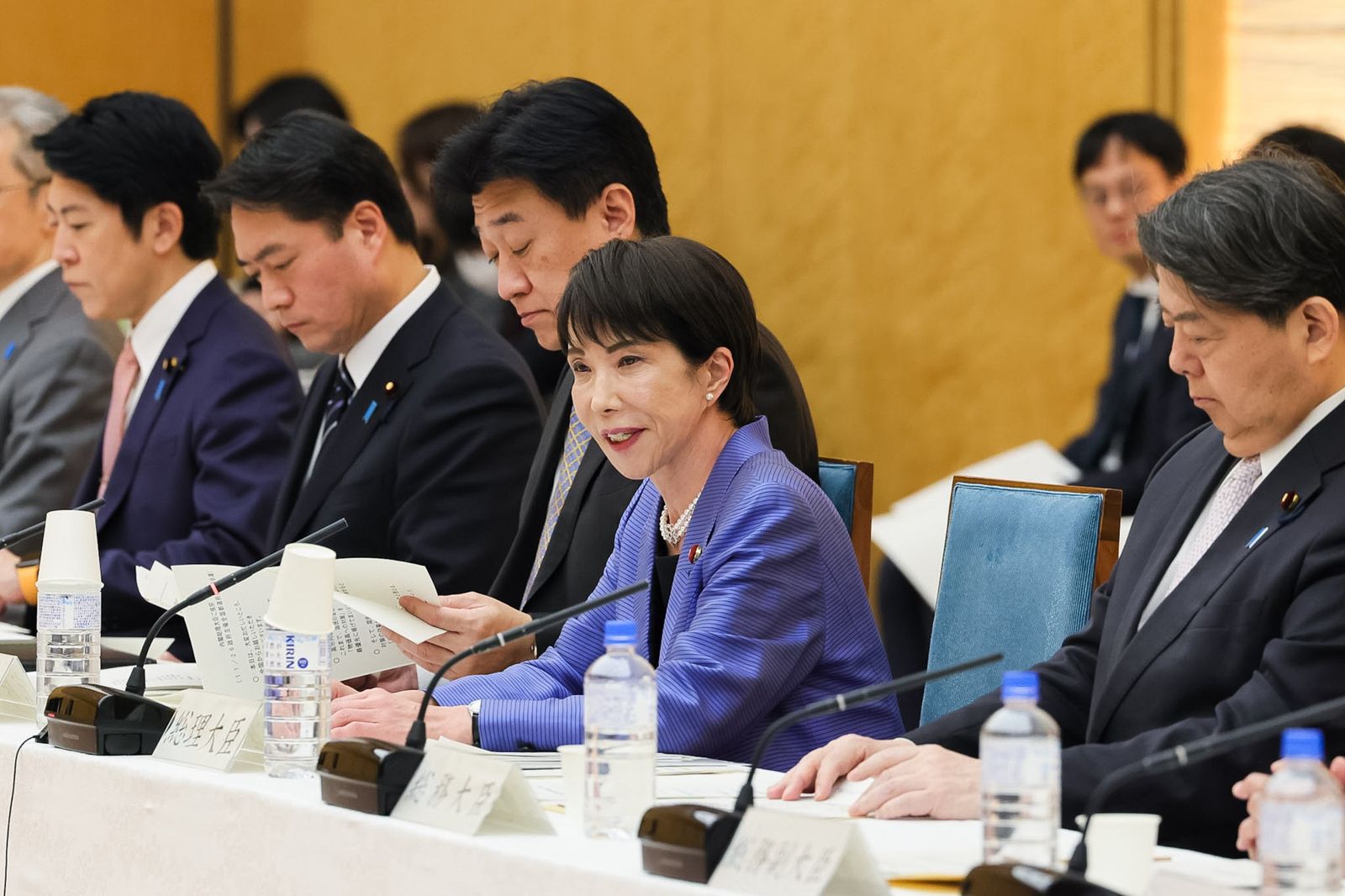
For eighty years, Japan has been the only major power in the world without a standalone civilian intelligence service. That era ended on 31 July, when Prime Minister Sanae Takaichi chaired the first meeting of a new National Intelligence Council and formally launched the National Intelligence Bureau beneath it. It is the first centralised intelligence body Japan has had since the Allied occupation dismantled the Imperial apparatus in 1945.
Two months on, Tokyo has shown no sign of pausing. On 28 September, Takaichi convened a seventeen-member expert panel to begin drafting the country’s first national intelligence strategy, an anti-espionage law and the design of a dedicated foreign intelligence service. The bureau was the opening move in a far larger reconstruction, and that reconstruction is now under way.
The significance of this should not be underestimated in London or Washington. A country that was until recently dubbed a “spy paradise” by the Royal United Services Institute is now building the machinery to become a serious intelligence partner. That changes the balance of the Indo-Pacific in a way that no single warship or missile battery could.
What has actually been built
The new bureau is not an invention from scratch. It is an upgrade of the old Cabinet Intelligence and Research Office, the modest body that has for decades fed reports to the prime minister and chief cabinet secretary without any real authority over the ministries that produced them. The reform gives its successor a statutory mandate to demand product from the line agencies, set the government’s intelligence priorities and report directly to the prime minister. Its director now ranks alongside the secretary-general of the National Security Secretariat.
The bureau begins life with roughly 730 personnel under Kazuya Hara, a former National Police Agency official whose career has taken him through the embassies in Moscow and Washington, the Defence Intelligence Headquarters and the police foreign affairs division. That is precisely the profile one would want for the job: a counter-intelligence professional who has seen both the Russian and American systems from the inside.
Above the bureau sits the National Intelligence Council, chaired by the prime minister and composed of the chief cabinet secretary, the foreign, defence and justice ministers and the chair of the National Public Safety Commission. In British terms, it is a Joint Intelligence Committee with the prime minister in the chair and full Cabinet weight behind it.
Why this matters
The Japanese intelligence community has always suffered from a structural rather than a technical weakness. Japan has never lacked collectors. The Defence Intelligence Headquarters runs one of the most capable signals intelligence operations in Asia. The Public Security Intelligence Agency, the National Police Agency and the Foreign Ministry all gather information of real quality. What Japan lacked was any institution with the standing to centralise intelligence for government decision-making.
Prime Minister Takaichi has understood that the cure is not more collectors but a central nervous system. The National Intelligence Bureau exists to integrate what already exists and deliver it to the leaders who make decisions.
The next steps
Tokyo has been unusually candid that the bureau is only the first stage, and this week it moved to the second. On 28 September, the government held the inaugural, closed-door meeting of a seventeen-member expert panel on strengthening intelligence capabilities, with the prime minister in attendance. Takaichi told the panel that co-operation among China, North Korea and Russia has deepened and that the threats now include the theft of advanced technology by foreign agents, cyber-attacks on classified information in both government and industry, and the spread of disinformation. Strengthening Japan’s intelligence capabilities, she said, is an urgent priority. Three pieces of work are on the panel’s desk.
First, a national intelligence strategy — Japan’s first — will set the medium- and long-term direction of the new bureau, which is budgeted at roughly $400 million and expected to reach full strength by December. The strategy will sit alongside the revised National Security Strategy, National Defence Strategy and Defence Buildup Programme, all three of which Takaichi has accelerated for release by the end of this year.
Second, an anti-espionage law — now being framed in Tokyo as a foreign interference prevention law — is being prepared for submission to next year’s regular Diet session. Japan has never had one. At present, the theft of state secrets by a foreign power is treated under general criminal law, with penalties that would embarrass a shoplifter. The draft will criminalise the illicit collection of confidential information from public institutions and companies and establish a mandatory registration system for foreign agents operating in Japan, on the model of the American Foreign Agents Registration Act and Britain’s new Foreign Influence Registration Scheme. Takaichi has made a further, sharper argument for the law: without espionage statutes of its own, Japan has no means of negotiating exchanges for the more than ten Japanese nationals China has detained on espionage charges over the past decade.
Third, and most consequential, an external intelligence service — a Japanese counterpart to MI6, the CIA or the French DGSE — is to be established by March 2028, a commitment written into the coalition agreement between the Liberal Democratic Party and the Japan Innovation Party. This would give Japan its first dedicated foreign human intelligence capability since the war. The New York Times has reported that the United States, Germany and Australia are all advising Tokyo on the design. A separate expert panel on counter-terrorism is to follow.
Taken together, these three measures are the prerequisites for the thing Japan actually wants: trusted partner status within the allied democracies’ intelligence architecture. I return to what that could mean below.
The threat that drove it
The drivers of this reform are the growing aggression from the totalitarian axis. Chinese coastguard and naval presence in the contiguous zone around the Senkaku Islands has become a permanent condition rather than an episodic provocation. Chinese cyber campaigns have repeatedly penetrated Japanese ministries. North Korean missile launches over Japanese territory have become routine. And since the invasion of Ukraine, Russian procurement networks have been scouring Japanese electronics markets alongside those of Taiwan, Korea and China for the dual-use components that keep the Russian military-industrial complex running, routing them home through Turkey, the Emirates and Central Asia.
Japan has been living with all of this while possessing no legal means to prosecute a spy and no institution capable of assembling a coherent picture of who was doing what. Beijing’s sustained pressure campaign — economic coercion, grey-zone maritime activity, cyber intrusion and influence operations — was presumably intended to intimidate Tokyo into a more accommodating posture. It has achieved the opposite. Takaichi’s remark that Japan must confront “new methods of warfare” is a direct acknowledgement that hybrid conflict has arrived and that the old post-war reticence is no longer affordable.
Xinhua’s response to the launch was instructive: a lengthy commentary invoking the pre-war imperial secret police and warning of Japanese remilitarisation. When the Chinese Communist Party reaches for history lessons, it is usually because the present has not gone to plan.
The timing of this week’s panel is also worth noting. It came two days after Takaichi spoke by telephone with President Trump in the wake of the US-China summit, and on the eve of an extraordinary Diet session in which her government must defend its economic programme while managing mounting pressure from China. Approaching the first anniversary of her premiership, Takaichi has chosen to put intelligence reform at the front of the queue rather than let it slip behind domestic priorities. That is a statement of intent.
The opportunity for the Five Eyes
For the Five Eyes, this is an opening of the first importance. The alliance that grew out of the wartime partnership between Bletchley Park and Arlington Hall has remained a closed club of five English-speaking democracies for three quarters of a century — for good reason. Membership rests on legal frameworks that protect shared secrets, on counter-intelligence discipline that keeps them out of hostile hands, and on a reciprocal contribution of collection that makes the exchange worth having. Japan has until now satisfied none of these conditions. Within eighteen months, it may satisfy all three.
Japan’s signals intelligence directorate has worked alongside the National Security Agency since the 1950s.
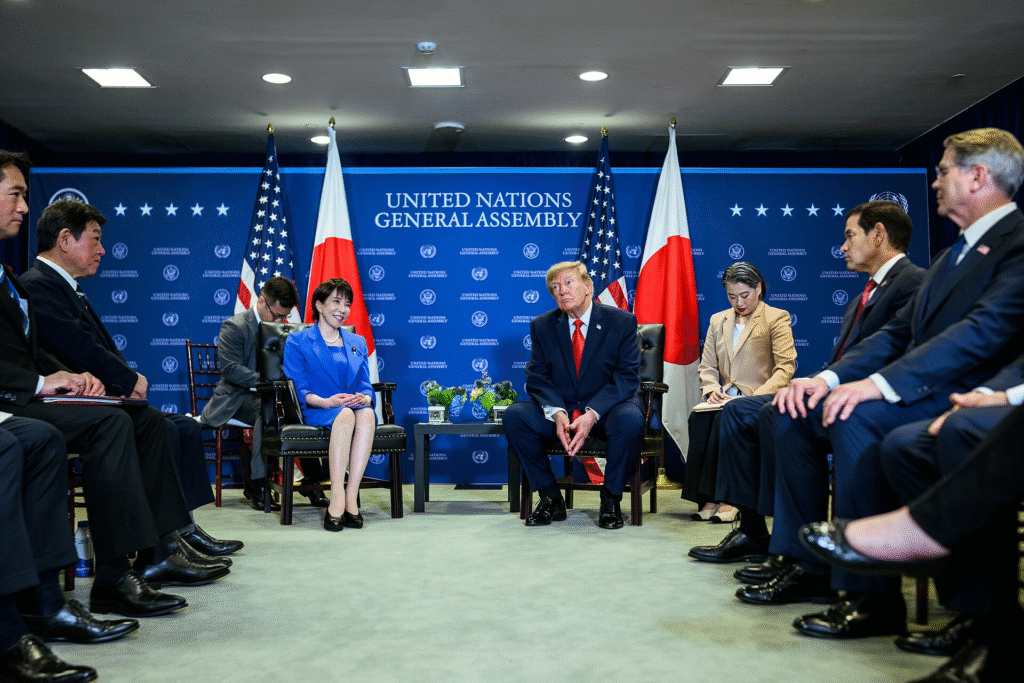
Its geography puts it astride every approach the Chinese, Russian and North Korean fleets take to the Pacific. Its counter-intelligence weaknesses were the reason the relationship never went further. The anti-spy law, the foreign agent registry and a professional external service under proper oversight are precisely the deficiencies the Five Eyes have long identified, and Tokyo is now repairing them in public and on a schedule.
The alliance should meet this halfway. That means a structured pathway towards association — expanded liaison, joint training of Japan’s first generation of foreign intelligence officers, embedded personnel in the National Intelligence Bureau, and progressively deeper access as each legal and institutional milestone is reached. The United States, Australia and Britain have each already begun advising on the design of the new service; that effort should be co-ordinated as an alliance undertaking rather than five bilateral ones. A “sixth eye” has been discussed for a decade and dismissed each time on the grounds that Japan could not yet keep a secret. That objection is being removed by legislation.
Britain has a particular role to play. It is bound to Japan by the Hiroshima Accord, the Reciprocal Access Agreement and the Global Combat Air Programme, and Tokyo is consciously studying the British model of a foreign service accountable to ministers and Parliament. London is well placed to be the sponsor within the Five Eyes that Washington has been for Canberra.
Japan need not look abroad for the philosophy of the enterprise. Miyamoto Musashi, the greatest of the samurai swordsmen, wrote in The Book of Five Rings that the strategist must see distant things as if they were close, and take a distanced view of things that are close. For eighty years, Japan has been content to let its allies do that seeing on its behalf. It has now decided to open its own eyes. An alliance that has seen the world through five pairs of eyes since 1946 should be ready to welcome a sixth.
