


Listen to the article
The United States has warned South Africa that it faces further punitive action after failing to meet a series of demands from the Trump administration over its foreign policy, treatment of white farmers and restrictions on American investment.
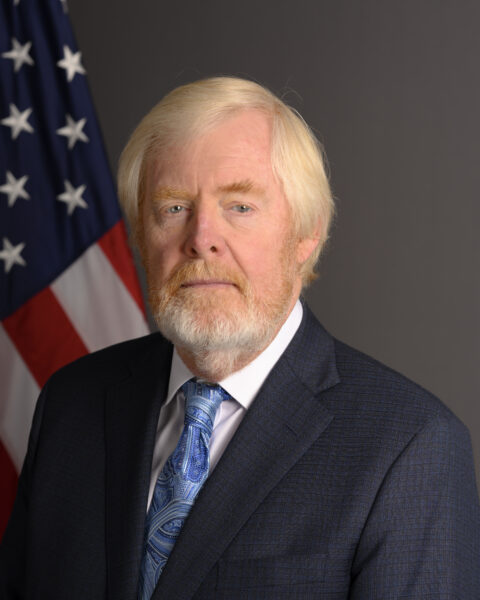
Leo Brent Bozell III, the US ambassador to South Africa, said Washington had made clear that further measures were being considered and warned that the South African government should not mistake the threats for a bluff.
In an interview with the The Common Sense, the ambassador accused elements of the South African government of wanting to return to the Soviet era and warned that the country could descend into the economic and political chaos experienced by Haiti if it continued to pursue what he regarded as damaging policies.
He said: “We’ve told them that there are going to be the next moves from the United States and they’re not going to be good for South Africa. Some people may have thought I was bluffing, but I wasn’t.”
The warning follows months of deteriorating relations between Washington and Pretoria over South Africa’s foreign policy, land reform legislation and laws designed to increase black participation in the economy.
Bozell, who was personally selected for the diplomatic post by President Donald Trump, said the White House had identified three principal concerns about South Africa: violent crime affecting Afrikaner farmers, restrictions on foreign investment and the country’s departure from what Washington regards as genuine non-alignment.
He said: “When we spoke, he raised the issues that would later become the centerpiece of his executive order. It was really three broad areas that concerned him.
“One was the Afrikaner and rural crime issue. Seeing how bad the situation was. The second one being the investment climate, and seeing the race-based policies that were anathema to free market investment.
“And then the third one was the whole non-alignment issue, which some people I would say is the biggest.”
The ambassador said Trump had wanted to make a statement by personally selecting the diplomat responsible for confronting Pretoria over those concerns.
Washington subsequently presented South Africa with five specific demands, including changes to its refugee arrangements, land expropriation legislation and Black Economic Empowerment policies affecting mining and telecommunications.
The Americans also wanted action over violent crime in rural communities and inflammatory political rhetoric, including the controversial “Kill the Boer” chant.
Bozell said South Africa had responded satisfactorily to only two of the five demands, although he did not identify in the supplied account which had been accepted.
“All three of those were answered in the negative unfortunately,” he said, referring to the outstanding demands.
The ambassador also accused elements of the South African government of aligning themselves with countries and organisations hostile to American interests.
He cited Pretoria’s relationship with Cuba, its position towards Hamas and its decision to bring proceedings against Israel at the International Court of Justice over the war in Gaza.
“Where we see the South African government lurching toward our adversaries, look at the relationship with Cuba, the celebration of Hamas, and leading the charge to the International Court of Justice against Israel,” he said.
South Africa has maintained that its case against Israel is intended to uphold international law and has defended its right to pursue an independent foreign policy.
Bozell suggested that ideological divisions within the South African government were contributing to the diplomatic confrontation.
“You’ve got some people in your government who want to go back to the glory days of the Soviet Union,” he said.
He acknowledged, however, that other figures within the government wanted to restore relations with Washington.
“You also have forces in your government who are the opposite — they want to work this partnership out.”
The ambassador also attacked South Africa’s economic policies, arguing that legislation introduced to address inequalities inherited from apartheid was discouraging foreign investment.
He described Black Economic Empowerment requirements as a non-tariff barrier to trade and criticised legislation allowing the government to expropriate property for less than market value.
“You have a massive crime issue, and as a subset, the people who supply the country with food are being murdered at higher rates,” he said.
“On the investment climate, Black Economic Empowerment policies act as a non-tariff barrier, and the expropriation legislation gives the government the ability to expropriate assets for less than market value.”
The South African government has defended its land reform legislation and rejected suggestions that white farmers are being systematically targeted because of their race.
Bozell also accused Pretoria of obstructing the introduction of Starlink, Elon Musk’s satellite internet service, by insisting on a 30 per cent ownership requirement.
“On Starlink, the government said they wanted 30 per cent of the company, which is preposterous,” he said.
He claimed Musk had offered to provide Starlink connections to schools free of charge but that the proposal had been rejected.
South Africa’s empowerment policies are intended to address the economic inequalities created by decades of apartheid, although critics argue that some requirements discourage investment and limit competition.
Bozell insisted that Washington wanted Pretoria to return to what he described as genuine non-alignment.
“I think that South Africa can and should say South Africa First,” he said.
“Our position on non-alignment is that it is the answer. South Africa has gotten away from that, and we’re asking South Africa to return to where it was 10-15 years ago.”
The ambassador warned that South Africa faced a choice between economic decline and prosperity, depending on the policies adopted by its government.
“South Africa can and will go the way of Haiti with the wrong policies,” he said.
“South Africa can and will go the way of the United States with the right policies. There’s nothing that we don’t have that you don’t have.”
Despite the diplomatic confrontation, Bozell said South Africa possessed enormous economic potential because of its natural resources, tourism industry and established democratic institutions.
“South Africa could, I do believe, become one of the biggest economic powers in the world,” he said.
“You’ve got the natural resources, you’ve got tourism. I see the possibilities are extraordinary for South Africa if it embraced the basic concept of freedom.”
He added that South Africa’s democratic institutions provided a foundation for restoring the relationship.
“The beauty is South Africa is a democracy with the rule of law, with a judiciary to interpret and enforce, just like the United States has,” he said.
“That’s the starting point of a partnership because we view the role of government pretty much the same.”
Bozell also disclosed that he had been repeatedly subjected to formal diplomatic protests by the South African authorities.
“I have the record for being demarched,” he said, referring to the diplomatic procedure by which a government formally protests against another country’s representative.
