


Listen to the article
Qatar is preparing to announce a new regional defence partnership to protect itself against missile and drone attacks following the war with Iran.
Deputy Prime Minister Sheikh Saoud bin Abdulrahman Al Thani said Qatar was drawing lessons from the war to strengthen its military capabilities. He also warned that disruption to global energy supplies had yet to reach its peak.
Speaking at the Global Security Forum in Doha on Monday, Sheikh Saoud, who is also minister of state for defence affairs, outlined plans for closer military cooperation with neighbouring countries to counter ballistic missiles, drones and cyberattacks.
Sheikh Saoud said “more than 90% of (Iran’s) attacks” on the region had been successfully intercepted, crediting decades of military investment, training and cooperation with the United States.
The proposed partnership would focus on protecting water supplies, a critical concern for Gulf countries that rely heavily on desalination plants to produce drinking water.
Iranian attacks have exposed the vulnerability of military bases, energy installations and civilian infrastructure across the Gulf, despite extensive investment in Western defence systems.
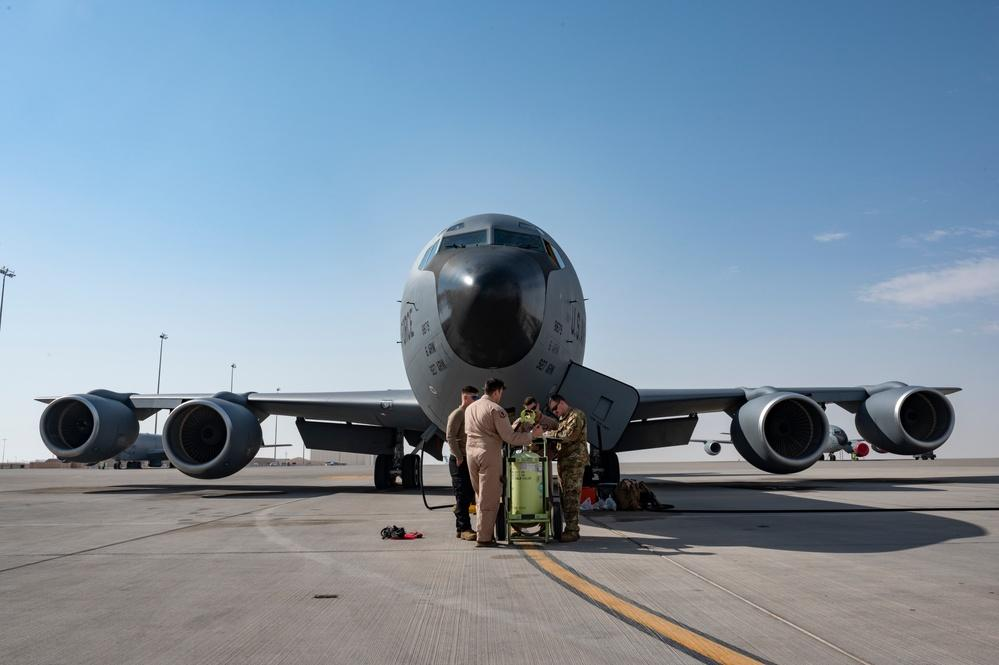
Qatar hosts Al Udeid Air Base, the largest US military base in the Middle East and a major operational centre for American forces in the region.
Sheikh Saoud said development of the base would continue in response to Qatar’s defence requirements.
Doha is also preparing to establish a domestic defence production hub, involving local manufacturing or investment in defence companies, alongside a regional partner and allies including the United States, Britain and France.
Despite strengthening its defences, Qatar is maintaining diplomatic contact with Tehran and calling for a regional agreement to prevent another conflict.
Sheikh Saoud said Doha had continued communicating with Iranian officials at different levels throughout the war, including after attacks on Gulf countries.
“We never stop our communication,” he said.
Qatar has longstanding diplomatic relations with Iran, despite its close defence ties with Washington. Its proximity to Iran means any further confrontation poses significant security and economic risks.
Sheikh Saoud called for negotiations between Iran and the six members of the Gulf Cooperation Council (GCC): Qatar, Saudi Arabia, the United Arab Emirates, Kuwait, Bahrain and Oman.
Pakistan and Turkey should also participate, alongside consultations with international allies, once the United States and Iran reach a settlement, he said.
Until then, Qatar is working with Pakistan and Oman to support mediation efforts aimed at ending the conflict.
Sheikh Saoud compared the diplomatic process to a long-distance race requiring determination and resilience, signalling that negotiations could be prolonged.
He raised the possibility of a regional non-aggression agreement, arguing that future talks should address security concerns on both sides and build trust between neighbouring countries.
“Iran is our neighbour,” he said.
The deputy prime minister argued that closer economic ties could help prevent renewed hostilities by giving countries shared interests in maintaining peace.
He cited cooperation between France and Germany in developing Airbus as an example of how economic partnerships can strengthen relations between countries.
Qatar and Iran already share one of the world’s largest natural gas reservoirs, known as the North Field in Qatar and South Pars in Iran.
The offshore field is vital to both economies, giving the countries a common interest in protecting energy infrastructure and avoiding further disruption.
Sheikh Saoud warned that the economic consequences of the conflict could worsen, with global energy markets facing further disruption.
“We haven’t reached the peak with respect to energy,” he said, warning of more difficulties “in the coming days and months”.
The conflict has threatened shipping through the Strait of Hormuz, the narrow waterway separating Iran from Oman through which a substantial share of the world’s oil and liquefied natural gas normally passes.
The strait is particularly important to Qatar, one of the world’s leading exporters of liquefied natural gas, which supplies customers across Asia and Europe.
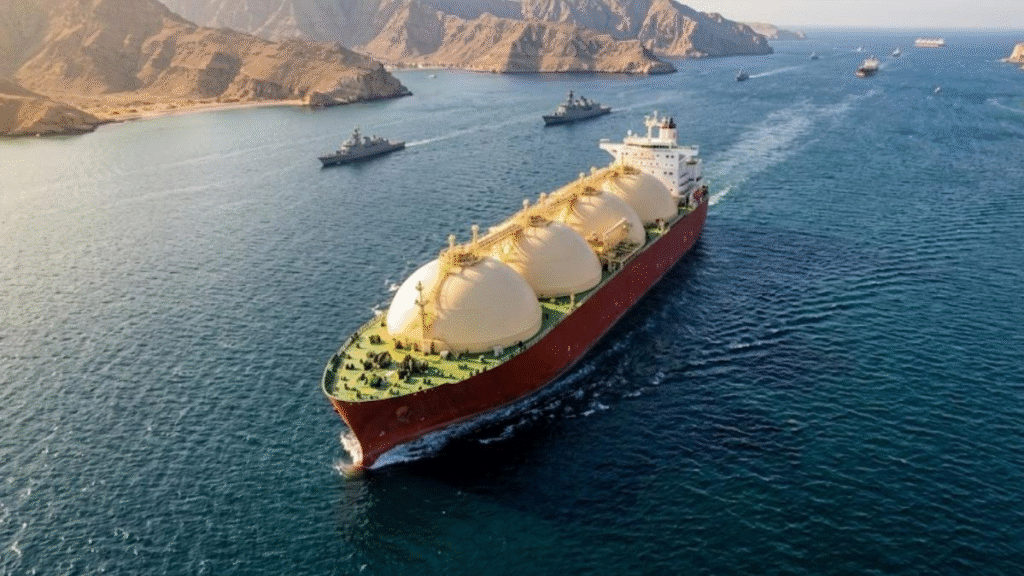
Prolonged disruption could restrict energy supplies, increase transport costs and push up prices for businesses and households worldwide.
Sheikh Saoud warned that the conflict could disrupt the “chain of supply from east to west and also from west to east”.
Disruption to shipping routes also threatens the movement of manufactured goods, industrial materials and other essential supplies, increasing costs throughout the global economy.
He rejected the introduction of transit fees for vessels passing through the Strait of Hormuz, warning that additional charges and uncertainty over shipping would ultimately raise costs for consumers.
Sheikh Saoud warned that continued regional instability could threaten Gulf investment in Europe.
