

Listen to the article
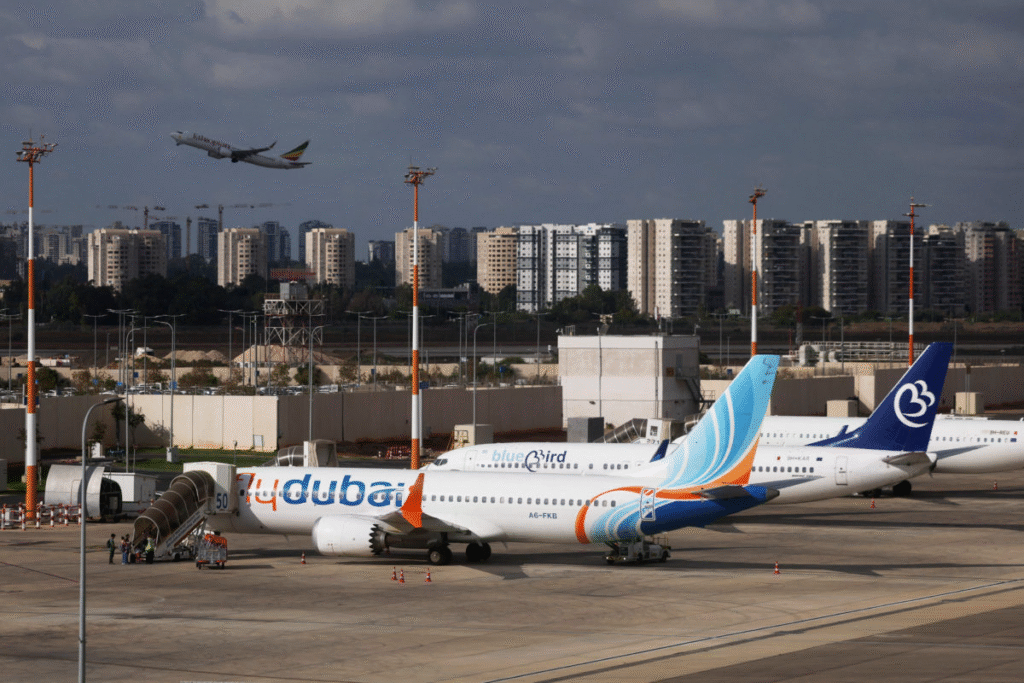
A Flydubai co-pilot stabbed the captain of an Israel-bound passenger jet and “apparently tried to crash the plane with everyone on board”, Benjamin Netanyahu has said.
The Israeli prime minister said passengers and crew intervened to overpower the alleged attacker during the dramatic emergency on flight FZ1073 from Dubai to Tel Aviv on Wednesday.
Netanyahu said: “During the flight, as they approached the country, one of the pilots stabbed the other pilot, and apparently tried to crash the plane with everyone on board.”
He said their intervention had prevented a “major disaster”.
The Boeing 737 MAX plunged from about 34,000ft to around 17,000ft in under a minute before eventually diverting to Tabuk in north-west Saudi Arabia, according to flight-tracking data.
Saudi authorities detained the suspected attacker after the aircraft landed safely, and both pilots were taken to hospital, according to the Associated Press.
Flydubai has confirmed that the aircraft suffered an incident and made an emergency landing but has not endorsed Netanyahu’s account that there was a deliberate attempt to crash it.
The airline said all passengers were safe and accounted for and that it was working with the relevant authorities.
Israeli officials are investigating whether the incident was an attempted terrorist attack. Reuters reported that security officials were treating terrorism as a leading possibility, although other explanations, including a possible personal or mental health crisis, were also being examined.
Israel’s national security minister, Itamar Ben-Gvir, described the alleged attacker as a terrorist and claimed his intention was to kill the Israelis on board.
The allegation has not been independently established by Saudi or Emirati authorities.
The emergency comes less than a month before Israel’s general election on October 27, the first national vote since the Hamas-led attack of October 7, 2023, and the wars that followed in Gaza, Lebanon and Iran.
Netanyahu is seeking a record seventh term and has made national security a central theme of his campaign, presenting himself as the leader best placed to protect Israel from regional threats. His opponents have focused heavily on the security failures surrounding the October 7 attack.
The Times reported that the suspected attacker was an Omani national. Earlier reports had given conflicting accounts of the nationalities of the pilots, including claims that they were Russian and Ukrainian. Flydubai has not publicly identified either man.
The aircraft transmitted a 7700 transponder code, signalling a general emergency, followed by 7500, the international code indicating unlawful interference or a possible hijacking.
The alerts prompted Israel to scramble fighter aircraft as the jet made erratic movements and lost altitude.
Netanyahu cleared his schedule and held emergency security consultations while Israeli officials sought information from Saudi authorities.
His office initially said: “The situation is under control, and all measures are currently being taken to bring the Israeli passengers back to Israel safely.”
Reports later emerged that a second team of pilots travelling in civilian clothes had been on board and helped prevent the suspected attacker from taking control of the aircraft.
Channel 12 reported that the off-duty pilots were able to assist after the cockpit confrontation, although the account has not been confirmed by Flydubai.
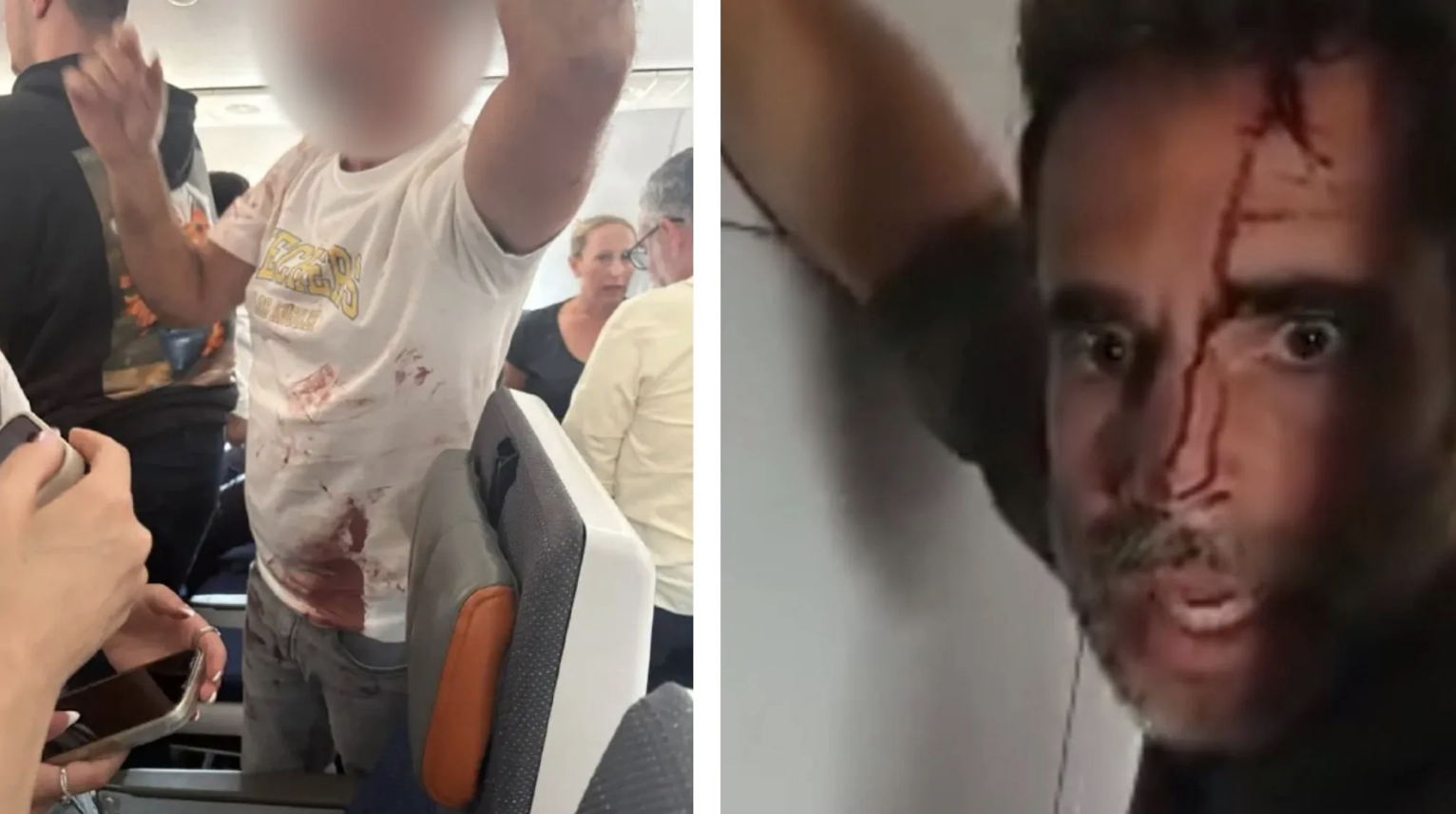
Passengers described scenes of panic as the aircraft suddenly plunged.
One passenger, Meital, told Channel 12 that her husband rushed towards the cockpit after hearing someone shout that there had been a stabbing.
She said: “Someone shouted ‘stabbing’ and my husband immediately understood what was happening and rushed to the front of the plane, and along with other Israelis they neutralized the terrorist.”
She added: “There were stabbings and a lot of blood.”
Another passenger filmed himself shortly after the confrontation with blood visible on his face.
He said: “We’re here during the hijacking of an airplane. At this point we’ve subdued the terrorists, we’re approaching landing.”
He added that everyone was safe apart from the injured pilot and appealed for help as the aircraft approached Tabuk.
Flight data showed that about two hours and 15 minutes into the journey, the aircraft descended from 34,000ft to about 17,000ft in less than a minute, while its speed increased sharply.
It briefly climbed again before falling below 15,000ft and then struggled to maintain a steady altitude for much of the remainder of the flight.
Flydubai said: “Flight FZ 1073 operating from Dubai International to Ben Gurion International Airport on 30 September experienced an incident while en route.”
It added: “The aircraft has landed safely in Tabuk Airport and all passengers are safe and accounted for.”
The emergency landing created an unusual diplomatic situation because Saudi Arabia and Israel have no formal diplomatic relations, although Saudi Arabia has permitted Israeli aircraft to use its airspace and has previously allowed emergency landings.
The passengers were later expected to continue to Israel on a replacement aircraft.
Saudi investigators are now seeking to establish the motive for the cockpit attack and whether, as Netanyahu alleged, the co-pilot deliberately attempted to bring down the aircraft.
The UAE and Oman had not issued detailed public statements about the investigation by Wednesday afternoon.
