

Listen to the article
France is stepping up protection of critical infrastructure and defence sites against Russian drone and cyber-attacks as the threat to Europe intensifies.
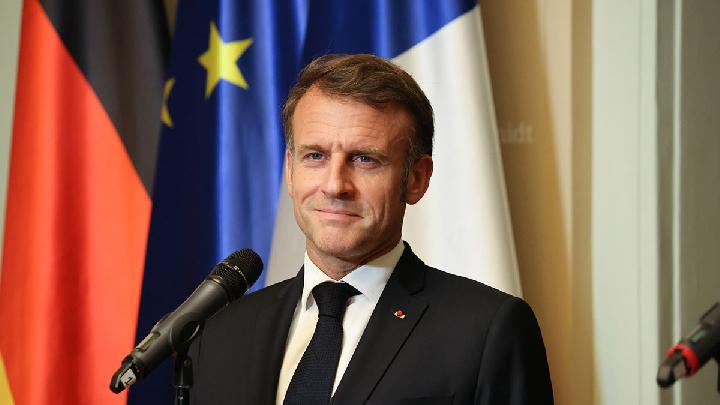
President Emmanuel Macron has ordered a new protection plan for critical infrastructure and sensitive defence sites.
Macron said: “In recent weeks, the threat – particularly the Russian hybrid threat – facing Europeans and France has intensified.”
He added: “We are not intimidated, because we know that our security today and tomorrow is at stake in Ukraine.”
The move follows a meeting at the Élysée Palace involving French political leaders and the heads of the country’s principal security and intelligence bodies.
The director-general of the DGSE foreign intelligence service, the head of the DGSI domestic security service, the director of military intelligence and the secretary-general for defence and national security were among those who briefed the meeting.
French authorities are increasingly focused on cyber-attacks, drones and foreign interference as threats facing Europe.
Macron cited an attempted drone attack at Leipzig airport in Germany, which German authorities attributed to Russian military intelligence.
He warned that a similar operation could take place elsewhere in Europe, saying: “No one is safe.”
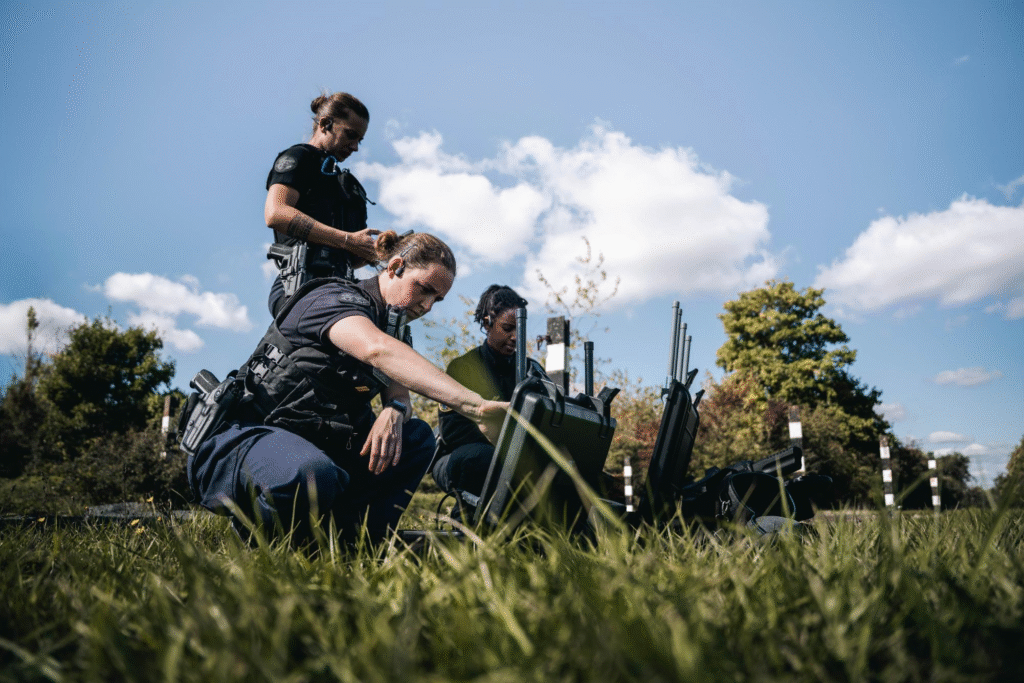
Macron said France was mobilising regional authorities and its wider security apparatus to protect strategic sites and the country’s defence industrial base.
He compared the approach with Sweden’s concept of “total defence”, which involves wider society in preparing for national emergencies and conflict.
Macron said France must recognise that such operations could take place in its cities and against its most sensitive sites, requiring authorities to anticipate, plan and strengthen protection.
He also warned that further hybrid attacks against European countries would provoke a response.
Macron said: “It will not go unanswered.”
He said the purpose of the attacks was to intimidate European countries and weaken their support for Ukraine.
Russia has denied that it poses a threat to France or other European countries.
France’s latest measures build on its 2025 National Strategic Review, which puts the possibility of another Russian attack against Europe within the next three to five years at the centre of European defence planning.
The review says the prospect of French forces becoming involved in “a major high-intensity war near Europe”, alongside destabilising hybrid operations against France itself, has reached “an unprecedented level since the end of the Cold War”.
However, it does not consider a major conventional war on mainland French territory to be a credible scenario.
Instead, Paris is preparing for the possibility that a military confrontation elsewhere in Europe could be accompanied by cyber-attacks, sabotage and foreign interference inside France.
The strategy calls for France to be prepared by 2030 to confront and win a major high-intensity war alongside its allies while managing destabilising activity at home.
The approach also includes efforts to increase national resilience and involve government, industry and the civilian population in preparing for crises.
French authorities are working to secure supplies of vital goods and strengthen the ability of public and private organisations to continue operating during major disruption.
France is also expanding its military reserves and wider citizen participation.
The measures come alongside a significant increase in French military spending.
Macron announced in July that an additional €36 billion would be provided for defence between 2026 and 2030.
The funding is intended to increase ammunition stocks and operational readiness while accelerating investment in early warning, space capabilities, long-range strike, surface-to-air defence and France’s nuclear deterrent.
France is also investing in counter-drone systems, electronic warfare and artificial intelligence as it prepares its armed forces for high-intensity conflict.
The strategic review says France should be capable by 2030 of acting as a framework nation within a NATO, European Union or ad hoc coalition in a major war.
It also calls for greater protection of the country’s economic, technological, scientific and industrial capabilities.
Macron said France had already been subjected to information and cyber-attacks which had been documented and attributed.
He said the risk of further hybrid attacks was real and that France had raised its threat posture in response.
