

Listen to the article
The Moscow–Pyongyang mutual defense pact has fused two threats into one axis that now threatens Japan.
By André Pienaar
I have just returned from Tokyo, where Japanese colleagues have experienced more heat than the unusually hot summer weather. Threats from Russia and North Korea, backed by the People’s Republic of China (PRC), converged dangerously for Japan during the month of August. Little of this aggression has been reported or discussed in the Western media.
On the fifth of August, Kim Yo Jong threatened “additional military options” over Tokyo’s test-firing of a Tomahawk cruise missile. The next day — the anniversary of Hiroshima — North Korea fired a ballistic missile into the Sea of Japan, then another on the twelfth, followed by a barrage of roughly ten missiles on the twentieth.
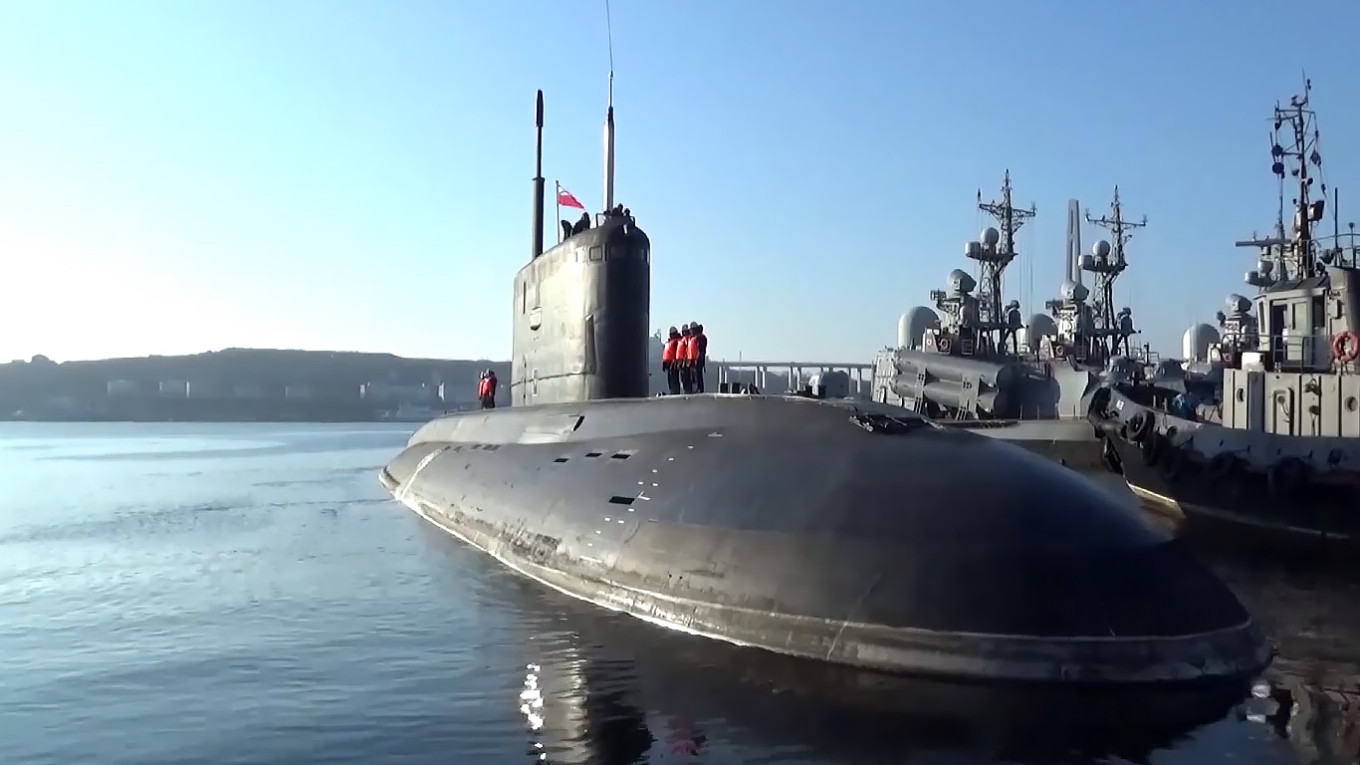
On the thirteenth of August, Vladimir Putin made his first-ever visit to the disputed Northern Territories, three miles from Hokkaido at their closest point. Within a week, Russia’s Pacific Fleet was firing anti-ship and cruise missiles around the same islands — from its flagship, from a nuclear-powered submarine, and from Bastion batteries stationed on territory Japan claims as its own.
Beijing’s ambassador issued a joint statement with his Russian counterpart endorsing Moscow’s territorial claims.
These acts of aggression, taken together within a fortnight, present something new: a coordinated system of armed coercion closing around Japan from the north and west, at precisely the moment Tokyo’s defences have been re-weighted south towards Taiwan.
Japanese planners have a name for this scenario — the two-front problem — and they are no longer treating it as a staff-college hypothetical. The Self-Defense Forces now openly exercise rapid north–south redeployment against a Russian diversionary scenario around Hokkaido timed to coincide with a southern crisis in the Taiwan Strait.
The mutual defence pact that changed the arithmetic
What transformed Japan’s threat picture was not any single missile test. It was a treaty signature: the June 2024 Comprehensive Strategic Partnership Treaty between Russia and North Korea, whose fourth article commits each to immediate military assistance if the other is attacked.
I have written in these pages about how that pact made Pyongyang the only treaty ally of both Moscow and Beijing. For Japan, its consequences are not theoretical. The treaty has already been implemented once — North Korean troops fought and died for Russia in Kursk — and the payment for that blood is being reciprocated at home through access to Russian nuclear and defence technology.
Consider what Russia is transferring, and what Japan has been building in response. Tokyo’s historic defence expansion — two per cent of GDP, Tomahawks aboard the destroyer Chokai, indigenous long-range missiles and expanded ballistic missile defence — was sized against previously isolated and indigenous North Korean armed forces.
The 2024 Comprehensive Strategic Partnership has changed that. Russian assistance on military reconnaissance satellites sharpens North Korean targeting of Japanese cities and the American bases they host. Russian re-entry and accuracy know-how hardens the missile force. Russian submarine and ballistic-missile-submarine assistance threatens to put a survivable nuclear deterrent in the Sea of Japan itself. And thousands of North Korean soldiers are rotating home from Ukraine with modern combat experience, the first the Korean People’s Army has accumulated since 1953. Japan’s defence minister said it plainly in January — Tokyo must squarely face the fact that it is a target of the know-how Pyongyang is bringing back from Moscow.
The arithmetic has moved too. Seoul’s defence ministry now assesses the North Korean arsenal at eighty to one hundred and twenty nuclear weapons — roughly double the figure cited in previous intelligence assessments. Behind that growth stands Russia’s Security Council veto at the United Nations, which has quietly buried the sanctions architecture that was once the principal brake on North Korea’s nuclear weapons programme. Japan is no longer racing North Korea. It is racing military aggression by Russia and North Korea with PRC support.
Why Japan may be forced to fight on two fronts
Geography has always enrolled Japan automatically in any Korean conflict: Yokosuka, Sasebo, Kadena, Iwakuni and Misawa are the staging architecture for American intervention, and therefore part of Pyongyang’s priority target set. What the 2024 treaty adds is a pathway — with precedent — for Russian involvement in that same conflict. The contingencies Japanese planners once gamed separately can now cascade into one another. A war on the peninsula could bring Russian pressure against Hokkaido and the Sea of Japan; a NATO–Russia crisis in Europe could see North Korean escalation in Asia rendered as a service to Moscow. The firewall between Japan’s northern problem and its Korean problem has been dismantled by treaty.
Moscow’s Kuril theatrics serve this system elegantly. They punish Japan’s alignment with Ukraine, pin Japanese forces in the north in the service of Chinese interests in the south, and signal to Washington that the American alliance network can be stressed at multiple points at once.
The convergence of wolves
Japan’s response has been serious — the largest military build-up since 1945, pursued by a government that now argues that the defence industry is an engine of national prosperity. But the residual gaps are structural, not budgetary. A quarter of a million active personnel cannot mass simultaneously against the Ryukyus, Hokkaido and the Sea of Japan. Interceptor magazines are finite against a Russian-assisted North Korean arsenal. And Japan has acquired counterstrike hardware faster than it has built the doctrine and political consensus for using it — a gap both Moscow and Pyongyang are rhetorically probing, each framing Tokyo’s deterrent as aggression to justify the next round of their own.
The lesson of August 2026 is the lesson of the axis itself: they need only converge on the same target at the same time, as a pack of wolves would. Japan is where that convergence and aggression are now visible in live fire. The US, UK and their allies must rally around Japan and our allies in Asia with urgency, because this convergence marks the beginning of a dangerous new gambit by the axis powers.
