


Listen to the article
By Harry Fullerton
Ambition and reality
In Arthurian legend, the Sword in the Stone is the iconic test of kingship. Placed in an anvil by the wizard Merlin, the blade was inscribed with a challenge stating that whoever could pull it free was the rightful King of England. Only a young squire, Arthur, managed to do it, revealing his royal lineage. It is an analogy that is very fitting for the UK Government’s current problem of trying to fund the nation’s defence. Their equivalent ‘stuck sword’ is the Defence Investment Plan or ‘DIP’ as it is referred to. The DIP has failed to be funded fully and although estimates vary, it is certainly short in the billions of pounds. It has turned out to be a self-imposed curse that has so far claimed the scalps of the Secretary of State for Defence, his deputy and has been a contributary factor in the demise of the Prime Minister.
One says self-imposed, because the same government both commissioned the last Strategic Defence Review and then rather courageously (or naively, as some might say) accepted the report and its recommendations. Yet as soldiers know, no plan lasts long after contact with the enemy. The problem that followed in trying to find the funding for UK Defence was not something that was properly thought through – and it turned out there was plenty more to think about. The obvious ones include manifesto pledges to increase spending on welfare, the NHS and other government departments and of course, empty coffers at HM Treasury. Add to this the UK’s requirement to give financial support to the ongoing war to in Ukraine and you already have a serious financial problem. This is where ambition meets reality, as the slightly altered line goes from the film Top Gun, “the SDR ego was writing cheques that the Government’s body couldn’t cash.”
Failing to learn from history

Starving the UK’s Armed Services of the funds they demand is not a new thing. Historical examples include the reluctance of the Government to re-arm in the years before Adolf Hitler invaded Poland in 1939. More recently, the ending of the Cold War produced the ‘peace dividend’, (as described in a previous article ‘Marching below Critical Mass’). Successive defence cuts have meant that the gap between current capabilities and the desired requirement is now too large to realistically solve and certainly something this current government did not contemplate. Given their ambition to spend more in other areas, such as on welfare, the task of delivering the DIP becomes a Sisyphean task. And this is only where the trouble really begins.
Procurement disasters
Whilst the finger of blame can be pointed at successive governments lack of concern for defence, the Ministry of Defence (MoD) has been at fault over its inability to manage its equipment and weapons budgets. Too many defence equipment projects have either over spent their predicted budgets, been delivered late or have yet to live up to their requirements. It naturally makes many government decision makers sceptical of the MoD’s demands for ever more funding. A vicious circle is created where trust breaks down between HM Treasury and the MoD, and where more red tape is introduced to attempt to avoid further procurement disasters. Yet all it seems to do is make the situation worse. And that strengthens the case amongst those who wish to actively de-fund defence. If this was not bad enough, there is then a more fundamental reason why defence spending continues to spiral and that is all to do with current conflicts, the huge advances in technology and the resulting Changing Character of Warfare. This is the key problem that few people fully understand and it needs to be explained.
War, innovation, uncertainty, risk and the ‘technology catalyst’
In times of peace and stability, funding a nation’s defence is relatively easy. As the risk of war is low, a nation’s defence is based upon existing or older capabilities. Advances in military technology and capability tend to be much slower in periods of peace. There is, in effect, no competition, no arms race and no need to invest in changing systems. What you do have is a form of certainty. No one ever genuinely tests the capability of a nation’s defence, so there is little justification to change or upgrade. This comfortable situation is upended when either a nation goes to war or is an observer or stakeholder in someone else’s war. This is because, once conflict starts, each side gets to see what weapons work and what ones don’t. Nothing stays still and uncertainty reigns. In such environments, commanders and soldiers learn to adapt and innovate quickly. This feeds back to requests for new weapons, systems and platforms.
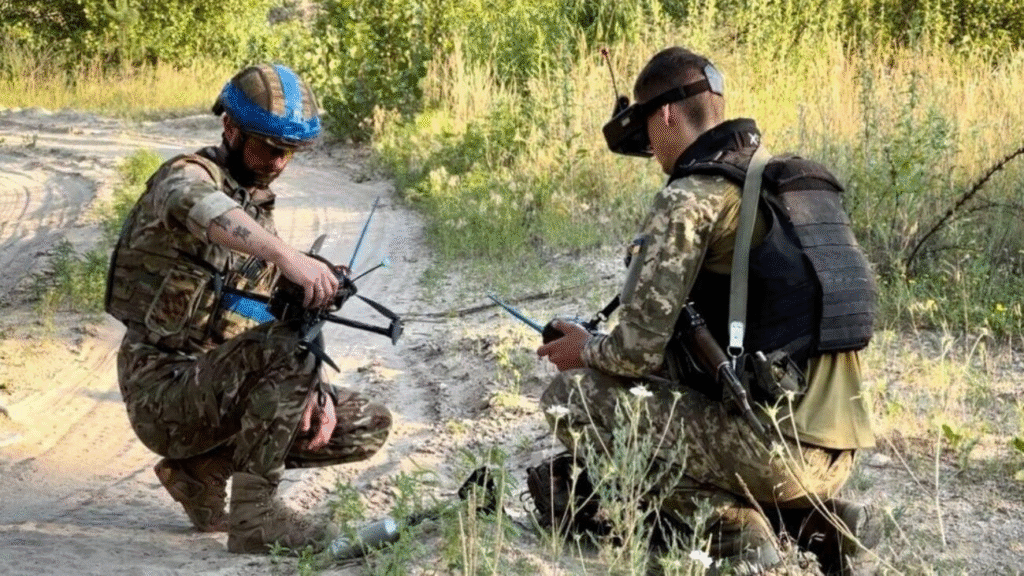
In the British Army, this is known as the ‘Urgent Capability Requirements’ (UCR) process, where short cuts to the normal, sluggish procurement process are introduced. Little regard is given to the expense of new weapon systems, especially in a conflict of national survival. Innovation comes to the fore as ideas and different systems are tested in real time and then adapted to full use. Greater risks are taken; prototypes go straight to the front line and the lessons learned cycle accelerates. Then every time one adversary delivers a capability advantage, the other side will try to counter the advantage. So, a game of cat and mouse begins. This is what has happened in the Ukraine-Russia War, now in its fifth year. It has also been happening in the US/Israel-Iran conflict. At the same time, the world is going through a technology revolution as never seen before, with rapid advances and breakthroughs in automation, robotics, communication, space technology and Artificial Intelligence (AI). Drones and Unmanned Aerial Systems (UAS) maybe the clearest example of the change, but there is far more happening behind the scenes. This ‘Technology Catalyst’ is fuelling the pace of battlefield change at greater and greater speeds. It has changed the Character of Warfare with no end in sight.
The new funding problem
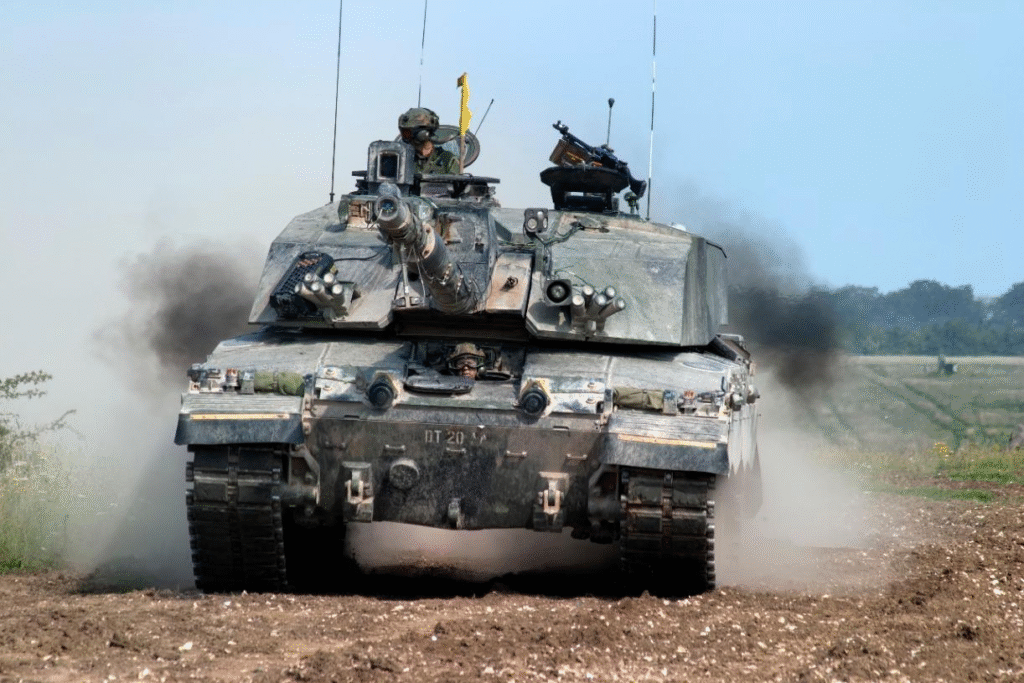
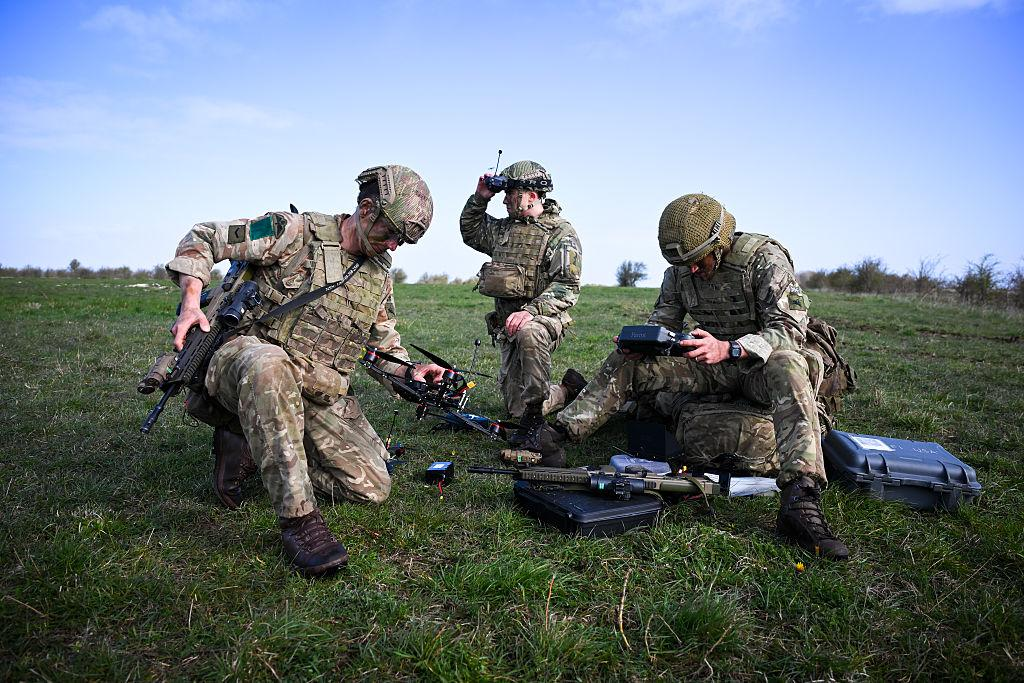
Military Chiefs whose Land Forces are technically at peace, say those of NATO nations, have been observing all this change for the past five years, with opinion divided as to what is really happening in terms of battlefield change. It was a previous CDS, General Sir Nick Carter who talked about retiring ‘Sunset Capabilities’ (and here he meant things like tanks and heavy armour) in his address about the Integrated Operating Concept of 2020. Yet it is only even in the last six months that senior NATO officers have started to accept the shocking consequences that the combination of ongoing wars and technology advances are having on warfare. They all now know they must change, however, short of going to war themselves (and finding out the hard way), there is inertia and a delay in developing new forces, new capabilities and in adapting to the recognised new Character of Warfare. Worse still, this requirement is a costly financial addition to their long term budgets to procure traditional capabilities, be that a crewed tank, piloted aircraft or ships with personnel. On top of these longer term platforms, militaries now need huge numbers of UAS, Unmanned Ground Vehicles (UGV), satellite communications, Electronic Warfare systems, cyber capabilities, AI decision making systems, and counter systems to negate everything they know the potential adversary could now possess. To make it worse, as current wars bring even more change, no one is sure whether today’s drones or other technology will be any use in six months’ time. Few are prepared to take risk and get rid of traditional capabilities (or indeed have the authority to do so). Military decision makers cannot commit to ditching the ‘Sunset Capabilities’, understandably wanting to integrate ‘drones with tanks’. They are in one way hedging their bets and asking for both old and new systems. Yet realistically the money is not there for both. So, whilst the UK MoD finds itself in a period of transition, where both ‘old and new’ are needed, it is not surprising that there is a significant shortfall in the UK’s defence budget (on top of the more traditional reasons of why defence budgets are under such pressure). There are no easy answers for chiefs, but it reminds me of Sir Basil Liddle-Hart’s warning that, “The only thing harder than getting a new idea into the military mind is to get an old one out.”
A longer term look (but it doesn’t help the current funding problem…)
If we assume that further automation of the battlefield is a near certainty, then it is likely there will be less soldiers operating in close combat. It is unlikely to reach a zero sum, but the trend will be downwards. That, in itself, is hard to imagine and also congers up sci-fi images and situations of lethal autonomous systems and robot wars, where even human intervention or decision making is not required. Although that might feel frightening and downright unethical, there are perceived benefits for funding this ‘automated defence’. With the soldier off the battlefield, automated platforms and systems can become smaller, cheaper and more disposable (most notably because much of the cost, complexity and size of a crewed platform is in ensuring the safety of the soldiers that operate it). Procurement times could drop, lowering the risk that a system is redundant by the time it comes into service. Next, militaries will need less personnel (another huge cost saving in terms of salaries and pensions). If one is optimistic, such automation may actually make war less likely, as described in the Economist article ‘Smart tech is making war a dumber choice’. , because this new technology can even the difference in capability between stronger and weaker nations at war.
Sadly, this automated, less people orientated vision of the future does not solve the current problems of funding defence. Whilst bold steps could be taken to achieve a technological transformation for the longer term, the risks involved in getting it wrong for the ‘fight tonight’ are huge and very real. We live in interesting times.
Harry Fullerton OBE served in the British Army for 28 years, including commanding the Household Cavalry Regiment and leading a battle group in Helmand Province, Afghanistan, for which he was awarded the OBE. He later specialised in defence technology and counter-IED capability at the UK Defence Academy and now advises organisations on leadership, technology and decision-making through his consultancy, SixFigureGrid.
