

Listen to the article

By Isabella Egerton
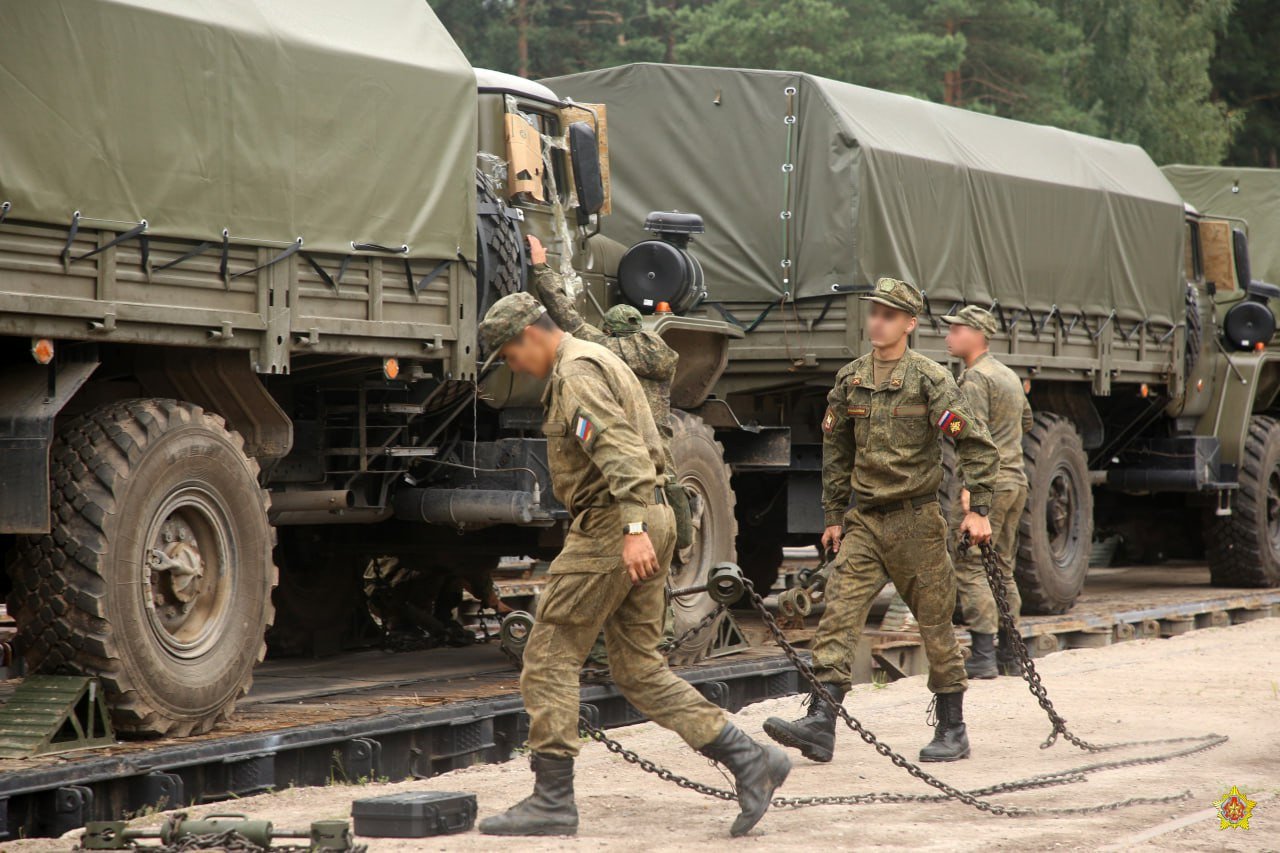
Russia and Belarus have launched the Zapad 2025 drills, with full-scale exercises scheduled for 12-16 September. Troops began arriving in Belarus last month, but this year’s drills are notably smaller than in previous editions.
Zapad, which takes place every two years, is closely watched in the West for its proximity to NATO borders and its history of serving as a rehearsal for Russian military action. The 2021 drills preceded the full-scale invasion of Ukraine, launched partly from Belarusian territory.
This year, Moscow’s limited capacity is on display. With forces tied up in Ukraine, Russia has sent only about 2,000 troops to Belarus. Lithuanian intelligence estimates a total of 6,000 – 8,000 troops are stationed in Belarus, with several thousand more deployed to Russia’s Kaliningrad exclave. By contrast, 30,000 Russian troops took part in the 2021 Union Resolve drills. Lithuania expects up to 30,000 Russian and Belarusian troops this year, far fewer than the 200,000 deployed in 2021.
Despite the smaller numbers, the drills retain a nuclear element. Belarusian Defence Minister Viktor Khrenin has said they will involve planning for the use of nuclear weapons and exercises with the Oreshnik missile, already used by Russia in Ukraine. Moscow has also transferred Iskander-M missile systems to Belarus and upgraded Belarusian aircraft to carry tactical nuclear weapons.
NATO allies are responding in kind. Estonia, Latvia, Lithuania and Poland will stage their own drills during Zapad, involving around 40,000 troops on land, at sea and in the air. Lithuania will contribute 10,000 personnel, supported by 6,000 allied troops. General Raimundas Vaikšnoras, Lithuania’s chief of defence, said the scale of NATO’s drills will exceed that of Zapad itself.
Several named drills are taking place alongside Zapad. Lithuania is conducting its Thunder Strike national defence drills, Poland is holding Iron Defender-25 with 30,000 troops, and ten Northern European NATO countries are participating in Tarassis 25. Lithuanian Deputy Defence Minister Tomas Godliauskas said, “We must take the drills near NATO and EU borders seriously; both the bordering countries and NATO itself are treating them with the utmost seriousness… ready to respond if necessary.”
Poland’s Ministry of Defence has warned of potential provocations during the Russian–Belarusian drills, including cyberattacks, GPS jamming and small-scale incidents to test NATO’s response. Warsaw views Zapad 2025 as a sign of deepening military cooperation between Moscow and Minsk.
The drills will cover Moscow and Leningrad military districts, Kaliningrad, the Arctic region, the Baltic and Barents Seas, and Belarus. Some manoeuvres will take place near the Belarusian village of Gozha and Kaliningrad’s Dobrovolsk, just a few dozen kilometres from Poland and Lithuania. Troops will also be positioned on both sides of the Suwałki Gap, the 70-kilometre corridor between Belarus and Kaliningrad widely considered NATO’s most vulnerable point in the region.
The drills have coincided with new regional developments. On 06 September, Belarusian authorities detained a 27-year-old Polish Carmelite monk, accusing him of espionage related to Zapad 2025. Poland condemned the arrest as a provocation. Separately, Polish Prime Minister Donald Tusk confirmed that Poland and its allies are preparing counter-drills in response to Zapad, while Lithuania has launched major military drills to coincide with the Russian–Belarusian drills.
Experts warn of escalation risks. Politico reported that Tomas Janeliūnas, professor at Vilnius University, said Moscow could use the drills to test NATO’s reactions through airspace violations, cyberattacks, or sabotage of civilian infrastructure, and that coinciding signals could be misinterpreted as actual attacks. Tomas Godliauskas also noted it is “unrealistic to expect a zero probability of air incursions,” citing incidents such as two drones entering Lithuanian airspace from Belarus in July. Lithuania recently closed airspace along the Belarus border until 01 October.
Belarus continues to signal engagement with the West. President Aleksandr Lukashenka has positioned the country as a potential mediator between Russia and Ukraine, offering concessions such as prisoner releases. In August, Donald Trump spoke with Lukashenka by phone and later praised him on Truth Social as “the highly respected President of Belarus,” raising the possibility of sanctions relief and even a US visit.
Defence analysts say the drills highlight ongoing pressure on NATO’s eastern flank and underscore Belarus’s deepening military integration with Russia, even as Lukashenka signals a willingness to engage with the West.
