

Listen to the article

By Isabella Egerton
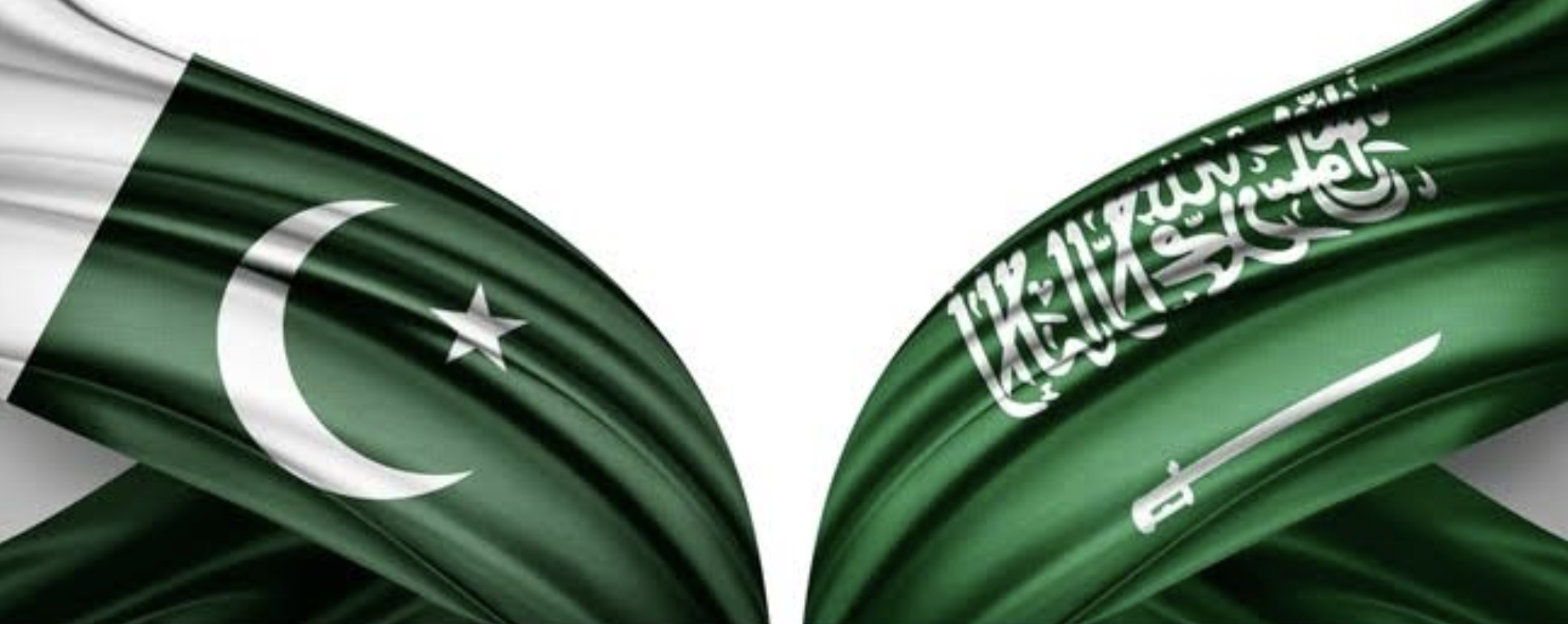
Pakistan and Saudi Arabia have taken their defence partnership, which spans over fifty years, to a new level. Last week in Riyadh, Prime Minister Muhammad Shehbaz Sharif and Crown Prince Mohammed bin Salman signed a Strategic Mutual Defence Agreement.
According to Islamabad’s official statement, the accord “demonstrates the shared commitment of both nations to bolster security in the region. It is intended to expand areas of defence cooperation between the two countries and to strengthen their joint deterrence against any aggression.” The agreement further states that “an attack on either country will be regarded as an attack on both.”
The announcement comes at a time of increased regional tensions, following Israel’s 09 September airstrike in Doha targeting Hamas officials.
Pakistan’s deputy prime minister and foreign minister, Muhammad Ishaq Dar, told reporters in London that other Gulf countries had shown interest in joining the pact, though he did not specify which nations. Dar emphasised that the agreement was “the outcome of months of effort rather than an overnight development.”
Saudi-Pakistani defence ties have deep roots, going back to the 1960s and formalised in 1967. In the 1970s, Pakistani officers were stationed in Saudi Arabia, thousands of Saudi troops trained in Pakistan, and Islamabad provided support for civil aviation and the Yemeni border. In recent years, collaboration has expanded to joint military exercises, defence production, and technology sharing, notably including former Army Chief Gen. Raheel Sharif’s 2017 leadership of the Saudi-led Islamic Military Counter Terrorism Coalition.
Beyond military matters, Saudi Arabia hosts over 2.5 million Pakistani expatriates and has provided financial assistance to Pakistan during periods of economic difficulty. The pact also carries significant implications regarding Pakistan’s nuclear arsenal. Defence Minister Khawaja Mohammad Asif told Pakistani television that “the deterrence that we get from nuclear weapons…will be made available to Saudi Arabia according to this agreement.”
Although Islamabad and Riyadh have not explicitly addressed nuclear collaboration, Asif’s comment represents the first public indication that Pakistan’s nuclear capability could potentially extend to an ally without its own nuclear weapons.
The deal has attracted international attention and speculation. Former US special envoy for Afghanistan Zalmay Khalilzad wrote on X: “A potentially consequential step in Pakistan–Saudi relations…stating that any aggression against one country would be considered aggression against both…Is the agreement an indication of declining confidence in US deterrence and defence on the part of Saudi Arabia?”
Responding to Khalilzad, Pakistan’s Foreign Ministry spokesperson Shafqat Ali Khan dismissed the comments, saying: “We don’t comment on every individual’s opinion…this hostility is one of the constants, and I think the only time he is not thinking of Pakistan is when he is sleeping!”
Analysts interpret the pact as a sign that Riyadh aims to diversify its defence alliances and reduce dependency on Washington. Dammam-based political researcher Moamer Al-Suleman suggested that the agreement “is likely to unsettle Washington, signalling Riyadh’s shift from US dependence toward diversified, independent defence partnerships.” He added that “this could be the beginning of a wider trend. Other regional powers—such as Turkey or Egypt—may also seek alternatives to US security assurances.”
Alex Mishra, an expert on Asian geopolitics, described the accord as “poised to fundamentally redefine US foreign policy,” underlining its consequences for regional influence and nuclear strategy. He said the pact “strengthens Saudi Arabia’s position as it edges closer to potential nuclear capability, while simultaneously cementing Pakistan’s role as the only nuclear-armed Muslim state. Together, they form a strategic bloc that the US cannot afford to ignore.”
