

Listen to the article
The British Prime Minister, Keir Starmer, has announced that he is prepared to send thousands of British troops to Ukraine to act as peacekeepers.
In all likelihood, Britain will be just one part of a multinational European force numbering up to 100,000 personnel, but possibly many more.
Inevitably, some European nations may be unwilling to participate – Germany and Poland are reported to have voiced concerns about a European troop deployment. This is not surprising, and any deployment will more than likely have to overcome significant domestic political hurdles before each member state can offer up troops and equipment. In the UK, this might require the support of Parliament.
Before any soldiers arrive on the ground in Ukraine, a complex set of rules of engagement would need to be established, and it is axiomatic that President Vladimir Putin would also have to agree to the deployment of a multinational peacekeeping force in Ukraine.
Any force deployed into Ukraine must be credible and have real deterrence value, which means that the force must be capable of defeating a Russian cross-border incursion. If Putin believes that any incursion is likely to fail, then deterrence is maintained, which is why it must be credible.
Simply put, this means that any Nato/European force must be capable of defeating any form of Russian aggression, from glide bombs to mass ground force attacks to cyber warfare.
So, from a UK perspective, how many troops would be involved? The British Army will very soon be reduced to about 72,000 – the lowest number of personnel for around 200 years. Any deployment into Ukraine is unlikely to be short-lived and could easily last five or possibly 10 years.
Given the various constraints the armed forces are currently facing, it is unlikely that the UK could commit more than 10,000, but it is more likely the force would be based around a large brigade of perhaps 5,000 troops, along with the requisite artillery, armour, air defence assets in the form of aircraft, helicopters, and air defence missiles capable of enforcing a no-fly zone or policing role.
The air intelligence role is crucial to ensure that the terms of the ceasefire are respected by both sides.
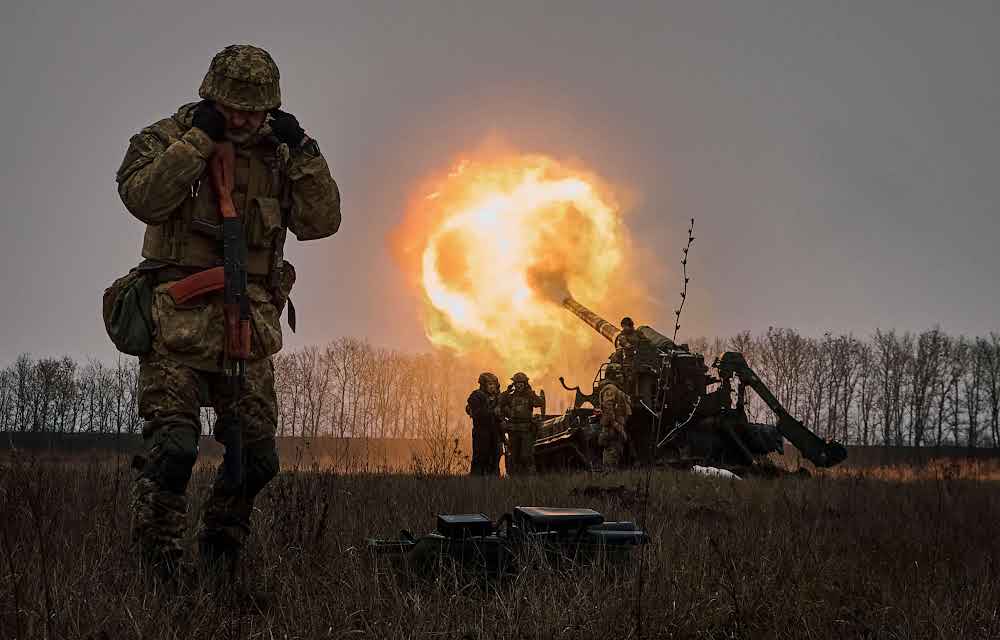
The UK has in the past based its expeditionary deployments on a six-month rolling tour of duty – this was the plan in Iraq and Afghanistan. If repeated, this would mean every six months a new UK force would deploy into the region. So, rather than committing say 5,000 troops to a peacekeeping operation, the UK would be committing at least 15,000 because 5,000 would be preparing to go, 5,000 would be deployed, and 5,000 would be recovering from the deployment.
So-called harmony guidelines would mean that troops would require a break of at least 18 months before they could deploy again. So, very quickly, the number of troops available for deployment reduces significantly.
Such a commitment would be required by most of the UK’s European and Nato partners to defend Ukraine’s 1,200-mile border with Russia with each country possibly responsible for a sector of the border or a specific role, such as air defence, logistic support or training. It would be a complex, vast, and highly risky undertaking.
While the United States has insisted that no US troops would set foot inside Ukraine, Prime Minister Starmer and other leaders would want, probably require, significant political backing from President Donald Trump. Additionally, the peace-keeping force would also require further air defence assets, as well as surveillance and intelligence aircraft.
In addition to a peace-keeping force, Ukraine would still require significant investment into its armed forces in the form of training and ammunition stockpiling, so that eventually the multinational peacekeeping force could be withdrawn, but that may take many years.
