Close Menu
National Security News
  • Ukraine War
  • Russia
  • Terrorism
  • China
  • Iran
  • Africa
  • Tech
    • Space
    • Nuclear
    • Cyber
  • Investigations

Trending

Bahrain uncovers Iran’s latest subversion network

May 13, 2026

Ramaphosa’s Zimbabwe visit puts constitutional crisis, not succession, at centre of regional concern

May 12, 2026

UK sanctions Iranian targets in response to national security threats

May 12, 2026

White House formally adds offensive cyberattacks to US counterterrorism strategy

May 11, 2026
Facebook X (Twitter) Instagram
National Security News
Subscribe
X (Twitter)
Login
IPSO Trusted Journalism in National Security
  • Ukraine War
  • Russia
  • Terrorism
  • China
  • Iran
  • Africa
  • Tech
    • Space
    • Nuclear
    • Cyber
  • Investigations
National Security News
  • Ukraine War
  • Russia
  • Terrorism
  • China
  • Iran
  • Africa
  • Tech
Home»NATO
NATO

Nato chief has warned the EU to increase defence spending or start learning Russian

Staff WriterBy Staff WriterJanuary 15, 20253 Mins Read
Facebook Twitter Pinterest LinkedIn Tumblr Email
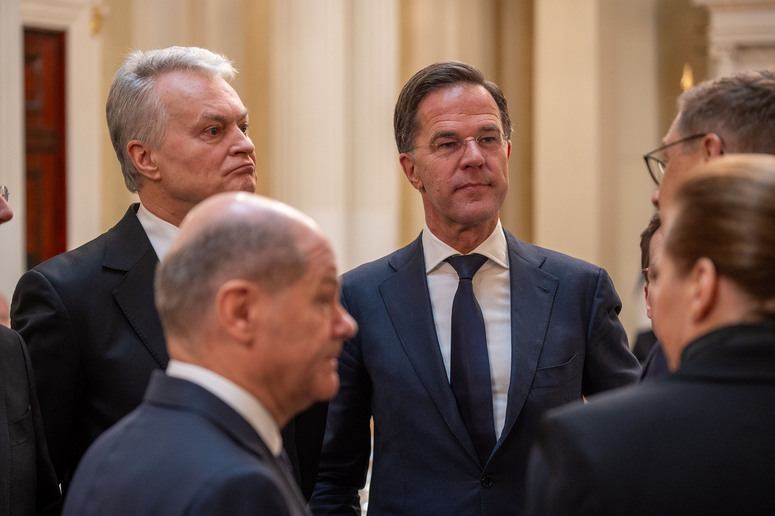
NATO Secretary General Mark Rutte attends the Baltic Sea NATO Allies Summit plenary session
Share
Facebook Twitter LinkedIn Pinterest Email

Listen to the article
0:00
0:00

Key Takeaways

🌐 Translate Article

Translating...

📖 Read Along

💬 AI Assistant

🤖
Hi! I'm here to help you understand this article. Ask me anything about the content!
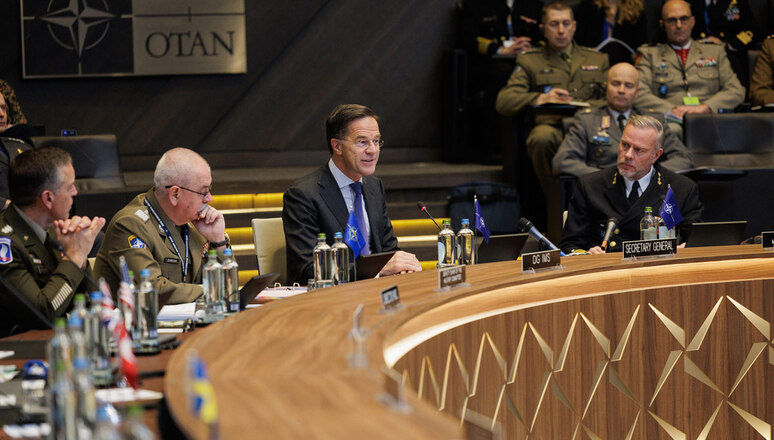
NATO Secretary General Mark Rutte. (Source – NATO)

The new head of NATO has told the European Union that member states need to spend more on defence or start learning Russian.

In a speech to the European Parliament, NATO’s new Secretary-General Mark Rutte said the EU needs to rethink its defence spending.

“On average, European countries easily spend up to a quarter of their national income on pensions, health, and social security systems. We need only a small fraction of that money to make defence much stronger,” Rutte told MEPs.

Most EU countries also belong to NATO, and for the last decade, the alliance has called on them to spend at least two per cent of their GDP on defence—24 of NATO’s 32 members now meet that target.

But President-elect Donald Trump is calling for NATO members to spend more to reduce the burden on the US. He called on allies to spend five per cent of GDP on defence—much more than even America, which spends 3.38 per cent.

In his first appearance in the European Parliament as NATO chief, Rutte said the aim was to “bring NATO and the EU closer together” to counter a “destabilisation campaign” by the Kremlin, along with threats ranging from Iran and China to cyberattacks and nuclear proliferation.

“We are safe now, but not in four or five years,” he said, adding later that if spending doesn’t go up, Europeans should “get out your Russian language courses or go to New Zealand.”

He continued: “I’m deeply concerned about the security situation in Europe. We are not at war, but we are not at peace either. That means we need to invest more in defence and produce more capabilities. This cannot wait. We need to boost the resilience of our societies and critical infrastructure.”

Rutte believes that greater cooperation between NATO and the EU is crucial to future security.

Both organisations are based in Brussels but have purposefully maintained an arm’s-length relationship, with NATO focusing on defence and transatlantic relations, while the EU leads on issues like trade, farming, and climate.

However, Russia’s invasion of Ukraine has forced the EU to reconsider its defence posture. The EU has appointed its first dedicated defence commissioner, and the European Parliament has created a full defence committee.

Rutte believes the two organisations can work together.

“NATO and the European Union have a lot to do together,” Rutte said—specifically mentioning the effort to help Ukraine defend itself against Russia.

However, he was cautious about the EU intruding too far into NATO territory, noting that the alliance “is strong” on issues like setting standards for artillery ammunition, but emphasising that the EU’s internal market will be crucial in boosting military production.

On Ukraine, he insisted that peace can only come from a deal that serves Kyiv’s interests.

He said this means “more weapons and faster, so [Kyiv] can defend itself better and negotiate a good deal for Ukraine, for Europe, and for the world.”

Follow on Google News Follow on X (Twitter)
Share. Facebook Twitter Pinterest LinkedIn Tumblr Email
Staff Writer

Keep Reading

Britain to create joint naval force with nine European countries as ‘complement’ to Nato

Russia paid African media network to spread anti-Western propaganda, leaked files show

Iranian drone and missile accuracy is dependent on Russian and Chinese satellites

United States could leave NATO, says Trump, as he claims Iran ‘wants a ceasefire’

Russian losses in Ukraine are now higher than the numbers of troops being recruited

Russian soldiers use invisibility cloaks to avoid drone detection

Editor's Picks

Ramaphosa’s Zimbabwe visit puts constitutional crisis, not succession, at centre of regional concern

May 12, 2026

UK sanctions Iranian targets in response to national security threats

May 12, 2026

White House formally adds offensive cyberattacks to US counterterrorism strategy

May 11, 2026

Whose money was in Ramaphosa’s sofa?

May 11, 2026

Trending

White House formally adds offensive cyberattacks to US counterterrorism strategy

Cyber May 11, 2026

Whose money was in Ramaphosa’s sofa?

South Africa May 11, 2026

Britain to create joint naval force with nine European countries as ‘complement’ to Nato

United Kingdom April 30, 2026
Facebook X (Twitter) TikTok Instagram LinkedIn
© 2026 National Security News. All Rights Reserved.
  • About us
  • Privacy Policy
  • Terms
  • Contact
Home Topics Podcast NSN Lists

Type above and press Enter to search. Press Esc to cancel.

Sign In or Register

Welcome Back!

Login to your account below.

Lost password?