

Listen to the article

Netumbo Nandi-Ndaitwah, representing the ruling South West African People’s Organisation (SWAPO), has been elected as Namibia’s first female president in a contentious election. The 72-year-old secured over 57 per cent of the vote, while her closest competitor, Panduleni Itula of the Independent Patriots for Change (IPC), received 26 per cent. Opposition parties have rejected the election results, citing widespread irregularities and are planning to contest them in court.
Before the elections, there was speculation that SWAPO might face a decline similar to South Africa where the ANC is ruling in a power sharing agreement. Botswana Democratic Party was kicked out after ruling for 60 years.
Nandi-Ndaitwa’s reputation, notably her lack of links to corruption unlike other SWAPO leaders, along with voters indicating that they prefer “the devil you know,” has, according to Dr. Piet Croukamp of North West University in South Africa, given her an advantage.
Opposition calls election a sham
Opposition leaders have expressed outrage over the election process. Job Amupanda of the Affirmative Repositioning party accused Zimbabwe’s ruling ZANU-PF of interfering in Namibia’s elections, calling the close ties between ZANU-PF and SWAPO a relationship that “will backfire.”
Panduleni Itula, the Independent Patriots for Change (IPC) candidate, described the election as plagued by “glaring and undeniable” malpractices, adding that he would not recognise the results. Meanwhile, McHenry Venaani of the Popular Democratic Movement accused SWAPO of holding onto power “by hook or (by) crook.”
Observers find mismanagement, not manipulation
Dr. Piet Croukamp, who observed the elections and visited polling stations across the country, said in an interview with National Security News that he did not see any evidence of deliberate interference by SWAPO.
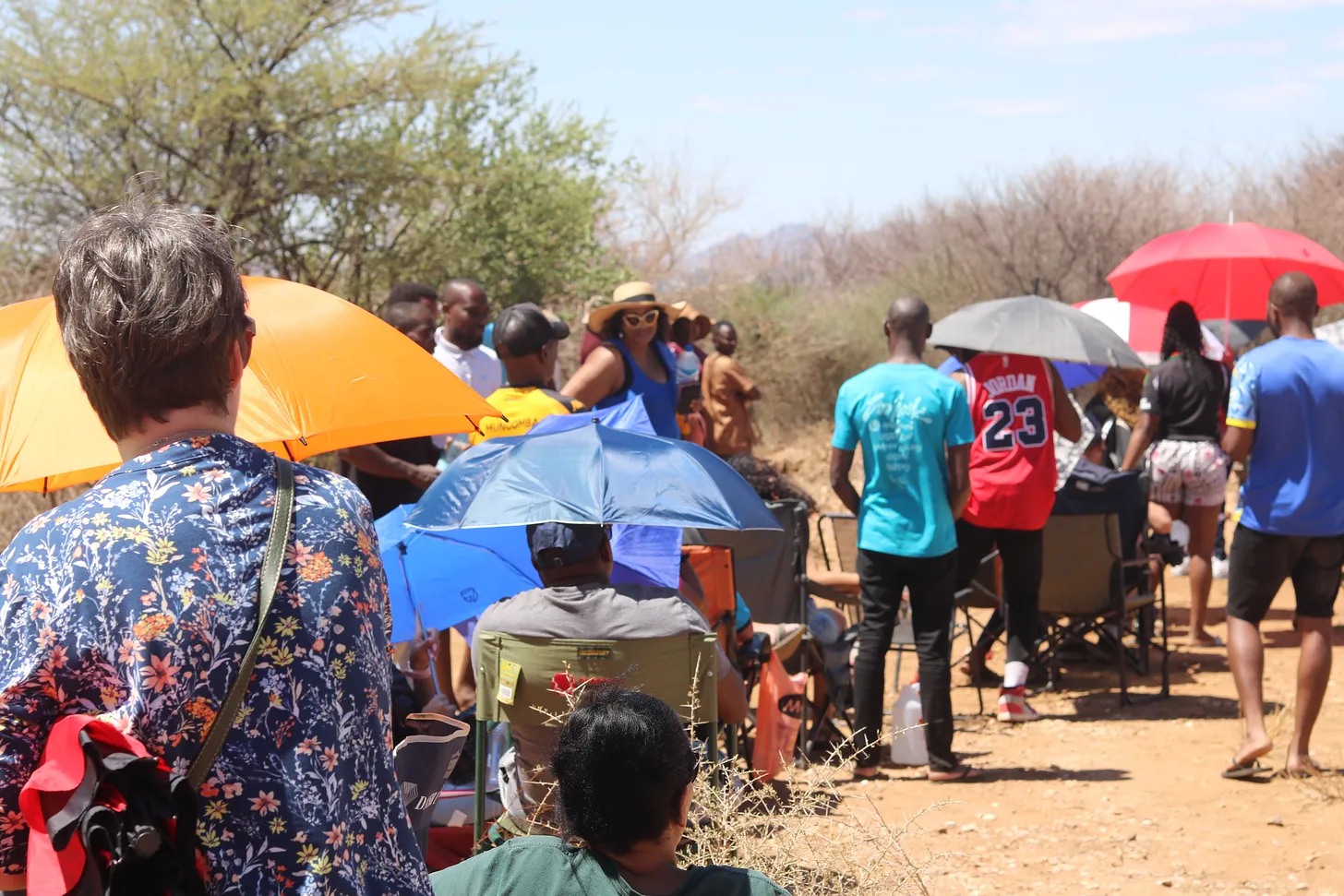
“There was nothing I or other independent observers, including those from the African Union, found to suggest SWAPO interfered with the elections,” Croukamp said. However, he noted significant logistical issues, including delays in opening polling stations, ballot shortages, and long queues due to the manual counting process mandated by a court ruling.
“These problems stemmed from poor management by the Namibian Electoral Commission,” he said, emphasising that the inefficiencies created frustration among voters but were not indicative of manipulation.
Nandi-Ndaitwah’s integrity boosts her appeal
Nandi-Ndaitwah’s reputation as being “untainted by corruption” appears to have worked in her favour. “Everybody’s been implicated in corruption, from [President] Hage Geingob through the top ranks of SWAPO, except Nandi-Ndaitwah and Finance Minister Iipumbu Shiimi,” Croukamp said. “If you look at the preliminary results, she’s even more popular than SWAPO itself.”
Nandi-Ndaitwah is optimistic about the country’s prospects, particularly with ongoing oil exploration and plans for a hydrogen-based economy. Croukamp described her as a blend of “old socialist” political ideals and a belief that the private sector should drive economic growth. “She thinks these developments could save the economy, which is burdened by massive debt,” he added.
Risk of minor incidents of violence
Croukamp said it is possible that there could be “small incidents of violence” because of the unhappiness of some political parties with the results, but he did not think it would be on the scale of what has recently been seen in Mozambique. He said one or two politicians might stir up some form of violence as a consequence of the election results because they may not make it into parliament, but he expects it to be “very, very limited.”
Why Namibia, with an economy smaller than Johannesburg matters
On the geopolitical stage, Croukamp noted that Namibia is not a major player in global politics and that its economy “is smaller than the economy of Johannesburg, perhaps closer to Bloemfontein or Durban.” Namibia, he said, plays virtually no role in the international political economy but “has very, very close ties with Germany and the Nordic countries.” Other European countries with an interest in Namibia include Switzerland and Austria, driven by humanitarian concerns.
“They somehow believe it is possible to save Namibia from itself if they invest heavily.” Namibia’s infrastructure, including its railways and airports, he said, is also crumbling. “There is a certain dilapidation settling in, but European countries remain optimistic about the route Namibia has taken,” he said. “They’re hoping for a more competitive political system and that good governance becomes the norm rather than the exception.”
Questions over BRICS membership
Namibia has previously expressed interest in joining BRICS, with Ambassador Khanduukeme Kashuupulwa indicating to Russian news agency TASS that Namibia is closely working with South Africa on this matter.
According to Croukamp, “China and Russia would likely accept Namibia immediately—it would be symbolic because the economy is too small to make a material difference.” However, he added that Germany and Nordic countries may discourage Namibia’s BRICS membership to preserve its non-aligned stance. “They see non-alignment as crucial for continued cooperation and sharing the burden of economic development.”
Economic challenges ahead for Nandi-Ndaitwah
As Namibia prepares for a historic transition to its first female president, the country faces significant challenges. Economic growth is projected to slow to 3.6 per cent in 2024, down from 4.5 per cent in 2023, due to global macroeconomic pressures and tight monetary conditions. Unemployment remains a pressing issue, with the overall rate exceeding 30 per cent and youth unemployment soaring to around 46 per cent. Additionally, approximately 27 per cent of the population lives below the national poverty line. Namibia’s rising debt levels, now at 71 per cent of GDP—well above the government’s target of 35 per cent —have raised concerns about fiscal sustainability.
Other pressing issues include land reform debates that have unsettled investors, a widening budget deficit projected to reach 3.1 per cent of GDP in 2024/2025, and rising electricity tariffs that have increased by 30 per cent in recent years, straining households and businesses. Corruption also remains a significant obstacle, with Namibia ranked 53rd out of 180 countries in Transparency International’s 2022 Corruption Perceptions Index.
The election of its first female president would mark a milestone, but Nandi-Ndaitwah’s ability to address these systemic issues, restore trust in governance, and harness Namibia’s oil and hydrogen opportunities will be closely watched both domestically and internationally.
