

Listen to the article
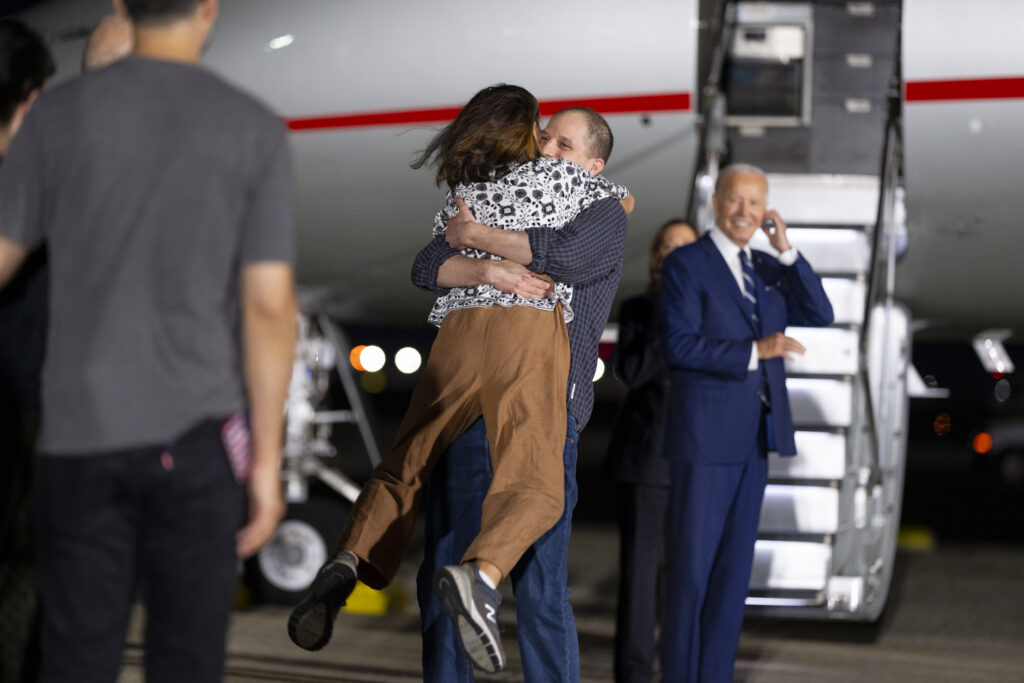
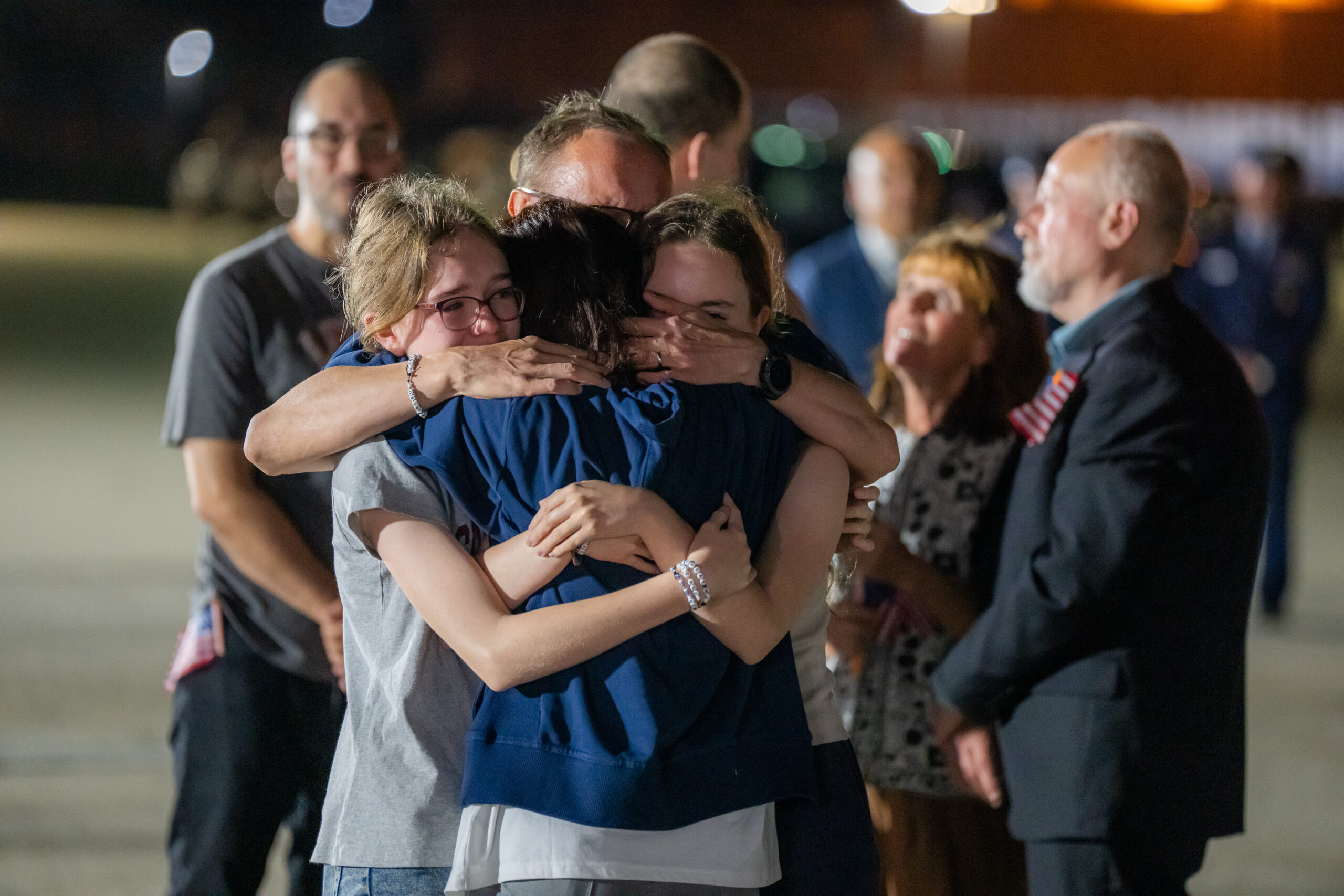
There will be no re-opening of diplomatic relations between Russia and the West in the wake of the historic prison exchange, according to a former US National Security advisor. Thomas Graham, who served as senior director for Russia on the National Security Council staff during the George W. Bush administration, said that the prisoner exchange, the largest in post-Soviet history, “does not really tell us that the US is in a different space with the Russians.”
Graham also dismissed the prospect that the prisoner deal could change the course of the Russia-Ukraine war. In an interview with National Security News, Graham, who is a distinguished fellow at the Council on Foreign Relations, said, it does not mean that “we’re opening up a possibility for a broader dialogue with the Russians.”
He also discusses possible pathways to end the Russia-Ukraine war, the potential impact of a new president in the White House on the war, and suggests ways in which Ukraine could become a modern equivalent of Cold-War Sweden instead of pursuing NATO membership.
The exchange of prisoners between the US and Russia happened, Graham said, because Putin himself had a personal relationship with one of the individuals that was exchanged on the US side. He emphasised that the multitude of issues dividing the US and Russia, particularly surrounding Ukraine, indicates that any common ground is minimal.
“The larger thing for people to remember is that this prisoner exchange does not really tell us that we’re in a different space with the Russians.”
“When there is an overlap in interest, it is possible to reach agreement with the Russians,” akin to interactions during the Cold War, Graham said. This dynamic has, however, diminished since Russia’s 2022 invasion of Ukraine.
Addressing concerns about whether the prison swap might increase the targeting of Americans abroad, Graham said the short answer is, “No.”
“So much of this depends on the individual or countries we’re talking about and the state of relations, and whether there are, in fact, prisoners in the American system that the other country would like to exchange for.”
The issue with the Russians was, in fact, a quite complicated one, he said. The negotiations extended over a number of years. Part of the problem was that there was no one in the US prison system that the Russians wanted to trade for the US citizens.
“So, we had to go through this very complicated diplomatic effort to get the Germans to agree… to trade someone of very high value to the Russians: Vadim Krasikov, an FSB assassin who had murdered a Chechen dissident in broad daylight in Berlin a few years back.”
Graham pointed out that arrests like that of journalist Evan Gershkovich are more about sending a political message to Western journalists operating in Russia, indicating the boundaries of acceptable reporting on sensitive topics critical to sustaining the Russian narrative regarding Ukraine.
Commenting on whether the prisoner exchange will have any effect on the ongoing war in Ukraine, Graham said there is no indication that Russia is willing to engage in serious negotiations with Kyiv or Washington about Ukraine.
Furthermore, he said, “It is clearly not interested in the types of terms that Russia talks about, which is basically capitulation.”
Washington had made itself clear from the beginning of the war, he said, that it is not prepared to sit down with Russia to talk about Ukraine without the Ukrainians at the table.
“While this exchange is good news for the United States,” he said, “it’s good news, obviously, for the prisoners that were released; it tells us very little about the course of developments in the Ukraine conflict.”
Potential pathways to end Ukraine-Russia conflict
“What strikes me is that this is not simply a matter of a conversation between the Russians and the Ukrainians, the way it’s generally framed in the West.”
Graham believes that a resolution of the conflict in Ukraine is going to require some sort of “direct conversation between the United States and Russia. Now that might not be sufficient, but it is an essential element.”
In addition, there also need to be talks between the Ukrainians and the Russians to work out a number of issues that are directly related to the conflict in Ukraine, he said. It would include maintaining contact on the battlefield and prison exchanges.
“Without the United States and by talking about broader security issues—European security in particular, strategic issues, nuclear issues—I don’t think you’re going to have a resolution of the Ukraine conflict.”
A resolution, he said, is not a single negotiation, “but a set of interlocking negotiations that touch on the broad range of issues that are disputes between the United States and Russia, between the West more broadly speaking and Russia, and between Ukraine and Russia.”
Doubt that Trump could resolve Ukraine conflict quickly
Graham discussed the uncertainty surrounding the next US president and the potential impact on policy regarding Russia. He suggested that a Harris administration would likely continue Biden’s approach, allowing for the possibility of negotiations based on evolving circumstances on the battlefield and a possible shift in attitudes in Ukraine.
Regarding a possible Trump presidency, Graham anticipates attempts by President Trump to reach out to the Russians, but he said it was not clear that the Russians were going to offer any different terms than they have been offering up to now.
“My sense is that if not Trump personally, then to many of the people that would be in critical positions in his administration, it [Russians’ conditions for ending the war] would not be acceptable to Congress. So, I think it’s very unlikely to go through.”
The West should help Ukraine become an updated version of Cold-War Sweden
Graham also proposed an alternative path for Ukraine, should NATO membership be a bridge too far, suggesting that Sweden offers a model that could be adapted to current circumstances. The West, he said, should be helping Ukraine become an updated version of Cold-War Sweden.
“So, when I talk about a Swedish model for Ukraine, I mean a Ukraine that begins to modernise and expand its defence industrial sector. People tend to forget that Ukraine was the fourth largest arms exporter before this conflict. So, it has the foundations for that type of a defence industrial sector.”
In parallel, he suggested, Ukraine could maintain close security cooperation with the United States, pursue talks with the European Union for EU membership, even if NATO membership is not feasible.
“I think that would provide a sufficient guarantee for Ukraine’s security in the years ahead and something that might be easier to sell to the Russians or to reconcile the Russians with because it would not require explicit Ukrainian membership in NATO.”
Thomas Graham is the author of the book ‘Getting Russia Right.’
