

Listen to the article
By Harry Fullerton.
Harry Fullerton is the founder of SixFigureGrid. This article was originally published by SixFigureGrid.
On 30 January 2022, SixFigureGrid published an article titled ‘Gathering Storm Clouds – Ukraine Crisis 2022 – A Lesson from History’. It looked at how Russia was building up to an invasion of Ukraine and how this potential conflict might resonate with a previous war in the same region: the Crimean War of 1853 to 1856.
It also explained how that war began amid a religious dispute in the Holy Land over responsibility for Christian sites in the then Ottoman-controlled region of Palestine. It spread to the Black Sea, drawing the Great Powers of Russia, the Ottoman Empire, Britain and France into battle, first at sea and then on land.
The conflict expanded further, with British and French naval attacks on Baltic ports. Fighting even reached the other side of the world at the Russian naval base of Petropavlovsk, on the Kamchatka Peninsula. All the while, the ‘Great Game’, the 19th-century political, diplomatic and espionage rivalry between the British and Russian empires for dominance and influence in Central Asia, continued. Although never classified as such, the Crimean War might therefore be described as an early world war.
Tragically, only 25 days after the article was published, on 24 February 2022, President Vladimir Putin committed Russia to the invasion of Ukraine and all the subsequent carnage, destruction and death.
Fast forward to the autumn of 2026, introduce a second conflict in the Middle East, and the phrase ‘World War Three’ has moved from the fringes of commentary into the mainstream.
There are four main views: ‘We are close, but not there yet’; ‘It is starting or spreading’; ‘We are already in it’; and ‘The label does not fit’. Each view makes its case convincingly, yet the second is probably closest to the truth: it is starting or spreading.
What is a World War? Definition and Perception
There is no agreed legal or academic test for when a war becomes a world war. The term is usually applied after the fact, by historians, to conflicts that drew in most of the great powers, spanned several continents and reshaped the international order. While events are unfolding, people rarely know they are living through one. That uncertainty lies at the heart of today’s debate.
The Second World War illustrates the problem well. In British and European memory, it has tidy bookends. It began in late summer 1939, when the Nazi-Soviet Pact of August cleared the way for Germany’s invasion of Poland on 1 September, followed by the Soviet invasion from the east just over two weeks later. Britain and France declared war on Germany on 3 September.
Yet for eight months, the confrontation in Western Europe was known as the ‘Phoney War’, before Germany launched its offensive against France and the Low Countries in May 1940. The wider war ended in 1945, with Germany surrendering in May and Japan announcing its surrender in August after the United States dropped atomic bombs on Hiroshima and Nagasaki.
The 1939 to 1945 dates frame the war as a declared conflict that started in Europe and finished in Asia, particularly from the perspective of Britain and France.
Yet for millions of people, the war did not begin or end on those dates. For Spaniards, and for the volunteers of the International Brigades, the struggle against fascism began in 1936. The Spanish Civil War saw Nazi Germany and Fascist Italy send aircraft, troops and weapons to Franco, while the Soviet Union supplied the Republic. Many contemporaries saw Spain as a rehearsal for the wider war, a testing ground for the bombing of cities and for alliances that would later fight one another.
For Ethiopians, the conflict began in October 1935 with Italy’s invasion under Mussolini. For Albanians, it began in April 1939 when Mussolini’s forces invaded. For China, the war began in 1937 with Japan’s full-scale invasion, or even in 1931 with the seizure of Manchuria. For the Soviet Union, the ‘Great Patriotic War’ began in June 1941. For the United States, the war began in December 1941 after the Japanese attack on Pearl Harbor.
The ending was just as blurred for many. In Greece, the withdrawal of Nazi German forces in 1944 was followed by renewed conflict and then a brutal civil war from 1946 to 1949. The Soviet invasion of Japanese-held Manchuria began in August 1945, and fighting continued after Japan announced its surrender, with further Soviet operations in the Kuril Islands into early September. Manchuria then became a central battleground of the renewed Chinese Civil War.
Across Asia, from Indochina to Indonesia, the end of the Second World War led directly into new wars of independence and revolution.
The lesson is that world wars are not single events with clean edges. They grow out of regional conflicts that become connected, as outside powers take sides, supply weapons and learn lessons on someone else’s territory.
Whether a given moment counts as ‘before’ or ‘during’ a world war depends partly on where one stands and partly on what happens next. This is why the present debate over where we are is so difficult to settle, and why the idea that a world war can be ‘starting’ rather than simply ‘on’ or ‘off’ has strong historical foundations.
Ukraine and Russia: the forming of sides
The Russia-Ukraine war is well into its fifth year since the full-scale invasion of February 2022, yet for Ukrainians, the war started in 2014 with Russia’s seizure of Crimea and the beginning of conflict in the Donbas.
At the time, this was perceived by many countries as serious, but not something that would necessarily spread. However, the war has now done what regional wars before world wars have often done: it has divided much of the world into opposing camps.
On one side stands Ukraine, supported by NATO members and their partners. The United States, Britain and the European Union have supplied weapons, ammunition, intelligence, training and tens of billions in financial aid. Western-made missiles have been used to strike targets inside Russia.
European states have rebuilt their defence industries and raised military spending to levels not seen since the Cold War. NATO itself has expanded, with Finland and Sweden joining.
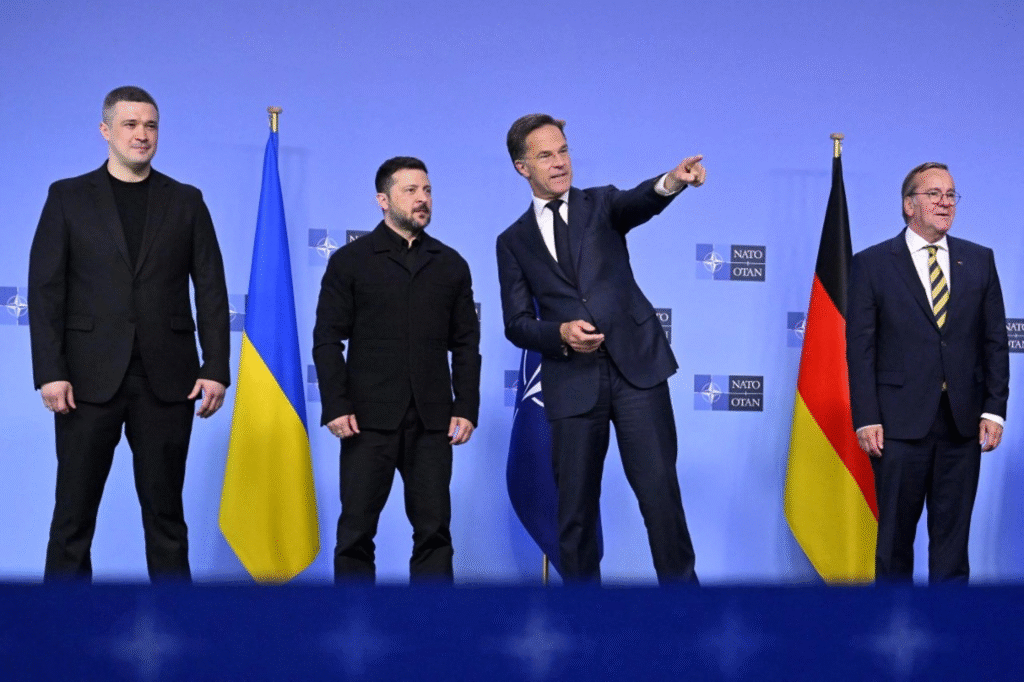
None of these states is formally at war with Russia, but their involvement goes far beyond neutrality. NATO countries increasingly talk about readiness, conscription and rising military budgets. The UK has even examined measures to strengthen its reserves.
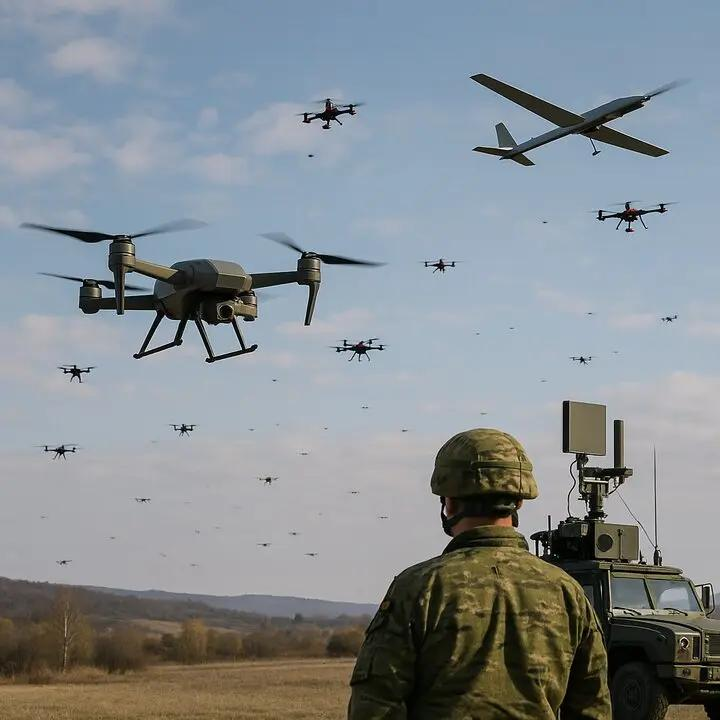
All the while, technology is advancing at a pace that makes it increasingly difficult for militaries that are not actually at war to keep up with changes on the battlefield.
On the other side, Russia has gathered its own supporters. Iran supplied Shahed attack drones, which Russia later began producing itself, and the two signed a strategic partnership treaty in 2025.
North Korea has supplied Russia with artillery ammunition and ballistic missiles. It also deployed thousands of troops to Russia, including forces sent to the Kursk region, after Moscow and Pyongyang signed a mutual defence treaty in June 2024.
The development has implications far beyond Europe, deepening military ties between Russia and North Korea and adding another dimension to tensions on the Korean Peninsula.
China has not openly supplied weapons and maintains that it is neutral, but it has become an important economic partner for Russia, buying Russian oil and gas and supplying machine tools, electronics and components. Belarus provided territory for the original invasion.
Meanwhile, the military stand-off over Taiwan is never far from the headlines.
This pattern of rival blocs, arms supplies and supporters bears similarities to Spain in the 1930s. There, too, major powers supported opposing sides, testing weapons and tactics on another country’s soil while avoiding a declared war with each other.
The Ukraine war has also spilled beyond its borders in quieter ways. Europe has seen sabotage of undersea cables and pipelines, arson attacks, cyber attacks on infrastructure and Russian drones crossing into NATO airspace.
Each incident is limited on its own. Together, they demonstrate how the consequences of the conflict are no longer contained within Ukraine.
This is why the ‘starting or spreading’ view is persuasive. The sides of a potential wider war are increasingly visible, with their members supplying, financing and, in some cases, fighting alongside the main combatants.
The US-Iran War: a second front that spread
If Ukraine shows the sides of a possible world war forming, the war with Iran demonstrates how quickly fighting can spread.
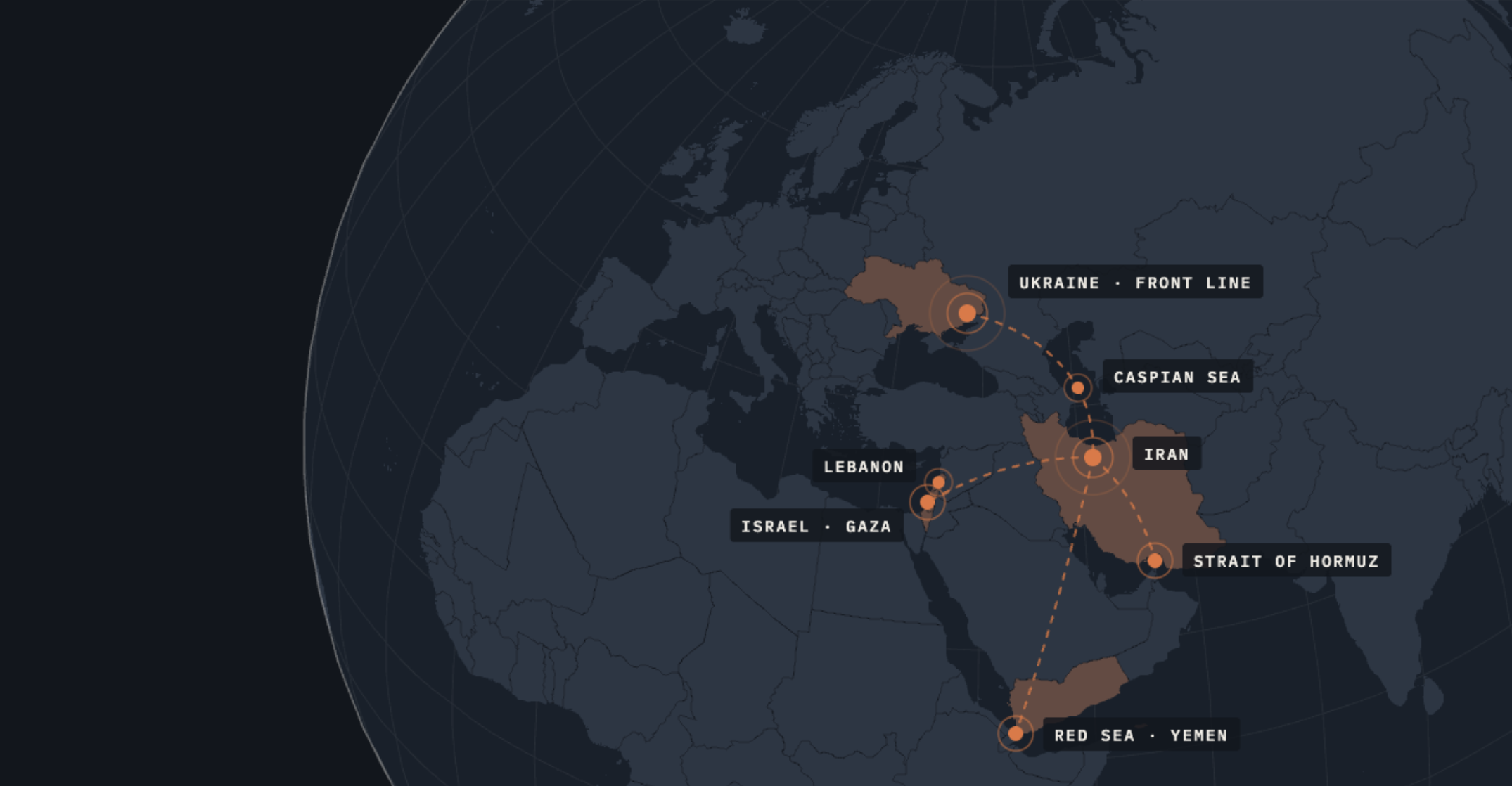
The Hamas-led terrorist attack on Israel on October 07, 2023, can be viewed as the beginning of a wider regional conflict. The war expanded to include fighting between Israel and Hezbollah in Lebanon and direct exchanges between Israel and Iran.
In a further escalation, in late February 2026, the United States and Israel launched a much larger attack on Iran. Within days, Iran’s Revolutionary Guards announced the closure of the Strait of Hormuz, one of the world’s most important energy routes.
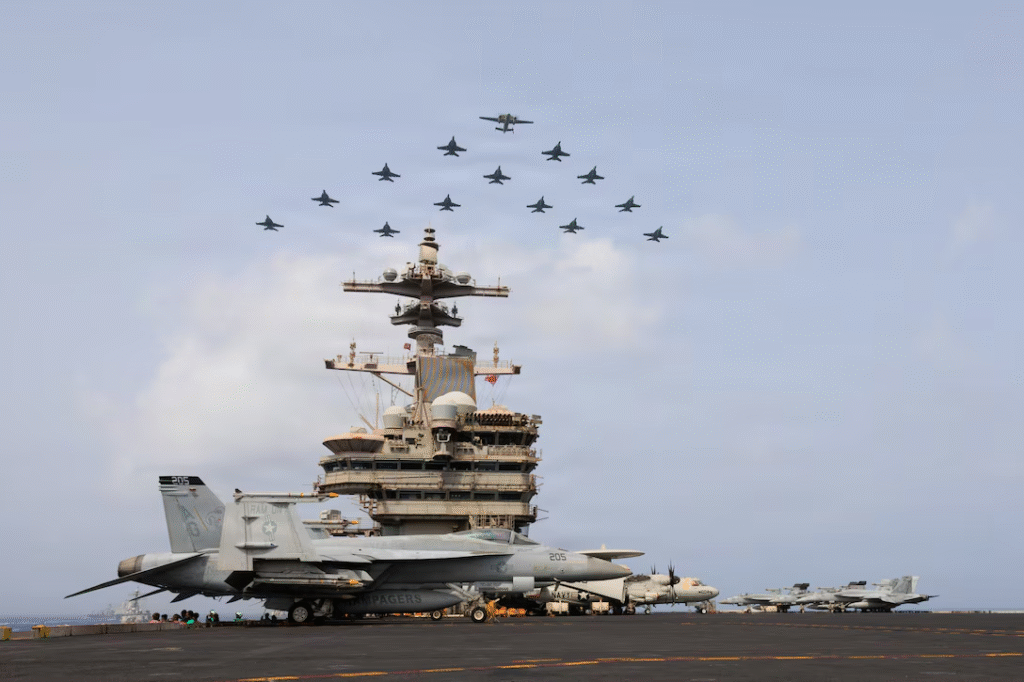
Iran also struck energy facilities across the region, including in Qatar and at Saudi Arabia’s Red Sea terminal at Yanbu.
In late March 2026, Yemen’s Houthis entered the conflict, firing missiles and drones at Israel in operations they said were coordinated with Iran and Hezbollah, and threatening to close the Bab el-Mandeb strait at the mouth of the Red Sea.
A ceasefire later paused much of the fighting, but it did not hold. By September, Iran was reported to have struck a US base in Jordan and American vessels after the United States targeted Iranian oil tankers, while the Houthis had seized the Red Sea port of Mocha.
What began as a strike campaign has become a war spanning Israel, Lebanon, Yemen, the Red Sea and the Arabian Gulf, involving states and armed movements alike.
Iran’s network of allies, which it calls the ‘Axis of Resistance’, has at times acted in ways that echo alliance systems before 1914 and 1939, with conflict involving one actor increasing the risk of others being drawn in.
The Middle Eastern conflict has also divided public opinion across Western nations, with large demonstrations in support of Palestinians and Israel’s war in Gaza becoming a major political issue.
Crucially, developments in the Middle East have also affected the war in Ukraine.
Russia has been both a beneficiary of, and exposed to, the consequences. Disruption in the Strait of Hormuz has pushed up oil prices, potentially increasing Russian energy revenues that can support its war in Ukraine.
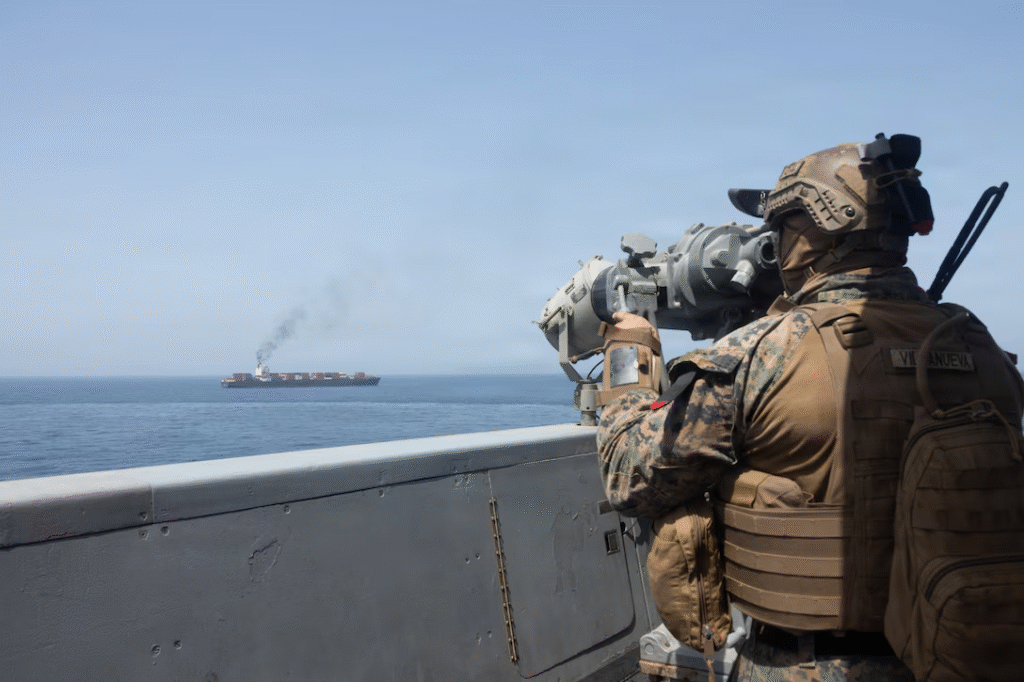
There have also been reports that Russia passed information to Iran to help it target American ships and aircraft. Meanwhile, American weapons, air defences and political attention have been pulled towards the Gulf, potentially competing with resources sought by Ukraine.
At the same time, the changed regional environment has complicated the close defence, energy and intelligence relationship that Russia and Iran developed after Russia’s full-scale invasion of Ukraine.
The two wars are therefore increasingly connected. Money, weapons, intelligence and diplomatic priorities flow between them. Iranian-designed drones have fallen on Ukrainian cities, while instability in the Gulf affects global energy markets and Russian revenues.
Countries are increasingly forced to make strategic choices even when they would prefer to remain neutral. It is this kind of linkage that historically allowed separate regional conflicts to become part of something much larger.
Mindset danger: drifting into war
There is a paradox in the ‘starting or spreading’ view. It may be an accurate description of the present, yet the belief itself carries risks.
If governments come to think a world war is already under way, they may begin to act as if it were. Military planners prepare for the worst. Each side reads the other’s defensive moves as preparations for attack. Warnings meant to deter become threats that provoke.
The danger is less a deliberate decision to start a world war than a series of miscalculations, in which a drone over Poland, a clash at sea in the Gulf or a strike on the wrong target triggers responses that no one can easily stop.
History offers a warning. In 1914, few leaders initially sought a general European war, but rigid alliances, mobilisation timetables and mutual suspicion helped turn a regional crisis into one within weeks.
Today’s leading powers have nuclear weapons, which remain a powerful deterrent. Yet nuclear deterrence has not prevented conventional wars or proxy conflicts. A serious miscalculation between nuclear-armed states could still produce a far more destructive confrontation.
Economic pressure adds to the danger. High energy prices caused by disruption to sea lanes, restrictions on Russian oil and gas in Western Europe, or Ukrainian attacks on Russia’s refining capacity feed into the cost of fertiliser, transport and food.
The Gulf is a major source of fertiliser as well as oil and gas, while disruption to Red Sea shipping raises the cost of moving goods, including grain, between regions.
Developing countries that import food and fuel are particularly exposed, often with weak public finances and young populations. Rising food and fuel prices were among the grievances that contributed to the Arab Spring of 2011 and could again become a source of instability.
Europe is not immune. Higher energy bills and inflation squeeze households and strain budgets already stretched by welfare, health and defence spending.
They also feed political anger. That anger can be exploited by populist movements and foreign disinformation campaigns, potentially weakening the unity on which support for Ukraine depends.
Unrest, state collapse and new refugee flows could, in turn, create further instability. In this way, the economic effects of today’s wars risk contributing to tomorrow’s conflicts, making a slide into wider confrontation more likely even if no government intends it.
A final thought: world war is not inevitable
The debate over whether World War Three is near, beginning, already here or not there is, in large part, a debate about definitions.
The Second World War itself had no single starting point or ending for those who lived through it. It began in Spain, China, Poland, Albania or Ethiopia, depending on where one stood and how the conflict is defined. For Americans, direct participation began after Pearl Harbor. Its ending was similarly experienced differently across Europe and Asia.
Judged against that history, the argument that a world war may be starting or spreading deserves serious consideration. Rival blocs have formed around Ukraine. A second war centred on Iran has spread across the Middle East. The two are increasingly connected through energy, weapons, intelligence and geopolitical alliances.
But ‘starting or spreading’ is not the same as ‘inevitable’.
Many crises that might have become world wars did not. During the Cuban Missile Crisis of 1962, leaders on both sides stepped back from the brink, and the Cold War, for all its proxy wars, never became a direct war between the superpowers.
If the right decisions are made, a major global war may yet be avoided. An optimistic view is that the conflict between Iran and the US could still be settled if both sides find a way to claim that their principal aims have been achieved. Ukraine looks more difficult.
Avoiding world war will require three things at once.
The first is statesmanship: leaders willing to keep channels open with adversaries, interpret the other side’s rational or irrational behaviour correctly, restore crisis hotlines and arms control, and resist the domestic pull of escalation.
The second is compromise: ceasefires in Ukraine and the Middle East that neither side will regard as perfect, and diplomacy that gives rivals a way to step back without humiliation.
The third is strength: credible defence and deterrence are required so that compromise is not mistaken for weakness and aggression is not rewarded.
In many ways, the world of 2026 resembles the late 1930s. Yet those leaders who made decisions that led to world war had less warning and fewer tools to step back from the brink than we have today, which should give us hope.
Recognising that a world war may be nearer than we would like to think, or may already be starting or spreading, is not a counsel of despair.
It is a reason to act while the fires are still separate, and to stop them joining up.
