


Listen to the article
Key Takeaways
🌐 Translate Article
📖 Read Along
💬 AI Assistant
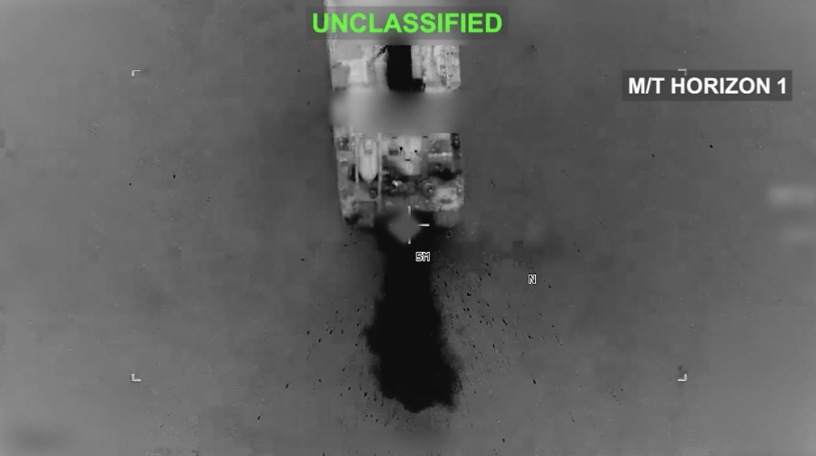
The United States has destroyed Iranian oil tankers after missile attacks on American warships, as fighting between Houthi rebels and Saudi Arabia threatened to widen the Middle East war.
American forces said they destroyed five Iranian crude oil carriers on Tuesday after Tehran targeted a US Navy warship with ballistic missiles twice in two days.
The strikes followed attacks over the weekend on three Iranian tankers after Iran fired ballistic missiles at an American aircraft carrier and a guided-missile destroyer.
None of the US warships was damaged and no American personnel were injured, but the attacks mark a significant escalation by Tehran and have raised concerns that Russia or China may be helping Iran locate American naval vessels.
US Central Command said: “The US warship successfully evaded the attempted Iranian attacks and continued to patrol regional waters. No American personnel were harmed.”
Iranian media said a US missile struck an Iranian tanker four miles from Kharg Island, the country’s principal oil export hub. State television said another tanker was attacked near Jask on the Gulf of Oman.
Iran said it retaliated by targeting American bases in Jordan and attacking two US vessels, eight oil tankers and ten “non-compliant vessels attempting to pass through the prohibited and unsafe zone of the Strait of Hormuz”.
There was no independent confirmation that American ships had been hit.
Jordan’s military said its air defence systems intercepted 18 ballistic missiles, while two others fell in unpopulated areas. There were no reports of casualties.
The escalation at sea came as Saudi Arabia was drawn back into confrontation with the Iran-backed Houthis after missile and drone attacks wounded more than 70 people and forced the suspension of operations at an oil refinery and other energy facilities.
The attacks helped push oil prices to their highest level in more than a month amid fears that the conflict could threaten supplies through both the Strait of Hormuz and Bab al-Mandeb.
The renewed Houthi offensive is being fought against Saudi-backed government forces in Yemen for territory close to Bab al-Mandeb, the narrow waterway linking the Red Sea with the Gulf of Aden and the Suez Canal.
The Houthis declared a “maritime blockade” of Saudi Arabia in July after Riyadh diverted more of its oil exports away from the Gulf and towards the Red Sea.
A Saudi-led military coalition warned that it would retaliate. A spokesman said: “The coalition will take all necessary operational measures to deter this terrorist militia and resolutely confront its hostile approach.”
The Houthis had earlier accused Saudi Arabia of carrying out an air strike that killed seven people.
The violence risks dragging Saudi Arabia back into Yemen’s civil war after a 2022 ceasefire brought an end to years of sustained fighting.
Saudi Arabia led a military intervention in 2015 after the Houthis seized Sanaa, the capital, and much of the north. Hundreds of thousands were killed during the conflict, many from famine and disease.
Although the Houthis are armed and trained by Iran, they retain considerable autonomy. Their decision to escalate against Saudi Arabia adds another layer of uncertainty as the war between the United States and Iran drags on.
Adam Baron, a Yemen expert and fellow at the New America think tank, said the Houthis appeared to be trying to demonstrate that they could threaten Bab al-Mandeb whenever they chose.
“In the context of the regional escalation, the Houthis appear to be making a move towards Bab al-Mandeb,” he said, adding that the group and Iran’s wider network of allies saw it as being in their interests “to demonstrate a capacity to shut down Bab al-Mandeb at will”.
Saudi and Western-backed forces control key territory close to the strait, but hundreds of government fighters and Houthi rebels have been killed in recent weeks in some of the deadliest clashes since the 2022 ceasefire.
Anti-Houthi factions considered launching a ground offensive last year to seize Hodeida, the Red Sea port that has allowed the rebels to threaten international shipping.
Washington carried out a month-long bombing campaign against the Houthis last year in an attempt to halt their attacks on Red Sea shipping in support of Hamas.
President Trump ended the operation after the Houthis promised to stop targeting American vessels. The rebels later halted their wider attacks after Israel and Hamas agreed a ceasefire.
The latest violence suggests that the uneasy calm has broken down, raising the prospect of a wider conflict stretching from the Gulf to the Red Sea.


