

Listen to the article
By Ben Farmer
Russian mercenaries have helped put down an attempted coup in Niger, underlining the Kremlin’s role as a security guarantor for a string of West African military juntas.
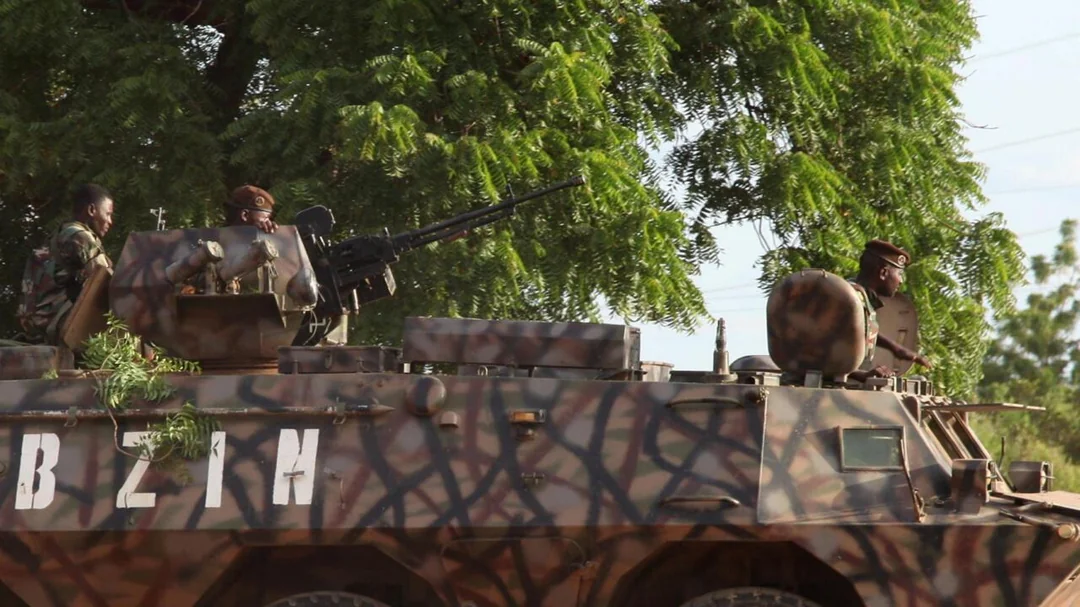
Troops from Russia’s Africa Corps played a major role in ending an hours-long uprising by mutinous young officers who attacked a military base and the presidential palace in the capital.
Niamey was jolted by hours of gunfire and explosions in the early hours of 29 August, until members of the Kremlin-controlled mercenary unit helped the loyalist presidential guard regain control.
A statement from Moscow said the attacks were repelled “with the support of the military personnel of the Africa Corps of the Russian Ministry of Defence”.
Africa Corps troops reportedly used kamikaze drones to dislodge the mutineers from sections of Air Base 101, one of the capital’s most strategic sites.
The coup attempt exposed divisions inside Niger’s military, which ousted the former president in a coup in 2023 but has since struggled to curb a potent jihadist insurgency.
After taking power in 2023, junta leader Gen Abdourahmane Tiani joined similar military regimes in neighbouring Mali and Burkina Faso in turning against the West, particularly France, the former colonial power.
He soon turned to Moscow for help in fighting the bloody jihadist uprising, and Russian military trainers arrived in early 2024.
Analysts estimate that between 1,700 and 2,000 Russian mercenaries are in the three Sahel countries.
The Russian forces have struggled to subdue the insurgencies, but Western diplomats believe one of their other main tasks has always been to provide a Praetorian Guard-style force for “regime protection” against military and political rivals.
Cameron Hudson, a former US State Department official, said: “Russia passed the test this weekend. They might not excel at clearing and holding areas as part of a strategic manoeuvre, but they can hold and clear fixed positions reasonably well.
“The difference between defending a regime and fighting terrorists.”
An offer of such regime protection is seen as one of Moscow’s main selling points as it expands its influence in West Africa.
Algeria also showed support for Niger’s junta, sending four fighter jets and other equipment to help in “countering the attempt to destabilize the brotherly nation”.
The attempted coup was reportedly fomented by young officers from the regions of Ouallam, Tera and Dosso in the south-west of the country.
Military units have sustained heavy casualties in battles with the regional Islamic State affiliate in that region, and there have been reports of mounting frustration among frontline units.
Hannah Rae Armstrong, a Sahel political analyst, said: “The trigger for the mutiny that snowballed into a coup attempt was, as it most often is in the Sahel, soldiers’ unwillingness to keep serving as cannon fodder in conflicts that are chewing them up at a horrifying rate.”
Security has remained weak despite Moscow’s support, and the attempted coup was the third major attack on Niger’s capital this year alone.
Islamic State attacked the airport in January, while the rival regional al-Qaeda branch attacked again in June.
