

Listen to the article
Hugh Paine examines how the battle over the Chagos Islands has evolved from an obscure sovereignty dispute into a geopolitical crisis threatening Britain’s relationship with the United States.
Chagos: What’s the deal?
Two years ago, the vast majority of British people would never have heard of the Chagos Islands, and even fewer would have been able to locate them on a map.
But today, this small archipelago of 60 islands in the Indian Ocean has become something of an international crisis and could seriously threaten future US-UK relations.
What has evolved from a minor dispute into an international crisis is a debate surrounding legality. The UK intends to hand the islands back to Mauritius — a plan the US initially supported.
But strained UK-US relations surrounding other geopolitical issues led to President Donald Trump calling the plan an act of “great stupidity”.
What is the Chagos Archipelago?
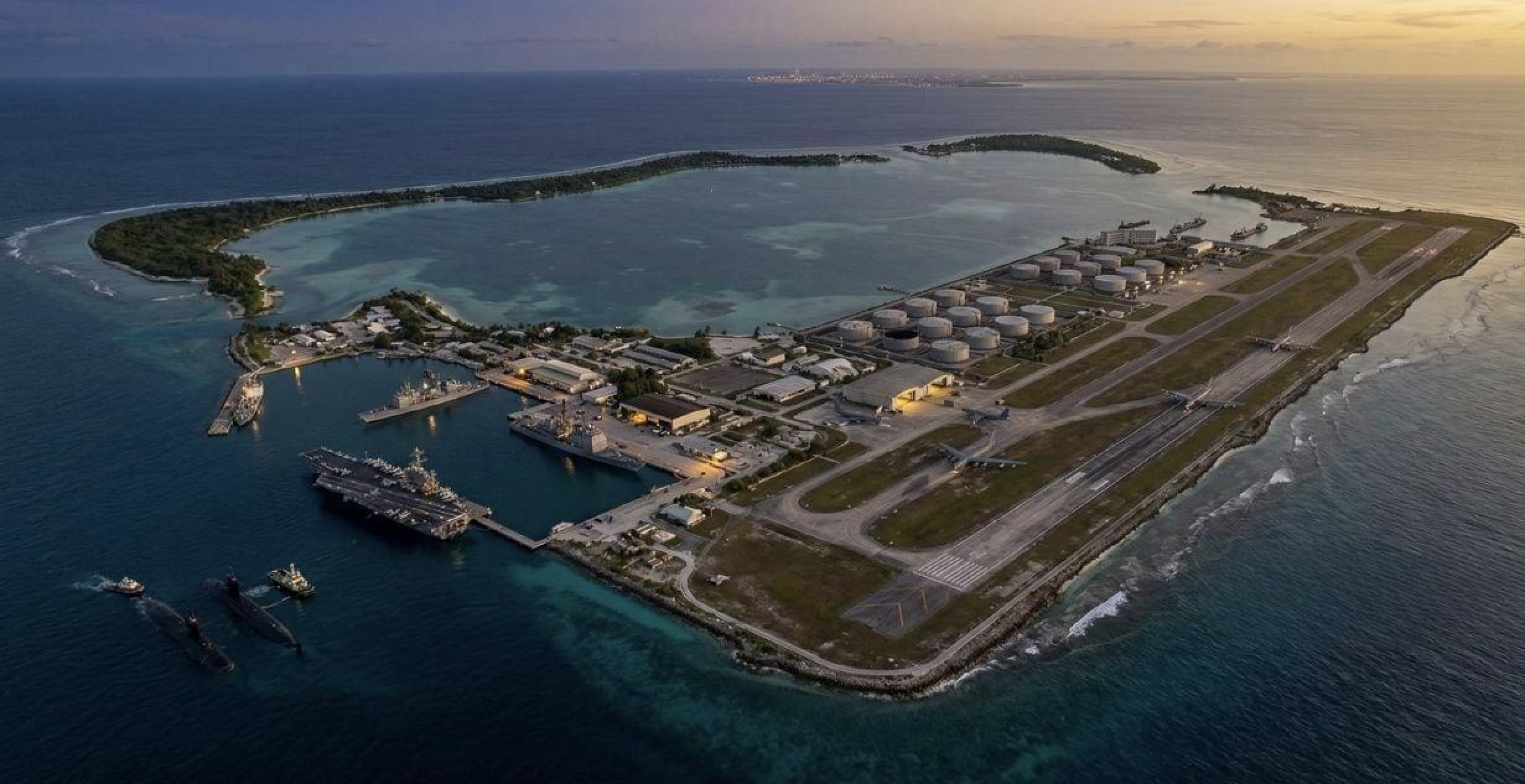
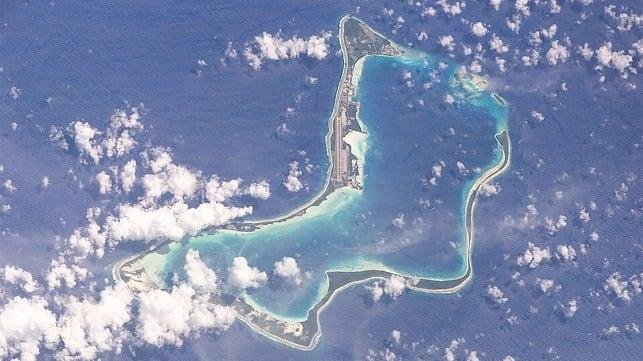
The Chagos Archipelago is a group of seven atolls and 60 islands in the Indian Ocean, nearly 10,000 km from the UK.
Although the islands are now inhabited only by around 4,000 US and UK military personnel, they were once home to more than 1,000 Chagossians. However, the indigenous population was forcibly displaced between 1967 and 1973 by order of the UK and US governments to build Naval Support Facility Diego Garcia.
The islands form the British Indian Ocean Territory (BIOT), one of 14 British Overseas Territories.
The history
Although the Chagos Islands have only recently become a major political issue in Britain, the dispute stretches back decades.
Sovereignty was originally ceded to Britain in 1814 under the Treaty of Paris. This treaty transferred sovereignty over Mauritius and its dependencies, including the Chagos Islands, from France to Britain.
This remained the case for more than 150 years. The crucial moment came in 1965. Under the Lancaster House agreement, the Chagos Islands were detached from Mauritius, forming the British Indian Ocean Territory. Mauritius gained independence from Britain three years later, in 1968. This separation became the foundation of Mauritius’s modern claim to sovereignty.
Since the 1980s, the Mauritian government has argued that because the dismemberment of the colonial territory of Mauritius and its dependencies took place before full independence was granted, the agreement is null and void.
Consequently, the Mauritian government claims the Chagos Islands are Mauritian territory and should be returned, an argument that received significant international backing in 2019 following an advisory opinion issued by the International Court of Justice (ICJ).
Why are these islands important?
The Chagos Archipelago may be small, yet its significance to the UK and its allies has propelled it into newspaper headlines and made it the subject of rounds of international negotiations.
The question that remains in the minds of many is: what makes these islands so important? It centres on three core interests: military, strategic and environmental.
Militarily, Diego Garcia, the airbase at the centre of this debate, often termed the ‘unsinkable aircraft carrier’, has enabled the US and UK to project military power across conflict epicentres that would otherwise have been difficult to reach, namely East Africa, the Middle East and the Indian Ocean.
The islands’ strategic importance has been demonstrated countless times over the past 40 years.
Operation Desert Storm was the second of two coalition efforts in the Gulf War, beginning on 17 January and lasting until 28 February 1991. During this operation, B-52 bombers based at Diego Garcia flew more than 600 sorties. Of the 72,289 total B-52 munitions loaded during this operation, 18,411 were at Diego Garcia.
Diego Garcia also proved its worth during the Global War on Terror, formally known as Operation Enduring Freedom. B-1 and B-52 bombers stationed at Diego Garcia flew just 10 per cent of strike sorties, yet delivered 65 per cent of all weapons during this conflict.
Operation Iraqi Freedom, which began in 2003, sought to depose Saddam Hussein and eliminate alleged weapons of mass destruction in Iraq. During just the first 10 days of the conflict, B-2 bombers flew 22 sorties from Diego Garcia. By the end of the eight-year campaign, B-2 bombers from Diego Garcia had achieved an 85 per cent mission-capable rate, far exceeding the average.
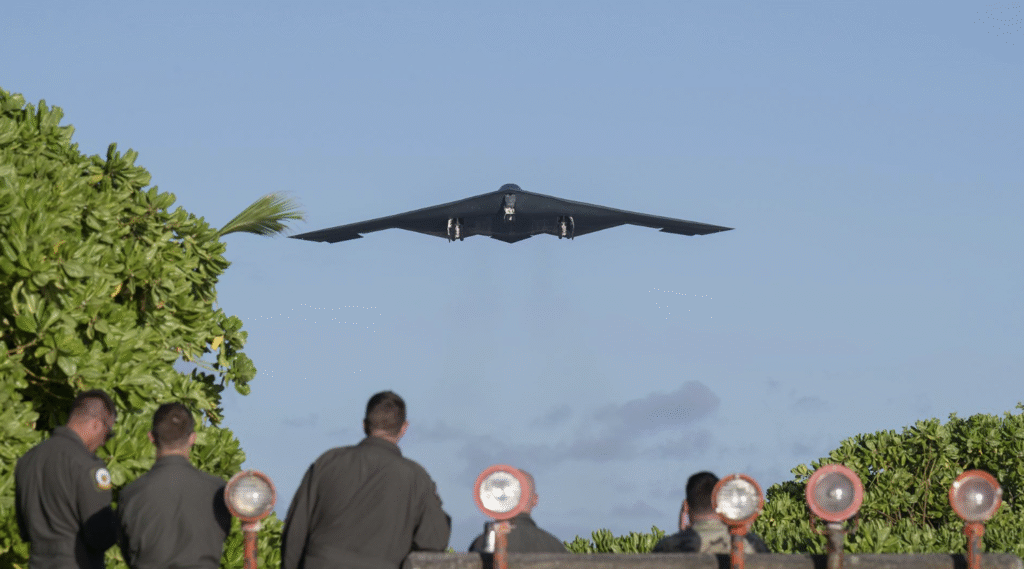
However, Diego Garcia’s worth is not limited to its ability to provide long-range air support.
UK ownership of the Chagos Islands has been utilised as a safeguard against the threat of possible Chinese expansion within the Indian Ocean and the surrounding region.
In 2017, China built the People’s Liberation Army Support Base in Djibouti, which sits along the Bab el-Mandeb Strait, a vital shipping chokepoint. This was China’s first overseas military base, signalling a clear shift towards a greater global presence.
The Belt and Road Initiative, a global infrastructure and investment programme, has enabled China to foster economic relations and widen its strategic influence across more than 150 countries. Despite being present in Africa, Asia, Europe and Latin America, the Indian Ocean region has been a particular focus.
While Mauritius has not yet joined China’s Belt and Road Initiative, nearby nations have, namely Madagascar and the Seychelles.
One of the two key elements of the Belt and Road Initiative is the 21st Century Maritime Silk Road, the sea-based component focusing on expanding trade and building port infrastructure.
Consequently, Chinese firms are present in more than a third of Africa’s maritime trade hubs, a greater presence than anywhere else in the world.
This growing presence and its impact often extend beyond the African mainland and into the Indian Ocean.
While China’s Belt and Road Initiative should not be viewed as outright military expansion, it is important to consider the economic and strategic impact of a growing Chinese presence within the region.
Considering this, it is clear that the military and strategic value of Diego Garcia is not confined to past conflicts and operations within the Middle East. It continues to play a vital role as the balance of power shifts within the Indian Ocean.
UK sovereignty over Chagos plays a vital role in ensuring commercial and military interests are maintained at a time when China is seeking to expand.
Nonetheless, the Chagos Islands also have considerable environmental significance. According to the Chagos Conservation Trust, the waters surrounding the islands support more than 300 species of coral, 800 species of fish and more than 50 species of shark. The islands themselves provide nesting grounds for approximately 175,000 pairs of seabirds.
UK sovereignty over the Chagos Islands has enabled the UK to establish a 640,000 km² ‘no-take’ marine reserve around the BIOT, banning commercial fishing and deep-sea mining — a vital step in protecting this vast array of biodiversity.
While Mauritius does not intend to preserve the existing ‘no-take’ marine reserve, it has announced plans for a new Marine Protected Area (MPA).
The current situation
The importance of the Chagos Archipelago is clear. Considering this importance, why is the UK government now planning to give the islands away, and what do these plans entail?
On 22 May 2025, the UK government announced a deal to hand sovereignty over the islands to Mauritius, with the UK leasing them back for 99 years at an average cost of £101 million per year.
Given their importance, the announcement surprised many, prompting criticism from opponents who viewed it as reckless and unnecessary. Yet the Chagos deal is not a radical policy shift; it is the product of years of strife surrounding security, sovereignty and legality.
In 2019, the ICJ released an advisory opinion which stated that the UK had failed to fully decolonise Mauritius and, in turn, had an obligation to end its administration of the Chagos Archipelago as rapidly as possible. The opinion states that Chagos “forms an integral part of the territory of Mauritius”.
Following the advisory opinion, the UN General Assembly voted 116-6 in favour of endorsing the Court’s findings, despite Washington and Whitehall’s efforts to lobby against such an outcome.
The cost
The initial treaty package estimated the total cost of the 99-year lease at £3.4 billion. Yet it is apparent that the deal will cost the UK far more than the government has disclosed, both financially and strategically.
Failing to account for projected inflation over the century, the government’s public estimate appears to be 10 times smaller than the deal is likely to cost.
In August 2025, the Conservative Party obtained figures produced by the Government Actuary’s Department which estimated the total cost at £34.7 billion.
Why now, and does the government have a choice?
Considering the huge financial and strategic cost of this deal, the question currently being asked of the government is: why? The government’s answer has been clear, centring on three key pillars: legality, legitimacy and security.
Firstly, if Mauritius chose to pursue real legal action, escalating the current approach, which critics of the deal have characterised as ‘lawfare’, the UK would have little, if any, chance of genuine success. Despite the ICJ’s opinion being advisory, the 116 votes in favour of the motion against the UK reflect the strength of international support for Mauritius’s position.
Secondly, if the UK were to ignore any legal judgments that may follow, international organisations could begin to intervene, potentially issuing binding orders more consequential than the ICJ’s 2019 advisory opinion.
Thirdly, Sir Keir Starmer and his Cabinet argued that if they did not reach an agreement with Mauritius, the UK would not be able to prevent hostile foreign nations, namely China, from establishing a deal themselves.
The question being asked of the government is whether it has successfully evaluated the weight of the legal obligations without underestimating the financial, strategic and diplomatic costs.
How has this deal been viewed?
Responses to the deal and the government’s plans have varied greatly.
The UK political right was quick to dismiss the deal. Reform UK leader Nigel Farage stated that it was “not far short of an act of treachery”, while Conservative Party leader Kemi Badenoch insisted that it was “not in our national interest”. Such narratives, however, seemingly erase the origins of this deal.
The process itself began under the Conservatives, with negotiations between then Foreign Secretary James Cleverly and the Government of Mauritius starting in November 2022. The previous Conservative government oversaw 11 rounds of negotiations between November 2022 and June 2024.
While dissent from the Conservatives and Reform is an inconvenience, Labour’s strong majority in the Commons means they pose a relatively limited threat to the deal’s future.
All of these pale in comparison with the threat the US poses to the deal.
Initially supportive of the deal, US Secretary of State Marco Rubio welcomed it in 2025, announcing that it was a “monumental agreement” which “secures the long-term stable and effective operation” of Diego Garcia.
However, this stance did not last long. Just eight months later, on 20 January 2026, President Trump intervened, turning the seemingly positive American narrative on its head by announcing that the deal was an act of “great stupidity”. Despite its colloquial nature, the comment sent the ratification process into doubt.
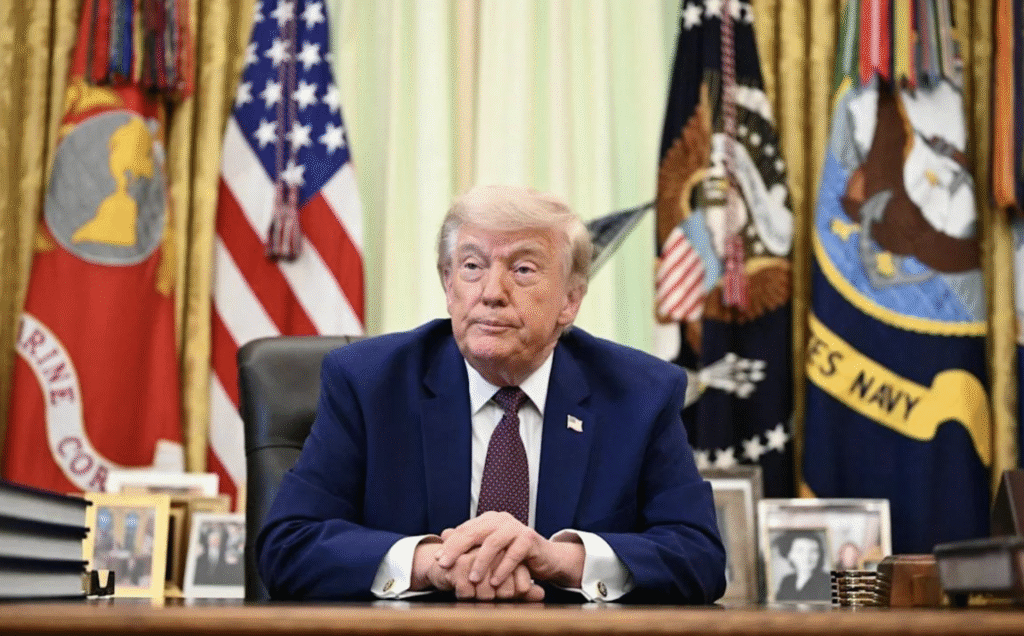
Following this withdrawal of support from the United States, on 11 April 2026, the UK government paused the Chagos deal, fearing it was no longer possible to agree an amendment to the 1966 UK-US agreement.
The sudden change in support raised questions surrounding President Trump’s motives for his U-turn.
While there is much speculation and no definitive answer, most explanations appear to centre on Iran.
Since 28 February 2026, the United States has been at war with Iran. In the same month, President Trump alluded to the use of Diego Garcia in bombing runs “should Iran decide not to make a Deal”.
This plan was quickly halted when the UK stated that it would not permit its airbases to be used for a pre-emptive US strike on Iran.
Despite President Trump describing the Chagos deal in February as the “best” deal Starmer could make in the circumstances, in the same month he became a staunch opponent.
Consequently, it appears that President Trump is not opposed to the deal itself but could instead be using it to leverage UK support over Iran or punish the UK for its lack of support.
While much of this remains speculation, UK government sources said this was viewed as the reason for Trump turning against the Chagos plan once again.
What does the future hold?
For the time being, the Chagos deal is on hold. President Trump’s change in opinion on the matter was enough to derail the ratification process in Parliament. However, a new Prime Minister, a new Cabinet and new relations being formed across the Atlantic pose a new round of questions and opportunities.
British Prime Minister Andy Burnham has expressed an intention to push ahead. However, with the US still opposed to the deal, the future remains unpredictable.
Burnham has two choices, neither of which offers an easy outcome. The UK government appears to be stuck in a lose-lose scenario.
Should Burnham push ahead with the deal without US support, relations could fracture or even be severed. However, should Burnham listen to President Trump and the deal’s other critics, the UK would be acting contrary to the ICJ’s opinion.
Despite being only advisory, disregarding the opinion could have serious implications for Britain’s credibility on the international stage.
The UK government has been a vocal critic of breaches of international law. Whether concerning Russia’s actions in Ukraine or China’s intentions surrounding Taiwan, the UK government has consistently been among the first to condemn such behaviour.
Should the same nation now choose to disregard the voice of international law, the UK risks discrediting its position when criticising similar breaches by other nations.
If the UK supports these institutions, it must abide by their rulings and advice consistently, not just when it is convenient to do so. The Chagos deal and the controversies that have emerged present a challenge that extends far beyond these remote islands.
