

Listen to the article
Ukraine has sharply increased long-range drone attacks on Russia, striking oil refineries, military factories, logistics hubs and other targets hundreds of miles from the Ukrainian border.
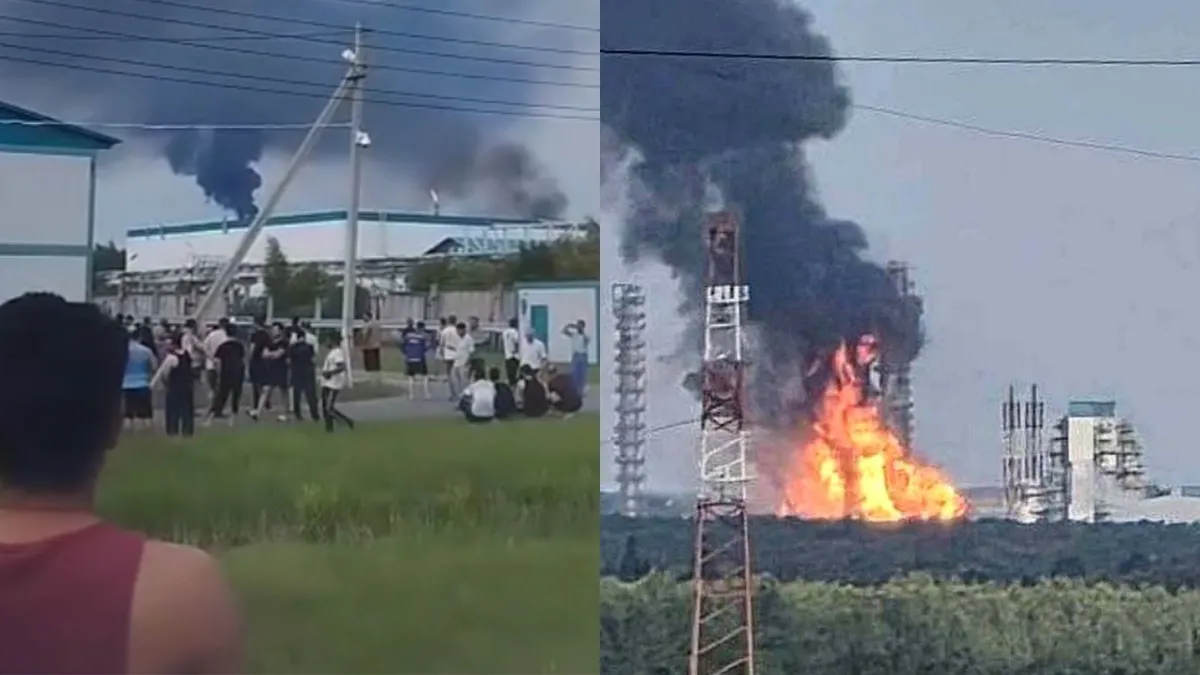
The growing reach of Kyiv’s drone force was demonstrated this week when Ukrainian aircraft struck Nizhnekamsk in Tatarstan, around 750 miles east of the Ukrainian border.
Russian authorities said 13 people, including a child, were killed and dozens wounded in the attack. Ukraine’s military said its intended target was Tatneft’s TANECO oil refinery, where a fire was reported following the strike.
The raid was one of the deadliest Ukrainian attacks inside Russia since Moscow launched its full-scale invasion in February 2022. It came amid a substantial increase in Ukrainian strikes on Russian energy and military infrastructure.
Analysis by the Financial Times, using data from the Polish monitoring group Rochan Consulting, found that Russian oil refineries had been hit at least 194 times between January and early July this year.
That was 11 times the number of attacks recorded during the same period last year.
May saw a record 16 successful strikes on Russian refineries, according to the analysis.
Figures released by the Russian Defence Ministry also show a large increase in the number of Ukrainian drones being launched against targets in Russia and Russian-occupied areas of Ukraine.
Moscow claims its forces intercepted more than 63,000 Ukrainian drones over Russia and occupied Ukrainian territory during the first six months of 2026.
The Russian figures cannot be independently verified and include drones operating over occupied Ukrainian territory.
Individual attacks have also involved hundreds of aircraft.
Russia said 635 Ukrainian drones were shot down during a single overnight attack on 2 August. On 7 July, Moscow said another 452 Ukrainian drones had been intercepted across Russia and occupied Crimea.
Longer-term figures compiled by the Armed Conflict Location & Event Data Project (ACLED) also show an increase in Ukrainian strikes inside Russia.
An analysis by the Washington-based Center for Strategic and International Studies found that ACLED recorded approximately 580 Ukrainian air and drone strike events inside Russia in 2023.
That figure increased to 7,244 in 2024, with another 6,176 recorded during the first six months of 2025.
Ukraine has concentrated many of its long-range attacks on Russia’s oil industry, which remains one of Moscow’s most important sources of export revenue.
Russian refineries at Ryazan, Tuapse, Volgograd and other locations have repeatedly been targeted by Ukrainian drones.
Russia’s seaborne oil-product exports fell by a third in July to around 3.9 million tonnes, according to market sources and LSEG data reported by Reuters.
The reduction reflected lower refinery production following Ukrainian drone attacks, as well as Russian government restrictions on fuel exports.
Ukraine has also expanded the range of targets it is attacking.
Since 18 July, Ukrainian drones have struck at least 20 warehouses belonging to Wildberries, Russia’s largest online retailer.
Ukraine has accused the company of being involved in supplying Russian military forces.
Military analysts say the growing number of Ukrainian drones is placing additional pressure on Russian air defences.
Emily Ferris, a senior associate fellow at the Royal United Services Institute (RUSI), said Russia’s air defence network was not necessarily designed to withstand “such an onslaught of multiple drones, all acting simultaneously and trying to target different sites”.
Justin Bronk, RUSI’s senior research fellow for air power and technology, has said repeated Ukrainian attacks are forcing Russia to deploy air-defence systems, fighter aircraft and helicopters to protect targets deep inside the country.
Deploying air-defence units across Russia means those systems cannot simultaneously be used elsewhere, including near the front line and in occupied Crimea.
Benjamin Jensen and Yasir Atalan, analysts at the Center for Strategic and International Studies, have described the conflict as “a race between two competing, attritional theories of victory”.
They said Ukraine was attempting to use deep-strike weapons to damage Russia’s oil and gas industry and other infrastructure supporting its war effort, while Russia continued large-scale missile and drone attacks on Ukrainian cities and energy infrastructure.
Russia has also increased attacks on facilities it claims are connected to Ukraine’s drone programme.
Last week, Moscow said its forces had struck seven logistics centres in Kyiv and the surrounding region that it claimed were storing drones or components used in their production.
Ukraine has developed a range of domestically produced long-range drones since the beginning of the invasion.
Some Ukrainian systems are now capable of travelling more than 1,000 miles, allowing Kyiv to reach military and industrial targets that were previously beyond the range of most of its weapons.
Ukrainian drones have struck airfields, ammunition depots, oil facilities and defence factories across western and central Russia.
Russia has accused Ukraine of deliberately targeting civilians during some attacks.
Kyiv says it targets military facilities and infrastructure supporting Russia’s invasion and describes the strikes as a response to Russian attacks on Ukrainian cities and energy infrastructure.
The latest attacks show that Ukrainian drones are now regularly reaching targets hundreds of miles beyond the battlefield, while the number of aircraft used in individual raids has risen into the hundreds.
