

Listen to the article

By Sean Rayment
China’s accelerating military modernisation is eroding the long-held assumption that Western powers would dominate the skies in any Pacific conflict, according to a new assessment by the Royal United Services Institute (RUSI).
The report argues that the People’s Liberation Army (PLA) has reached a point at which US and allied air superiority can no longer be taken for granted, particularly in a confrontation centred on Taiwan. Chinese advances in aircraft production, missile technology and integrated air defence systems mean that Western forces would face unprecedented risks in the opening stages of any conflict.
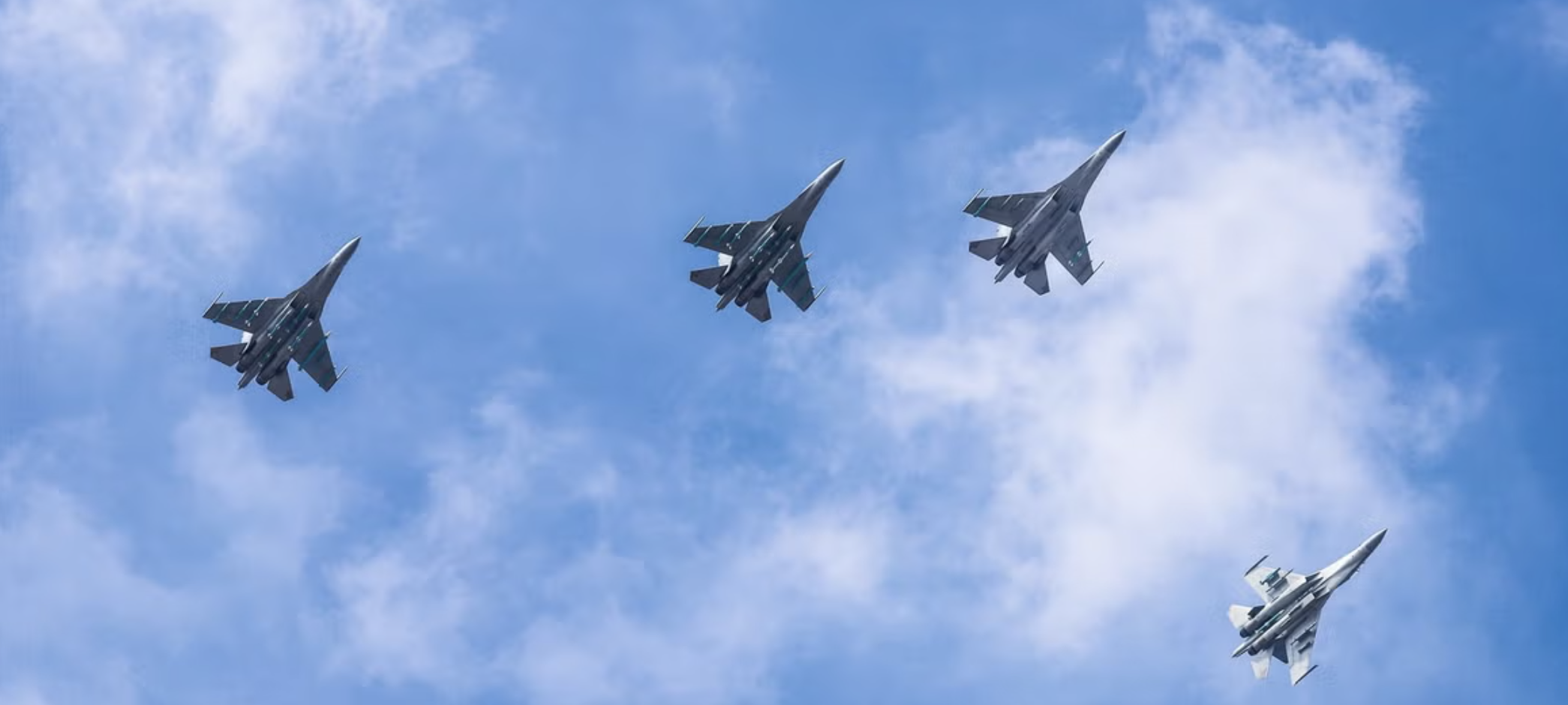
Central to this shift is the rapid expansion of China’s combat aircraft fleet. RUSI estimates that China is producing around 120 J-20A fifth-generation stealth fighters each year, a figure that exceeds the annual number of F-35s acquired by the US Air Force. The PLA Air Force is also believed to be adding about 100 J-16 multirole fighters annually, giving China the ability to replenish losses far more quickly than its potential adversaries.
The aircraft are supported by a growing arsenal of long-range air-to-air missiles. The PL-15 and PL-17, both in operational service, are assessed to have greater reach than equivalent weapons deployed by the United States, Russia or European nations.
According to the report, these missiles allow Chinese pilots to engage enemy aircraft at distances that would force Western forces to rethink their tactics.
The report adds that Chinese long-range weapons now pose a serious threat to US air bases, aircraft carriers and aerial refuelling tankers from distances of more than 1,000 kilometres, complicating the ability of Western air forces to sustain operations deep into the Pacific.
Much of this progress has been driven by President Xi Jinping’s strategic focus on technological superiority rather than numerical advantage. Since coming to power, Xi has overseen sweeping reforms aimed at transforming the PLA into a modern, networked fighting force capable of operating across multiple domains.
The report also states that naval power has expanded in parallel. China now possesses the world’s largest navy by number of vessels, although it continues to trail the United States in aircraft carrier capability. Even so, the combination of land-based aircraft, naval aviation and missile forces has created what the report describes as a layered system designed to deny adversaries freedom of movement in the region.
RUSI analysts caution that Western planners have become accustomed to uncontested air operations over the past three decades, from the Balkans to the Middle East. That experience, the report argues, risks fostering dangerous assumptions about future wars against a peer competitor.
In a conflict over Taiwan, Western forces might still be able to secure limited air superiority in specific areas or for short periods. However, the scale and speed of China’s military build-up mean that overall dominance is no longer guaranteed. The report warns that failure to recognise this shift could lead to miscalculation and higher losses in the early stages of a war.
