

Listen to the article

By Ben Farmer
Sudanese paramilitary rebels have been accused of massacring as many as 2,000 civilians, including hundreds of hospital patients, in ethnic killing sprees after they overran a besieged city.
El Fasher fell to the Rapid Support Forces (RSF) after an 18-month bombardment and blockade that had turned the enclave into the epicentre of the country’s catastrophic civil war.
Sudanese army defenders and their militia allies were eventually routed when the RSF captured their last stronghold in the city, the 6th Division headquarters, after heavy fighting.
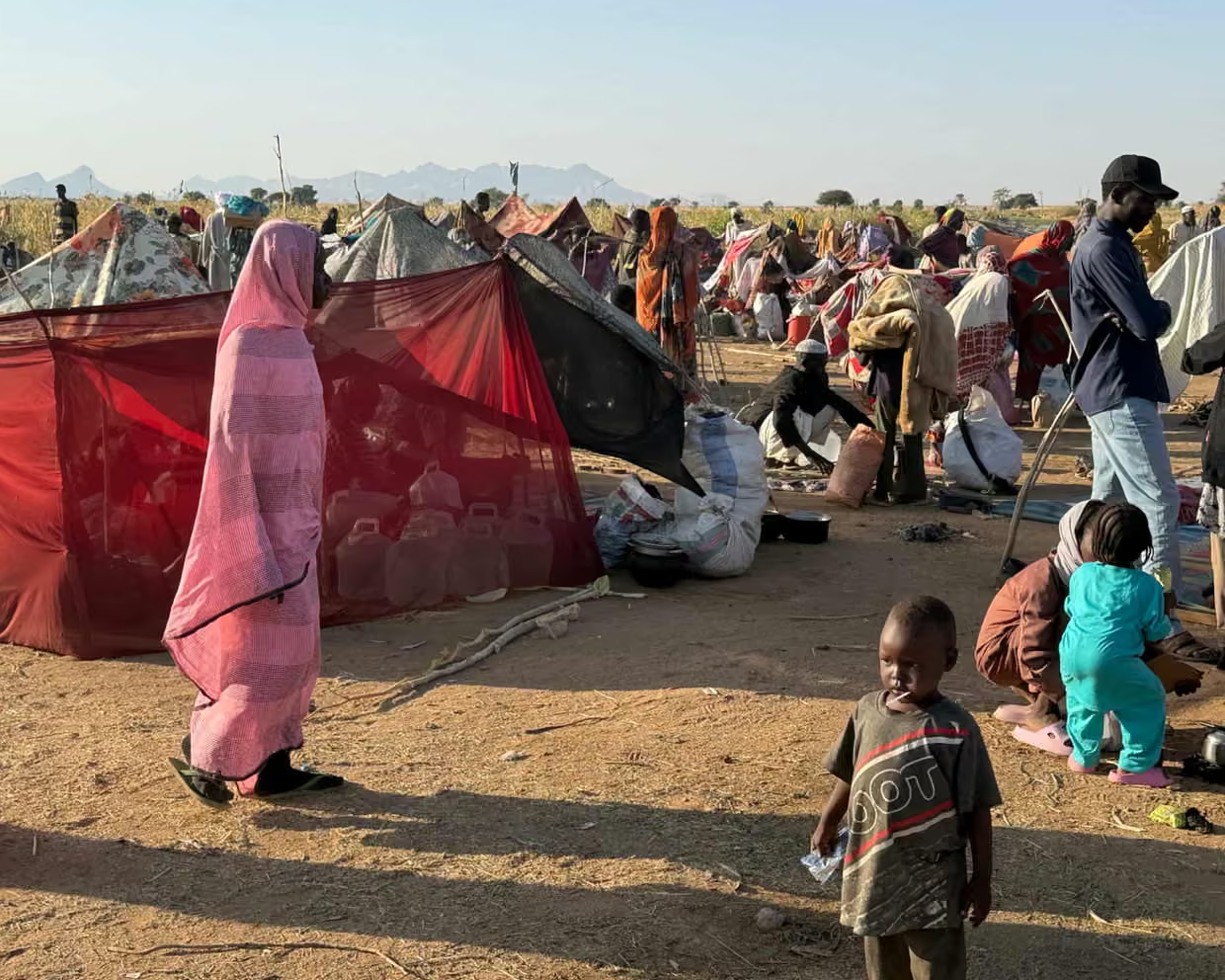
Tens of thousands fled in the hours that followed. Their testimony, along with satellite imagery and video clips filmed by the RSF and others, has revealed evidence of mass killings.
Videos have purported to show fleeing civilians being pursued, harassed and shot by militiamen, while satellite images taken in the hours after the city’s fall appear to show bodies and pools of blood.
Civilians are also alleged to have been executed as they tried to escape over a sand berm built around the city by RSF forces.
Monitoring groups said the killings mirrored atrocities committed earlier in the war, when the RSF, largely drawn from Arab militias, killed members of black African communities.
The Yale Humanitarian Research Lab (HRL), which has been tracking the siege using open-source images and satellite data, said the city “appears to be in a systematic and intentional process of ethnic cleansing of indigenous non-Arab communities through forced displacement and summary execution”.
Among the worst alleged atrocities are reports of the killing of 460 people at a maternity hospital.
Tedros Adhanom Ghebreyesus, head of the World Health Organisation, said he was “appalled and deeply shocked by reports of the tragic killing of more than 460 patients and companions at Saudi Maternity Hospital in El Fasher”.
With tens of thousands still trapped in the city and many captives being held for ransom, there are fears that the killing will continue.
Sudan has been convulsed by civil war for more than two years after rivalry between the de facto president, Gen Abdel Fattah al-Burhan, and his deputy, Gen Mohamed Hamdan Dagalo, known as Hemedti, erupted into open fighting.
Hemedti on 29 October acknowledged that atrocities had taken place in El Fasher and vowed that “any soldier or officer who committed a crime will be held accountable”.
In the early weeks of the war, the RSF, under Hemedti, made quick gains after catching Gen al-Burhan’s army ill-prepared.
The army has since been able to retake ground, including the capital, Khartoum, and front lines have solidified, prompting speculation that the country faces an effective partition between the two sides.
The fall of El Fasher consolidates RSF control over the vast Darfur region and gives the paramilitaries control of about a third of the country. The army, meanwhile, controls the north, east and centre. Fighting is now concentrated in the central Kordofan region.
The United Arab Emirates has been widely accused of supporting the RSF, sending supplies and mercenaries through Chad and Libya.
The UAE strongly denies supporting either side and says it has consistently called for a ceasefire.
